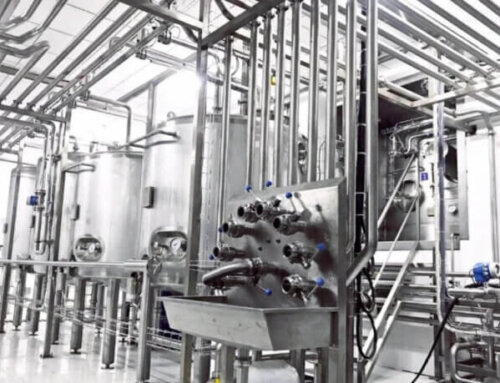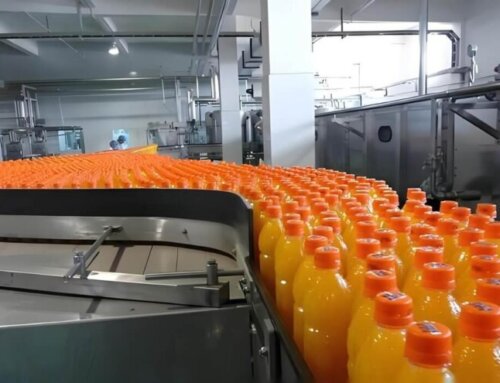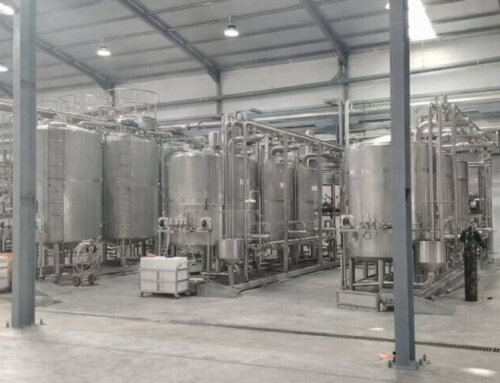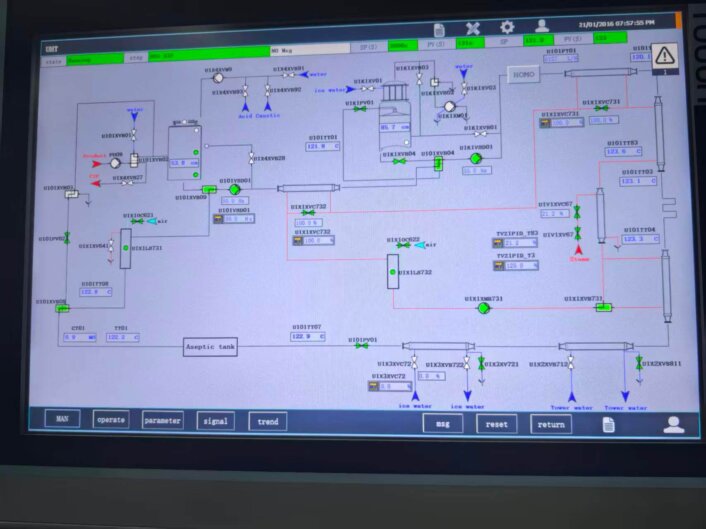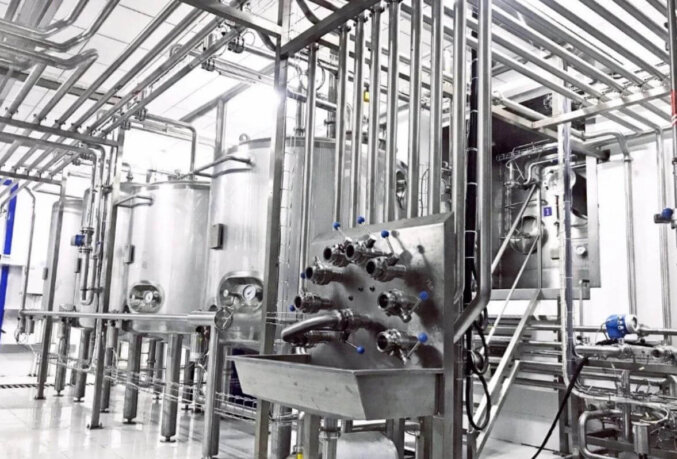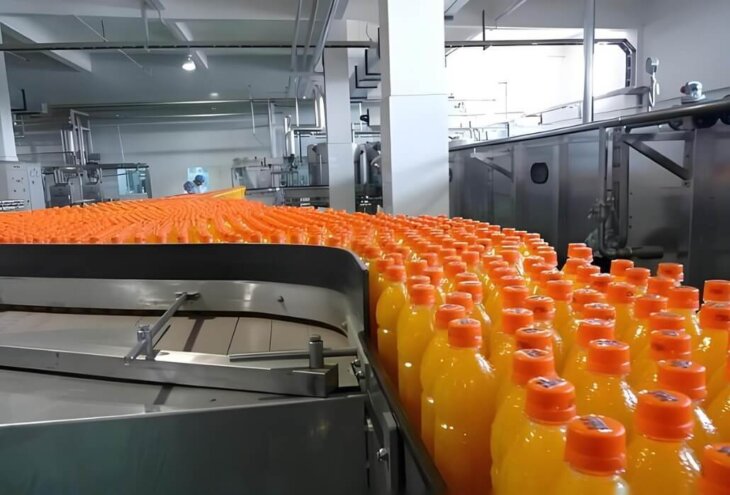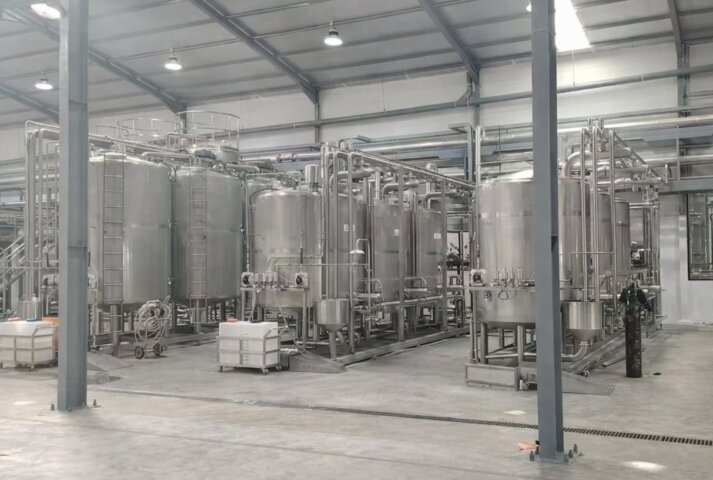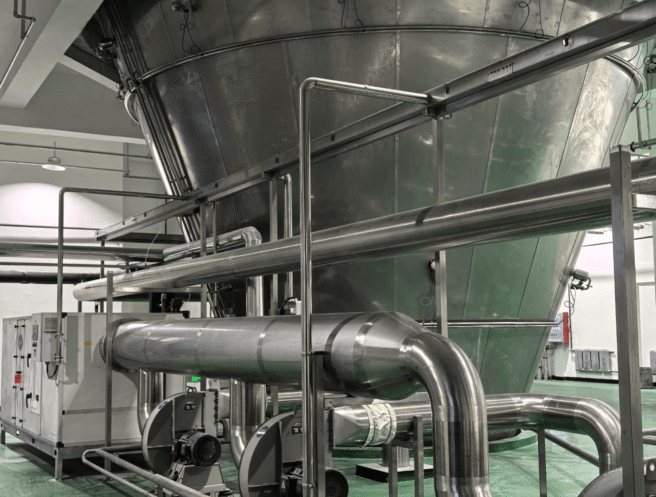
Fruit Jam Processing Plant Description
- The fruit jam processing plant starts with fruit pretreatment, where fresh or frozen fruits are washed, sorted, and prepared through processes such as peeling, pitting, blanching/preheating, and crushing according to different fruit characteristics. The prepared fruits are then processed by a fruit pulping machine to separate the fruit pulp from skins, seeds, and unwanted fibers. The extracted fruit pulp is mixed with sugar, acid, pectin, and other ingredients to achieve a uniform formulation. After mixing, the fruit mixture is concentrated under vacuum conditions to remove excess water, preserve the natural color and flavor, and reach the required soluble solids content and texture. Finally, the finished jam is hot-filled into sterilized containers and cooled for storage and distribution.
- The capacity of the fruit jam processing plant ranges from 2 tons per day to 100 tons per day, and the end products of fruit jam are usually filled into glass jars, metal cans, pouches, soft bags, and other containers that have great sealing performance.
- All fruit jam processing machines are manufactured using food-grade stainless steel, mainly SUS304, which meets food hygiene standards. For applications requiring higher corrosion resistance, SUS316L stainless steel can also be selected for specific product-contact components. With advanced fruit processing technology, a complete fruit jam production line can provide stable product quality, efficient production, and flexible processing solutions for different types of fruit-based products.
- Fruit jam is a fruit-based product made from fruit pulp or puree, sugar, acid, and pectin. Through controlled cooking and concentration, the mixture reaches the required soluble solids content and forms a stable gel texture while maintaining the natural flavor, color, and aroma of the fruit. Fruit jam is sometimes categorized together with fruit preserves, although preserves generally contain larger fruit pieces, while jam is mainly produced from crushed fruit pulp.
- Most fruits can be processed into fruit jam, but the best fruits are those with good flavor, attractive color, sufficient natural pectin, and suitable acidity to form a stable gel structure. Common fruits suitable for jam production include: mango, plum, apricot, peach, apple, guava, strawberry, cherry, blueberry, raspberry, youngberry, pineapple, grape, and orange. Fruit jam can be produced from a single fruit or a combination of two or more fruits to create different flavors and textures.
- The main ingredients of fruit jam processing include fruit pulp, sugar, acid, and pectin. During production, the soluble solids content of commercial fruit jam is usually controlled at around 65–72°Brix, depending on the product formulation and market requirements. The low pH value (normally around 2.8–3.5) combined with high soluble solids content reduces microbial growth and helps achieve a longer shelf life.
- Fruit concentrates (such as mango concentrate, strawberry concentrate, apple concentrate, or berry concentrate) can be directly used as the fruit base for jam production, especially when fresh fruit availability is seasonal or when a consistent product quality is required. The concentrated fruit is first diluted or adjusted according to the required formulation, then mixed with sugar, pectin, acid, and other ingredients before the final concentration process. For premium-quality jam, many manufacturers still prefer using fresh fruit pulp or puree, or a combination of fresh pulp and concentrate, because fresh fruit generally provides better natural aroma and texture. For large-scale industrial production, fruit concentrate is widely accepted as a practical and economical raw material.
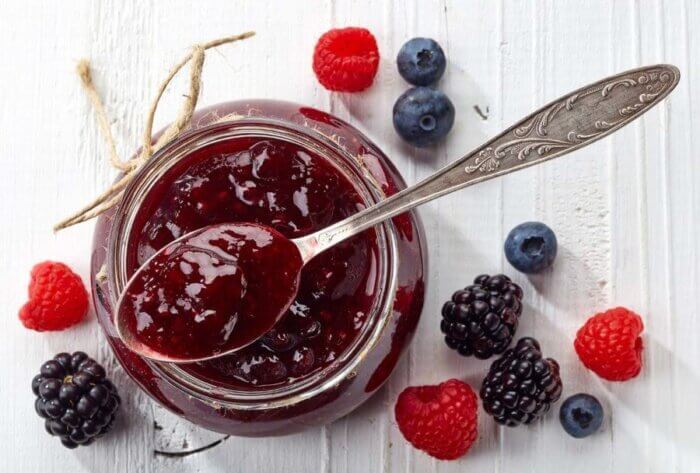
Fruit Jam Processing Ingredients
The four essential ingredients for fruit jam production are fruit pulp, pectin, sugar, and acid. Depending on the product formulation, optional ingredients such as spices, buffering agents, preservatives, and antifoaming agents may also be added.
Fruit Pulp
Fruit pulp is the main raw material for fruit jam production and determines the final product’s flavor, color, and texture. Fresh fruits with good flavor, color, and suitable maturity are selected as raw materials. A mixture of ripe and slightly under-ripe fruits is often preferred because ripe fruits provide better aroma and sweetness, while slightly under-ripe fruits contain higher natural pectin and acidity. The prepared fruits are processed through a fruit pulping machine to separate the pulp from skins, seeds, and unwanted fibers.
Pectin
Pectin is a natural hydrocolloid that provides the gel structure and characteristic texture of fruit jam. Although pectin naturally exists in many fruits, the content varies significantly among different fruit varieties. Citrus fruits, apples, and some tropical fruits generally contain higher levels of natural pectin, while fruits such as strawberries and some berry fruits contain lower levels.
To achieve consistent gel strength and product quality in industrial jam production, commercial pectin powder or liquid pectin is commonly added during the mixing process.
Sugar
Sugar plays two important roles in fruit jam production: enhancing sweetness and flavor while reducing water activity to inhibit microbial growth. The final jam soluble solids content is typically controlled at around 65–68°Brix, although some products may reach 70–72°Brix depending on formulation and market requirements.
For industrial production, refined sugar is usually dissolved with water to prepare sugar syrup. The syrup is then filtered to remove impurities and transferred into the mixing tank to ensure uniform ingredient distribution.
Acid
Acid is an important ingredient in fruit jam production because it provides the suitable pH environment required for pectin gel formation. It also balances sweetness and enhances fruit flavor.
The typical pH range for fruit jam is approximately 2.8–3.5. Fruits with naturally high acidity may require little or no additional acid adjustment, while low-acid fruits such as banana, papaya, mango, and some berry fruits usually require the addition of food acids such as citric acid, malic acid, or tartaric acid to achieve the desired pH and gel structure.

Fruit Jam Processing Plant Main Machine and Process Introduction
Fruit pretreatment system and pulp extraction machine
Fresh and high-quality fruits are selected as the raw materials for jam production. The fruits should be firm, slightly under-ripe, and have good color, aroma, and flavor to ensure the final jam has excellent taste and texture.
In the pretreatment stage, fruits are thoroughly washed with clean water to remove dirt and impurities, then peeled, pitted, or deseeded according to the fruit type. The prepared fruit is transferred to a fruit crusher and pulping machine, where the edible part is separated from the skin, seeds, and fibers. The extracted fruit pulp provides the essential base material for the following jam cooking and concentration process.

Fruit Jam preparation and blending system
For an industrial fruit jam production line, the mixing process is not simply combining all ingredients together. The sequence and method of ingredient addition directly affect pectin hydration, gel formation, viscosity, color, flavor retention, and final product stability.
1. Fruit Pulp Preparation
The processed fruit pulp or puree is transferred into the mixing/cooking tank. Depending on the fruit type and process requirements, the fruit pulp may be preheated to improve flowability, reduce viscosity, and facilitate uniform ingredient dispersion.
During this stage:
- The fruit pulp is gently agitated to maintain uniformity.
- The agitator prevents pulp settling and ensures even heat distribution.
- The fruit pulp provides the main fruit solids, natural color, flavor, and part of the natural pectin.
2. Sugar Addition and Dissolution
Sugar is gradually added into the fruit pulp under continuous agitation. Sugar increases the soluble solids content (°Brix), improves sweetness, contributes to pectin gel formation, and reduces water activity to improve product stability.
In industrial production, sugar can be added in two ways:
- Direct addition of granulated sugar into the mixing tank.
- Addition of pre-prepared sugar syrup from a sugar dissolving system.
A sugar syrup preparation system can improve sugar dissolution efficiency, mixing uniformity, and reduce the presence of undissolved sugar particles.
3. Pectin Addition and Hydration
Pectin is a key ingredient in fruit jam production because it provides the gel structure and desired texture. However, dry pectin powder requires proper dispersion because it can quickly absorb water and form lumps if added incorrectly.
Common industrial pectin addition methods include:
Sugar-Pectin Premixing
- Pectin is blended with part of the sugar before addition.
- The sugar particles help separate pectin particles and prevent lump formation.
High-Shear Dispersion
- Pectin is added through a powder induction system or high-shear mixer.
- The equipment ensures rapid dispersion and complete pectin hydration.
During pectin addition, high shear is recommended for initial dispersion, while gentle agitation is preferred after hydration to maintain the desired viscosity.
4. Acid Addition and pH Adjustment
Citric acid or other food acids are added to adjust the pH value of the jam. Proper pH control is essential because it creates suitable conditions for pectin gel formation, improves product stability, and balances sweetness with fruit flavor.
The typical pH range of fruit jam is approximately 2.8–3.5.
In many industrial processes, acid is added during the later stage of cooking or before filling because prolonged heating under acidic conditions may affect pectin stability.
5. Addition of Other Ingredients
Depending on the product formulation, additional ingredients may be added:
Corn syrup / liquid glucose
- Improves texture and mouthfeel.
- Reduces sugar crystallization.
- Enhances product smoothness.
Natural flavors
- Added near the end of the process or after concentration.
- Minimizes aroma loss caused by evaporation.
Fruit pieces or fruit dices
- Pre-treated by blanching, preheating, or pasteurization before addition.
- Added during the later stage of processing to maintain their shape and texture.
- Mixed gently without high shear to prevent damage to fruit structure.
Industrial Mixing Equipment for Fruit Jam Production
The ingredients are accurately weighed or metered according to the recipe and transferred into batch premixing tanks. For larger production lines, two mixing tanks are commonly installed, allowing one tank to prepare the recipe while the other supplies the production process for continuous operation.
A typical mixing system includes:
- Fruit pulp mixing tank with gentle agitator.
- Sugar dissolving system (optional).
- Pectin dispersion system.
- Batch premixing tanks with heating jacket and scraper agitator.
For fruit jams containing fruit pieces, a horizontal mixing tank equipped with a paddle agitator or scraped-surface agitator is recommended. This design provides gentle and uniform mixing while preventing fruit pieces from settling at the bottom.

Fruit jam vacuum evaporator
The vacuum concentration process is an important step in fruit jam processing plant. It removes excess water from the fruit mixture to achieve the required soluble solids content (°Brix), texture, and shelf stability while minimizing the loss of natural fruit color, flavor, and nutrients.
There are two common types of vacuum concentration equipment used for fruit jam production:
Forced Circulation Evaporator
A forced circulation evaporator can be applied for medium and large-scale fruit jam processing plant, especially for smooth jam products made from fruit pulp or puree without large fruit pieces. It is suitable for continuous production where high evaporation efficiency, short heating time, and accurate concentration control are required.
During operation, the fruit jam mixture is circulated through the heating system by a pump and indirectly heated by steam through a heat exchanger. Under vacuum conditions, water evaporates at a relatively low temperature, typically around 60–65°C, which helps minimize thermal damage and preserve the natural fruit color, flavor, and nutrients.
Due to its high heat transfer efficiency and strong circulation capability, the forced circulation evaporator is suitable for high-viscosity fruit products and large production capacities. The system can accurately control key processing parameters, including product temperature, vacuum level, evaporation rate, and final soluble solids content (°Brix), ensuring consistent product quality.
However, for fruit jams containing large fruit pieces or dices, a forced circulation evaporator is generally not recommended because continuous pumping and circulation may damage the fruit structure. In this case, a vacuum cooking kettle with gentle agitation is preferred.
Vacuum Cooking Kettle
A vacuum cooking kettle is commonly used for small and medium-scale batch fruit jam production and products containing fruit pieces. After ingredient mixing, the fruit mixture is transferred into the vacuum cooking vessel, where steam heating through the jacket provides indirect heating.
The kettle is equipped with a low-speed scraper agitator, which continuously mixes the product, improves heat transfer, reduces product sticking on the heating surface, and prevents localized overheating when processing high-viscosity jam mixtures.
Under vacuum conditions, water evaporates rapidly at a lower temperature, typically around 60–65°C, helping preserve the natural fruit aroma and color. The generated vapor passes through a vapor separator or cyclone separator to remove entrained product droplets, while recovered product is returned to the cooking vessel.
For fruit jams containing fruit dices or pieces, the gentle agitation of the vacuum cooking kettle helps maintain the integrity and appearance of the fruit pieces, ensuring a high-quality final product.

Fruit jam pasteurization machine
After concentration to the required soluble solids content (°Brix), the hot fruit jam is transferred by a pump to a scraped-surface heat exchanger or tubular heat exchanger for pasteurization. This step reduces spoilage microorganisms and improves product safety before filling.
Due to the high viscosity of fruit jam, scraped-surface heat exchangers are often preferred because the scraping mechanism improves heat transfer, prevents product sticking on the heating surface, and ensures uniform temperature distribution. The pasteurization process is typically carried out at 85–95°C, depending on the product formulation, pH value, and packaging requirements.
Alternatively, fruit jam pasteurization can be performed after filling. Filled containers such as glass jars, cans, or pouches can pass through a spray tunnel pasteurizer or water bath pasteurizer, where the product is heated to approximately 85–95°C and held for a suitable time (commonly around 15–20 minutes, depending on container size and process validation). After pasteurization, the containers are gradually cooled to room temperature before labeling and packing.
For high-acid fruit jams, the combination of proper pH control, high soluble solids content, hygienic filling, and pasteurization provides excellent product stability and extended shelf life.

Fruit jam filling machine
Before filling, cans, glass jars, or other containers should be properly cleaned and sanitized to ensure hygienic packaging conditions. The concentrated fruit jam is then hot-filled into the containers, typically at around 85–95°C, depending on the product formulation, pH value, and packaging requirements.
Maintaining the correct filling temperature is important for product safety, filling performance, and vacuum formation. If the filling temperature is too low, the jam viscosity increases, which may affect filling accuracy and reduce the effectiveness of air removal. Excessively high filling temperatures may accelerate flavor loss, color changes, or quality deterioration.
The containers should be filled with a controlled headspace, leaving sufficient space above the product to allow vacuum formation during cooling. The vacuum created after cooling helps maintain package integrity, reduces oxygen exposure, and improves shelf stability. After filling, the containers should remain in an upright position during cooling until the jam structure and gel texture are fully developed.
Fruit Jam Processing Plant Technological Flowchart