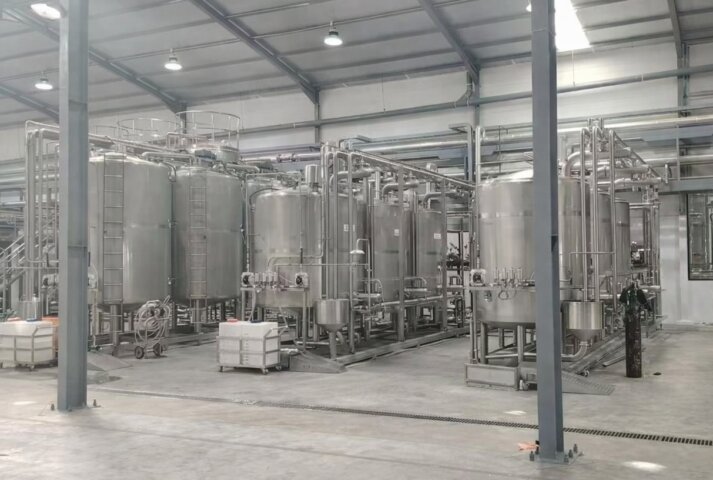
Sports Drinks Production Line Description
- Sports drinks are a kind of beverage that emerged in the 1960s. Sports drinks are designed to supplement the body’s vitamins, water and inorganic salts when people sweat a lot during exercise. In the process of sweating, a large amount of water, vitamins and inorganic salts in the body will be lost. Therefore, timely supplementation of these substances can quickly help people recover their physical strength, enhance endurance, and replenish water and energy.
- Sports drinks need to have the characteristics of fast absorption. After high-intensity exercise, athletes hope that after drinking the drinks, they can quickly take effect and absorption. Therefore, the concentration of inorganic salts in sports drinks should be close to that of human body fluids, with a concentration of about 0.9%. In this way, athletes after drinking, it can quickly balance the osmotic pressure of the body’s water, salt and alkali.
- The main ingredients of sports drinks are water, glucose, sucrose, citrate, vitamins, taurine, acid sodium phosphate, anhydrous magnesium sulfate, potassium chloride, sodium chloride, potassium chloride, caffeine, flavors and fragrances, and pigments etc.
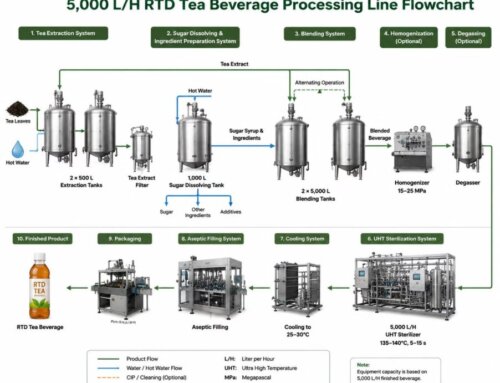
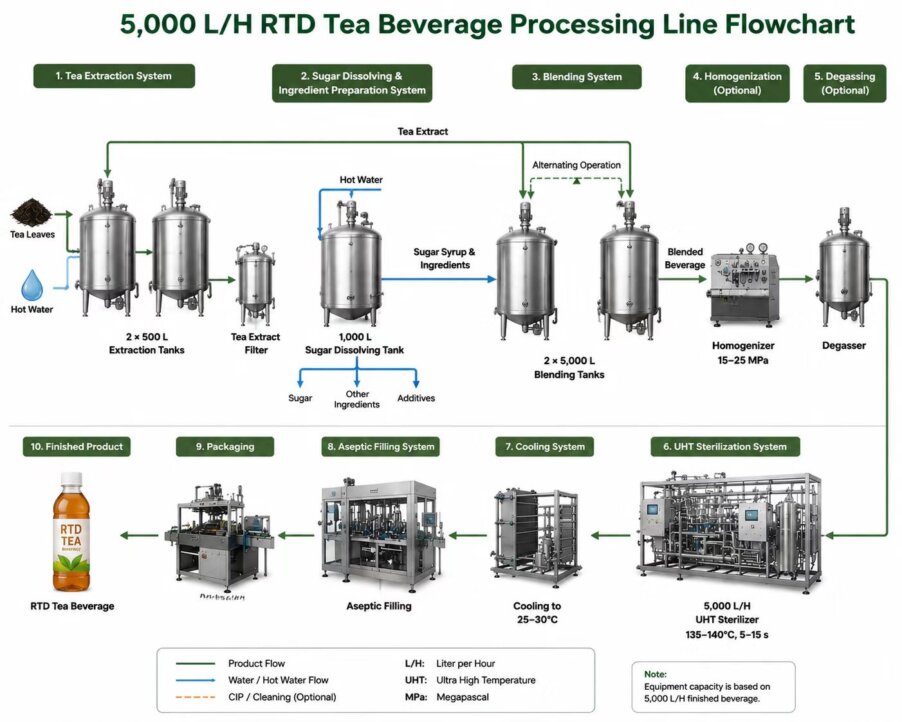
- The sports drinks processing line mainly includes RO water generating system, hot water treatment system, water powder dissolving system, blending and formulation system, homogenizing, degassing and sterilizing system, bottling or canning system, packing system and CIP system.
- The capacity for the sports drinks production line is from 500LPH to 10000LPH, and the drinks can be filled into PET bottles, glass bottles or metal cans.
- The sports drinks machine is made of food-grade SUS304 material, the production efficiency is high and fully automatic and energy saving.
- We offer sports drinks, nutrient drinks and energy drinks processing solutions with high flexibility and fully customized.

Sports Drinks Production Line Recipe Reference
High energy drinks recipe reference:
| Ingredients | Percentage |
|---|---|
| Ginseng Extract | 8% |
| Fructose Syrup | 8% |
| Stevia | 0.01% |
| Vitamin B1 | 0.0014% |
| Vitamin B2 | 0.006% |
| Vitamin C | 0.12% |
| Citric Acid | 0.1% |
| Potassium Citrate | 0.01% |
| Ferric Citrate | 0.015% |
| Sodium Chloride | 0.06% |
| Water | 83.6% |
Quick Thirst Quencher Drinks Recipe:
| Ingredients | Percentage |
|---|---|
| Glucose | 4% |
| Phytic Acid | 0.2% |
| Citric Acid | 0.18% |
| Potassium Hydroxide | 0.07% |
| Sorbitol | 0.28% |
| Sodium Chloride | 0.1% |
| L-Arginine | 0.01% |
| Vitamin C | 0.02% |
| Taurine | 0.01% |
| caffeine | 0.001% |
| Water | 95.13% |
Electrolyte Drinks Recipe:
| Ingredients | Percentage |
|---|---|
| White Sugar | 2% |
| Glucose | 2% |
| Citric Acid | 0.97% |
| Sodium Citrate | 0.24% |
| Sucralose | 0.065% |
| Essence | 0.14% |
| Sodium Chloride | 0.29% |
| Potassium Chloride | 0.087% |
| Potassium Dihydrogen Phosphate | 0.36% |
| Vitamin C | 0.0042% |
| Water | 93.84% |
Sports Drink Production Line Key Process Introduction
Water Treatment System
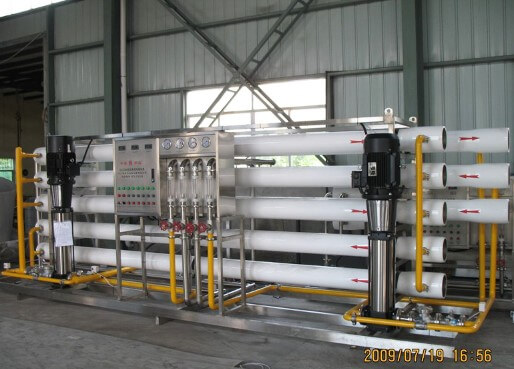
Water is the main ingredient in most sports drinks, so its quality directly affects the final product’s taste, stability, and safety.
An industrial water treatment system may include multimedia filtration, activated carbon filtration, water softening, and reverse osmosis, depending on the quality of the incoming water and the beverage manufacturer’s requirements.
The treated water should meet the applicable drinking-water and beverage production standards. Its mineral content and other characteristics must also be considered when formulating the beverage, particularly when precise electrolyte concentrations are required.
Water powder dissolving system
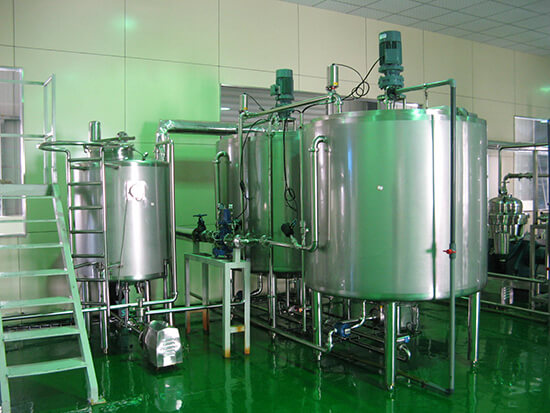
According to the product formulation, the required quantities of water, sugar, inorganic salts, and other soluble ingredients are added to the dissolving tank and mixed to prepare the syrup. Hot water at approximately 80°C can be used to accelerate dissolution and improve processing efficiency.
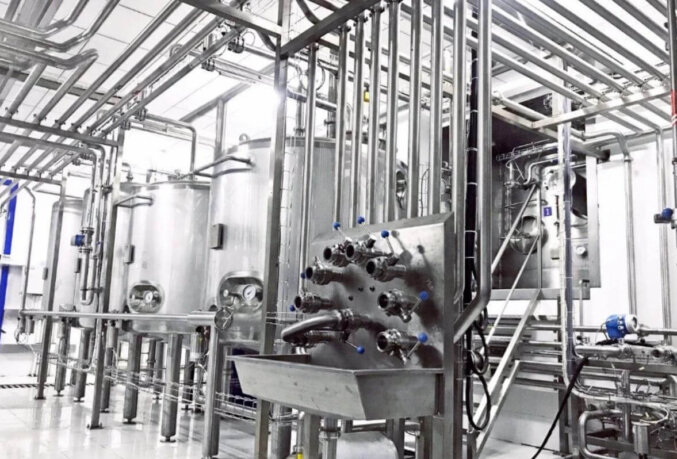
The dissolving tank can be equipped with a steam-heated jacket or connected to a hot water supply system to maintain the required processing temperature. After dissolution, the syrup passes through a double filtration system to remove undissolved particles and other impurities, achieving the required clarity and consistency.
The filtered syrup is then transferred to a SUS304 stainless steel storage tank for temporary storage before being pumped into the beverage blending system. For formulations requiring concentrated sugar syrup, a target concentration of approximately 65° Brix can be used, subject to the product formulation and the solubility of the ingredients.

Ingredients formulation and blending system
The beverage blending system combines treated water, sugar syrup, electrolytes, acids, flavors, and other ingredients in the required proportions.
A typical blending process involves the following steps:
- Pump the measured quantity of treated water into the blending tank.
- Add the prepared sugar syrup and dissolve any remaining ingredients as required.
- Introduce electrolytes, acidulants, flavors, and colorants according to the formulation.
- Mix thoroughly until the ingredients are uniformly distributed.
- Check the relevant product parameters, such as pH, Brix, and electrolyte concentration.
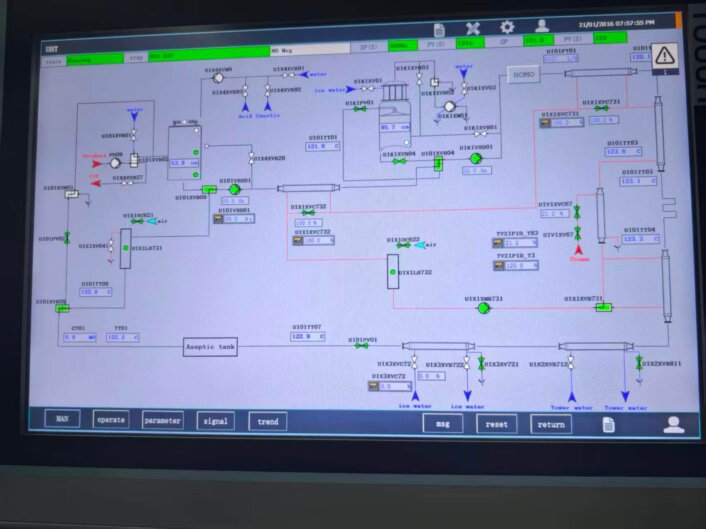
For large-scale sports drink production, automated batching and PLC control can improve dosing accuracy, repeatability, and production efficiency.
Sports drinks sterilizer/pasteurizer
Thermal processing is an essential step in sports drink production, helping control microorganisms and achieve the required product safety and shelf life. Depending on the beverage formulation and packaging method, the production line can be equipped with a plate heat exchanger, tubular heat exchanger, or other suitable thermal processing equipment.
Before thermal treatment, the beverage can be preheated to approximately 60°C for homogenization, if required by the formulation. The product then enters the thermal processing system, where one of the following treatments may be selected according to the product’s pH, ingredients, and target shelf life:
- High-temperature short-time (HTST) treatment: The beverage is heated to approximately 115°C for 5-15 seconds when this process is appropriate for the product and has been validated.
- Pasteurization: The beverage is heated to approximately 95°C and held for 30–60 seconds, subject to product-specific validation.
After thermal treatment, the beverage can be cooled or maintained at approximately 80–85°C for hot filling, provided that the selected process and packaging system are designed for these conditions.
The appropriate processing temperature, holding time, and filling method depend on the beverage’s pH, formulation, microbial requirements, packaging material, and intended storage conditions. For hot-fill production, the thermal process must be compatible with the container and filling equipment. For aseptic production, the product must be cooled to the required filling temperature and transferred through a system that maintains aseptic conditions.
The complete thermal processing and filling system should be validated to ensure the required microbiological safety and shelf life of the finished sports drink.

Sports drink filling and packing machine
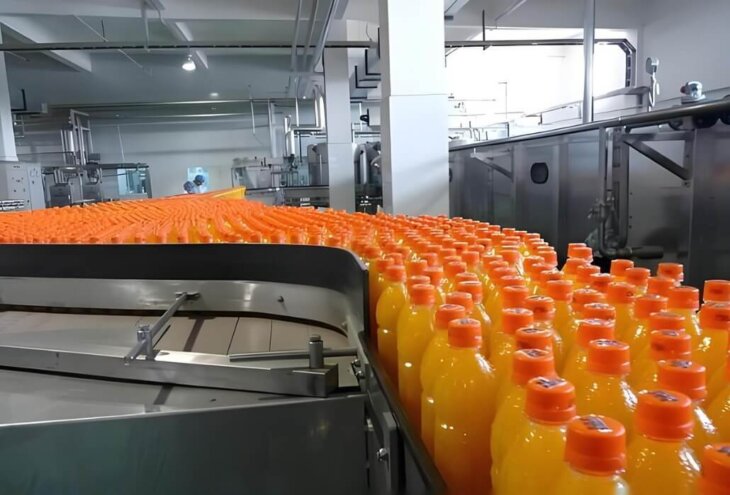
Sports drinks are commonly packaged in PET bottles or aluminum cans. PET bottles may feature wider neck openings or specialized sports caps designed for convenient drinking and quick hydration during physical activity. The bottle neck diameter and cap design should be selected according to the product requirements and the filling equipment configuration.
The filling method depends on the beverage formulation, heat sensitivity, carbonation level, packaging material, and required shelf life.
- Ultra-clean filling: For selected non-carbonated sports drinks containing heat-sensitive vitamins or other functional ingredients, ultra-clean filling at a moderate temperature, such as approximately 65°C, may help reduce thermal exposure. However, the appropriate filling temperature depends on the validated thermal process, product formulation, and packaging system.
- Hot filling: Hot filling at approximately 85°C may be suitable for certain non-carbonated, acidified sports drinks when the product and packaging system are designed for this process. The required filling temperature and holding conditions must be determined through process validation.
- Cold filling for carbonated sports drinks: Sports drinks containing carbon dioxide are generally filled at low temperatures, typically around 3–5°C, to help retain carbonation and reduce foaming during filling. The filling system must be designed for carbonated beverages and compatible with the selected bottle or can.