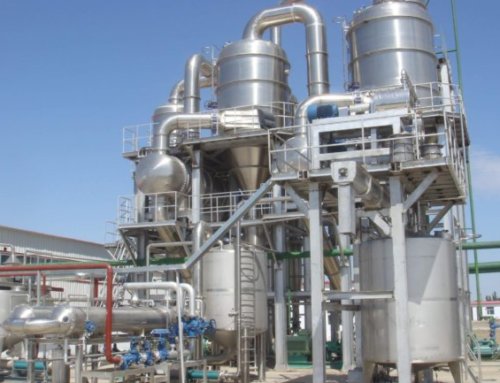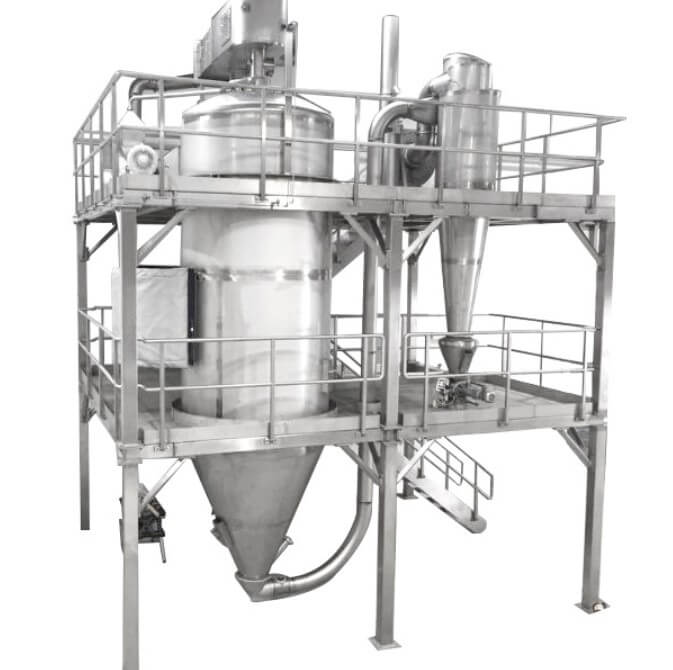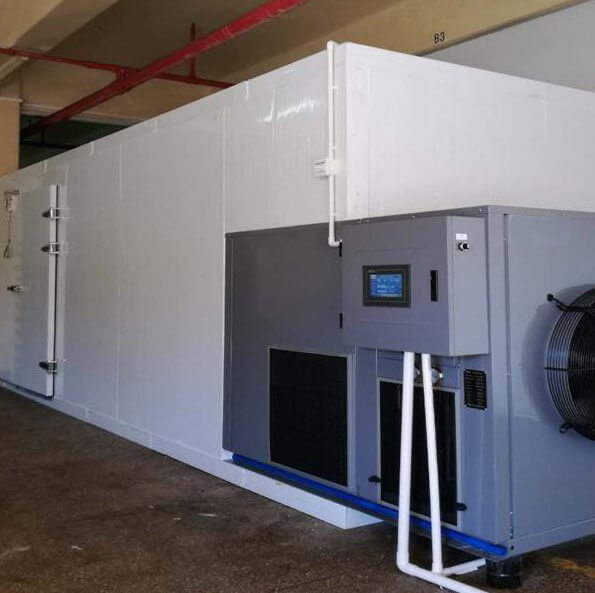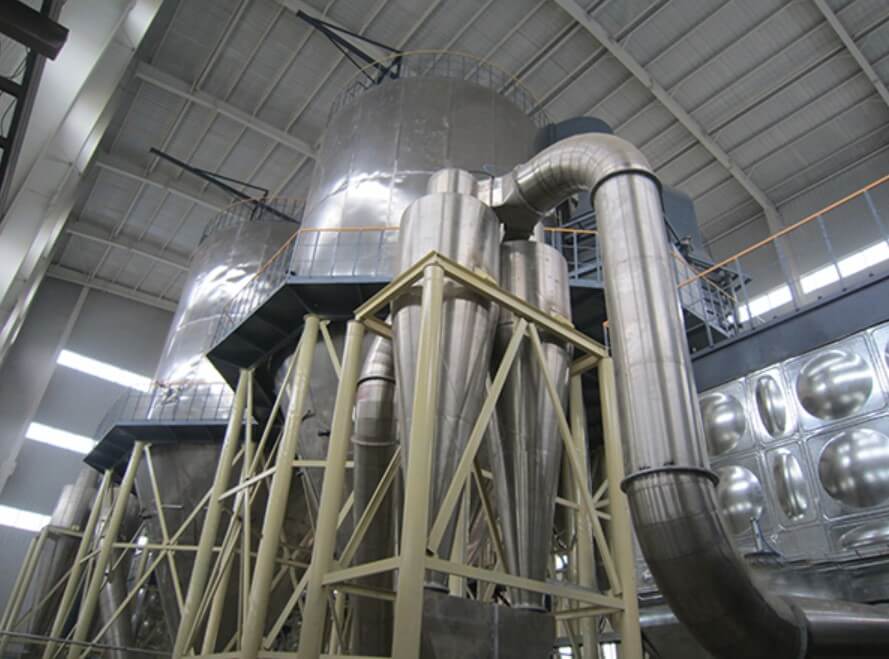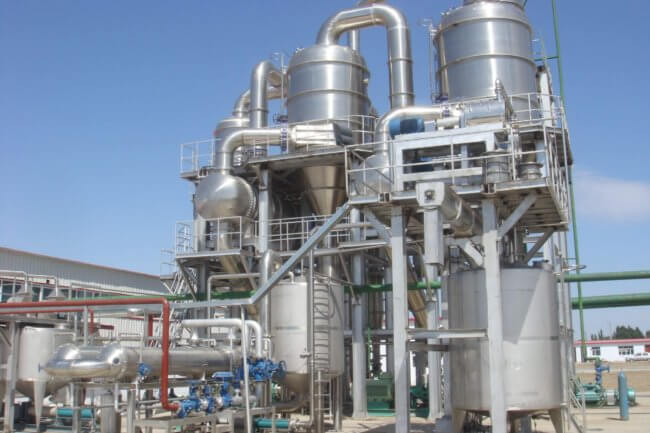
Falling Film Type Evaporator
Equipment Application Field:
The falling film evaporator is a key process equipment widely used in liquid food and beverage processing plants. It is mainly applied for the concentration of heat-sensitive liquid products by removing water under vacuum conditions.
Due to its high heat transfer efficiency, short product residence time, low evaporation temperature, and gentle processing characteristics, the falling film evaporator is widely used in the following industries:
Fruit and vegetable juice processing field: It is suitable for making low viscosity heat-sensitive concentrated fruit juice like apple, orange, pineapple, pomegranate juice, coconut water, grape juice, guava and passion fruit juice, etc.
Milk and dairy field: Used for the concentration of milk and the production of condensed milk. These evaporators allow for the removal of water from milk, leading to increased solids content and the creation of condensed milk.
Sugar syrup production: used in the production of sugar syrups from sugar beet or sugar cane juice. The evaporators help concentrate the sugar solution by removing water, resulting in a thicker syrup that can be used in various food and beverage applications.
Other liquid food and beverage processing fields: It can be also used for coffee extract, tea extract, plant extract, glucose, starch, xylose concentrating and evaporating.
Machine Structure:
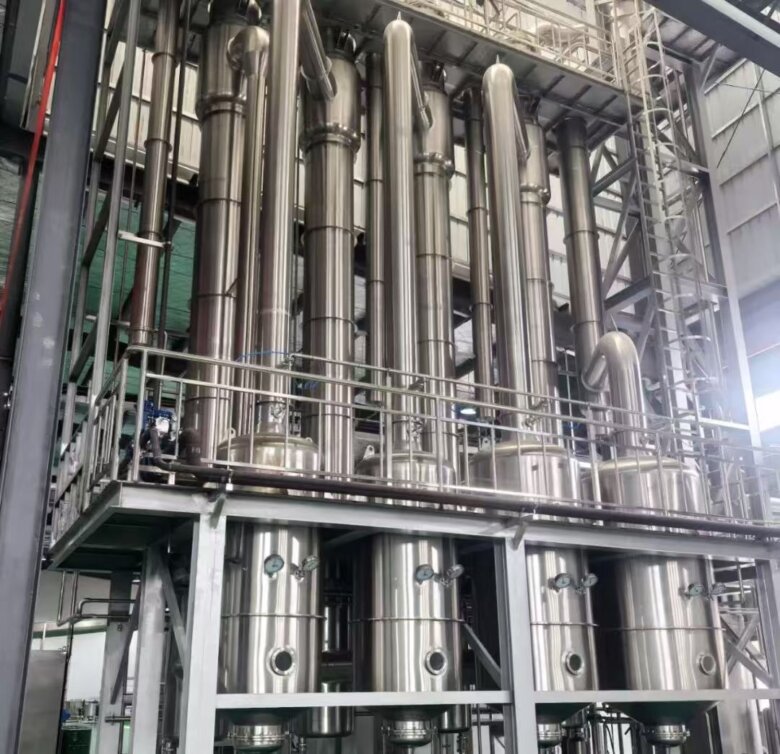
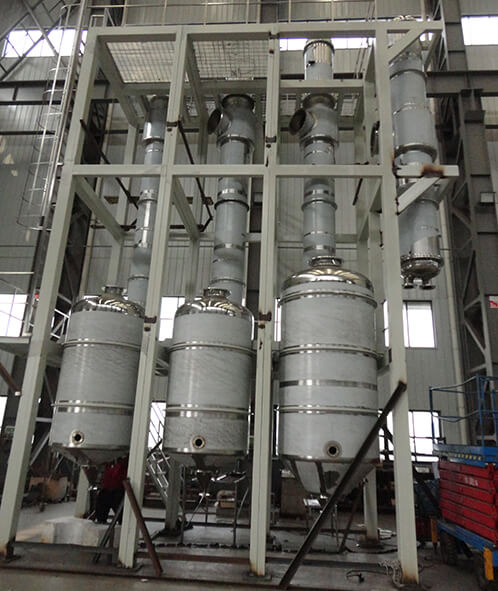
A falling film evaporator is mainly composed of a heating chamber, evaporation chamber, condenser, and vacuum system. The system operates under vacuum conditions, allowing the product to evaporate at a lower temperature. The product flows downward as a thin film along the heating surface, achieving efficient heat transfer, rapid evaporation, and gentle concentration of heat-sensitive products.
1. Heating Chamber
The heating chamber is the main heat transfer section of the falling film evaporator, where the product is heated and concentrated.
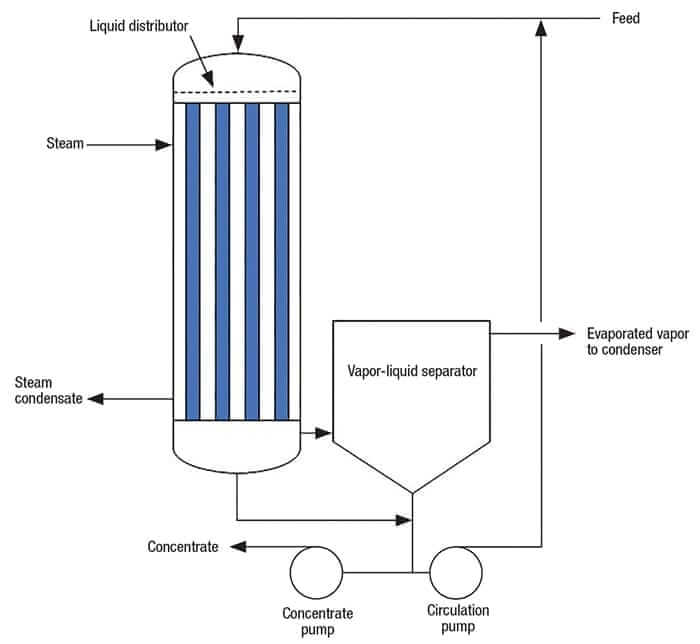
It usually consists of a vertical shell-and-tube heat exchanger with multiple heating tubes. During operation, heating steam flows on the shell side and transfers heat indirectly through the tube wall to the product flowing inside the tubes.
The fruit and vegetable juice enters the top of the heating chamber and is evenly distributed into each heating tube. Under the influence of gravity, the product flows downward along the inner wall of the tubes, forming a thin liquid film. The heat transferred from the steam causes the water in the product to evaporate continuously, increasing the soluble solids concentration until the required concentration is achieved.
The thin film evaporation design provides:
- High heat transfer efficiency
- Short product residence time
- Reduced thermal damage
- Better retention of product color, flavor, and nutrients
2. Evaporation Chamber
During the heating process, water in the fruit and vegetable juice evaporates and generates secondary vapor. The vapor-liquid mixture leaving the heating chamber contains concentrated product droplets and secondary steam.
The evaporation chamber provides sufficient space for efficient vapor-liquid separation. Through the reduction of flow velocity, gravity separation, and centrifugal separation (depending on the design), the concentrated product is separated from the secondary vapor.
The concentrated juice is discharged from the bottom of the evaporation chamber, while the secondary vapor flows to the condenser or is reused as heating steam in the next evaporation effect.
3. Condenser
The condenser is an important component for maintaining the vacuum operation of the falling film evaporator.
During the evaporation process, the secondary vapor generated from the product enters the condenser and is cooled by circulating cooling water. The vapor condenses into liquid, significantly reducing its volume and helping maintain the negative pressure inside the evaporation system.
The condenser works together with the vacuum system to provide stable vacuum conditions, which allows the product to boil at a lower temperature and reduces thermal degradation.
Benefits of vacuum evaporation include:
- Lower boiling temperature
- Improved product quality
- Reduced energy consumption
- Protection of heat-sensitive ingredients
4. Vacuum System
The vacuum system is used to maintain the required negative pressure inside the evaporator and ensure stable evaporation performance.
Common vacuum equipment includes:
- Water ring vacuum pumps
- Dry vacuum pumps
- Steam ejectors (depending on the system design)
The vacuum system removes non-condensable gases, including air entering the system and gases released from the product during evaporation. Maintaining a stable vacuum improves the evaporation efficiency and heat transfer performance of the equipment.
The vacuum system helps to:
- Reduce product boiling temperature
- Increase evaporation capacity
- Improve heat transfer efficiency
- Minimize product oxidation and quality loss
Working principle:
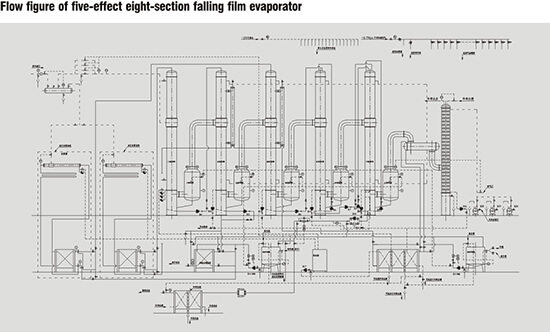
The raw fruit juice is feeding on the top of the evaporator and evenly distributed through the distributor to the inner wall of the heating tube. Under the gravity, it forms film shape and falls down along with the tube wall. During the descent, it is heated by the heating tube and continuously evaporates, the concentrated juice and steam generated during evaporating processing enter the gas-liquid separation chamber from the bottom of the heating chamber, and they will be separated into secondary steam and concentrated juice. Secondary steam is discharged from the top and the concentrated juice is discharged from the bottom.
Advantages of Falling Film Evaporator:
1. Short Residence Time and Better Product Quality
In a falling film evaporator, the product flows downward as a thin film along the heating surface inside the tubes or plates. The product passes through the heating section quickly, resulting in a very short heating time.
This gentle evaporation process minimizes thermal degradation and helps preserve:
- Natural color
- Flavor compounds
- Vitamins and nutrients
It is especially suitable for heat-sensitive products such as fruit juice, vegetable juice, dairy products, and plant-based beverages.
2. Hygienic Design and High-Quality Materials
All product-contact parts of the falling film evaporator are manufactured from high-quality stainless steel, normally SUS304 or SUS316L, depending on product requirements.
The equipment is designed according to food processing hygiene standards, with smooth surfaces and sanitary connections to prevent contamination and facilitate cleaning.
The system is fully compatible with Clean-in-Place (CIP) operation, including automatic cleaning sequences.
3. Single Effect, Multi-Effect and Customized Designs
According to production capacity, energy consumption requirements, and product characteristics, the falling film evaporator can be designed as:
- Single-effect evaporator
- Double-effect evaporator
- Triple-effect evaporator
- Multi-effect evaporator
Multi-effect designs reuse secondary vapor as the heating source for the next effect, significantly reducing steam consumption.
4. High Continuous Operation Efficiency
The falling film evaporator is designed for continuous operation, providing:
- Stable production performance
- High equipment utilization rate
- Consistent product concentration
Automatic feeding, evaporation, concentration, and discharge processes reduce manual operation requirements and improve production efficiency.
5. High Heat Transfer Efficiency
Because the product forms a thin film on the heating surface, the falling film evaporator provides:
- Large heat transfer area
- High heat transfer coefficient
- Efficient evaporation performance
The small temperature difference between heating steam and product evaporation temperature reduces the risk of product fouling and burning.
6. Low Energy Consumption
The falling film evaporator achieves low energy consumption through:
- Multi-effect evaporation technology
- Secondary vapor reuse
- Optional TVR/MVR vapor recompression systems
In multi-effect operation, the secondary vapor generated from one evaporation stage is reused as heating steam for the next stage, greatly reducing fresh steam consumption.
7. Low Cooling Water Consumption
Due to efficient vapor utilization and optimized condensation design, the falling film evaporator requires less cooling water compared with traditional evaporation systems.
8. Suitable for Various Food and Beverage Applications
The falling film evaporator is widely used for concentrating:
- Fruit juice concentrate
- Vegetable juice concentrate
- Tomato products
- Coconut water concentrate
- Milk and whey
- Plant-based beverages
- Sugar syrup
It is suitable for low to medium viscosity products and can handle products with relatively high solid content when properly designed.
9. Fully Automatic Control System
The falling film evaporator can be equipped with an advanced automatic control system, including:
- Automatic feed flow control
- Automatic preheating temperature control
- Automatic evaporation temperature control
- Automatic vacuum control
- Automatic concentrated product level control
- Automatic Brix/concentration control
- Automatic condensate level control
- Automatic CIP cleaning control
The automation system ensures stable operation and consistent product quality.
10. International Brand Components
According to customer requirements, the control system can use internationally recognized brands, such as:
- PLC and HMI: Siemens
- Steam control valves: Spirax Sarco
- Frequency converters: Danfoss
- Low-voltage electrical components: Schneider
- Solenoid valves: Koganei
The specific configuration can be customized according to project requirements.
11. Aroma Recovery System for Juice Concentration
For fruit juice concentration projects such as apple juice concentrate and orange juice concentrate production lines, an aroma recovery system can be integrated.
The system collects and recovers volatile aroma compounds during evaporation, improving the flavor quality of the final concentrated juice.
12. Multi-Effect Steam Saving Technology
Evaporation requires a large amount of energy to remove water from liquid products. The falling film evaporator uses multi-effect technology to maximize steam utilization.
In a multi-effect evaporator:
- The first effect uses fresh steam as the heating source.
- The secondary vapor generated is reused as heating steam for the next effect.
- Each additional effect increases energy efficiency.
This technology significantly reduces steam consumption and operating costs.
13. Tubular and Plate-Type Falling Film Evaporator Options
According to different heat exchanger designs, falling film evaporators can be divided into:
—Tubular Falling Film Evaporator
The most common design for industrial juice and beverage concentration. The product flows as a thin film inside vertical heating tubes.
—Plate Falling Film Evaporator
Uses plate heat exchange surfaces and provides excellent heat transfer efficiency with short residence time. It can be advantageous for certain heat-sensitive products, especially dairy applications.
The suitable design depends on:
- Product characteristics
- Viscosity
- Solid content
- Required concentration
- Production capacity
14. Wide Capacity Range and Low Temperature Operation
The evaporation capacity of falling film evaporators can be customized from approximately 1,000 L/h to 65,000 L/h depending on the product characteristics and system design; the evaporation temperature can typically operate between 40 °C and 90°C under vacuum conditions.
Technical Parameter:
| Model | Single effect | Double effect | Triple effect | Forth effect | Fifth effect | ||||
|---|---|---|---|---|---|---|---|---|---|
| Evaporating temperature | 45-90 ℃ | ||||||||
| Steam consumption | Depend on the capacity and evaporating temperature of the material | ||||||||
| Steam pressure | 0.5-0.8MPA | ||||||||
| Material discharge brix | Depend on the material character | ||||||||
| Material Feeding brix | Depend on the material character | ||||||||
| Capacity(LPH) | 300-2000LPH | 1200-4000LPH | 500-15000LPH | 5000-50000LPH | 10000-65000LPH | ||||