UHT Milk Processing Line
UHT Milk Processing Line Description
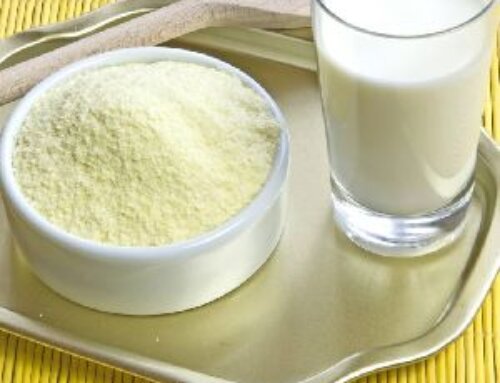
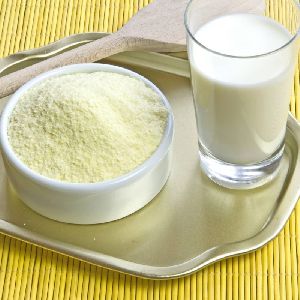
UHT milk is a dairy product with a long shelf life that can be directly consumed. This dairy product not only improves the color and taste, but also improves the original nutritional value. Sterilized milk, also known as long-lasting fresh milk, refers to products that use fresh milk as raw material, then after being purified, pre-pasteurized, standardized, homogenized, UHT sterilized and aseptically packed into containers.
UHT milk does not need to be refrigerated and can be stored at room temperature. Depending on the packaging container, the shelf life generally ranges from 3 months to 12 months.
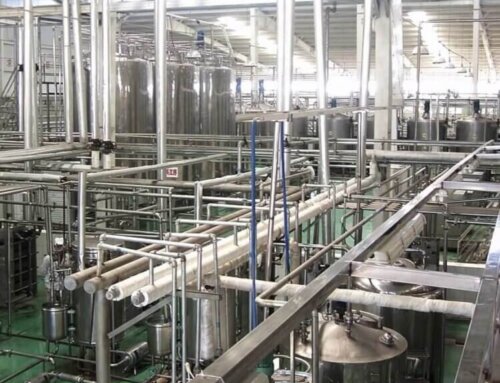
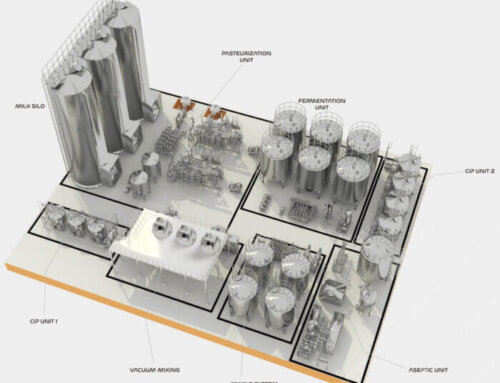
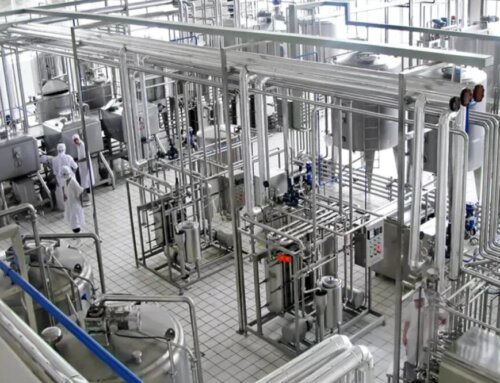
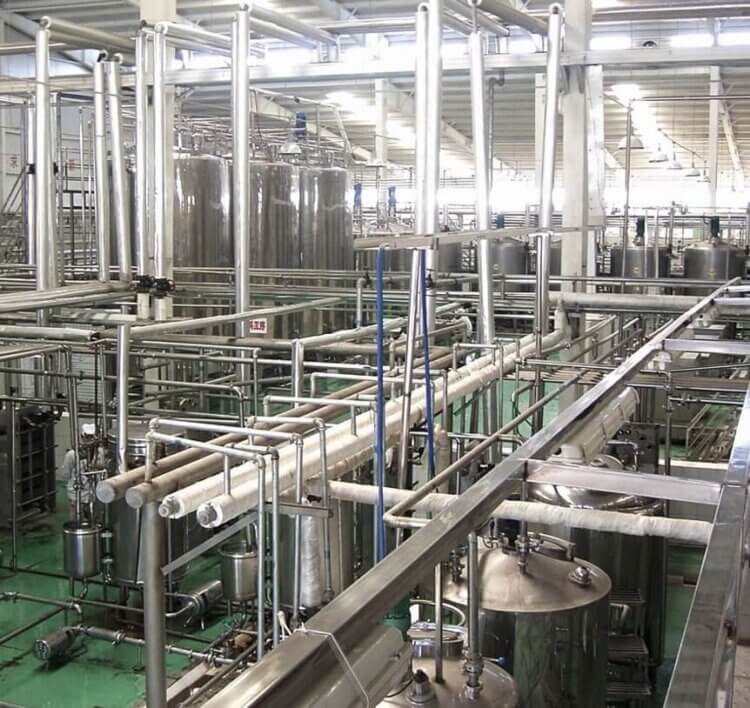
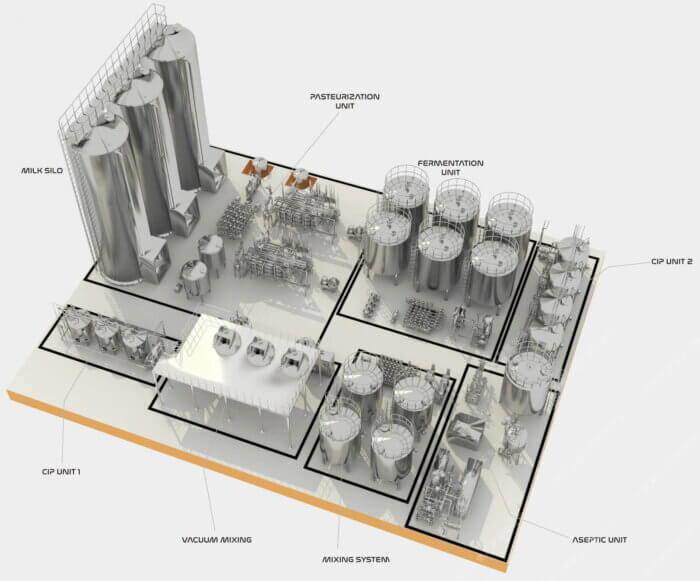
The UHT milk processing equipment includes raw milk receiving and cooling system, raw milk standardization and prepasteurization system, milk UHT sterilizing system, UHT milk aseptic storage and filling system. The auxiliary equipment, like the CIP system, chill water generating system, boiler, and RO soft water treatment system, is needed for the whole production line. All the machines are made of SUS304/316L material.
The capacity of the production line can be designed from 1 ton/hour to 50 tons/hour according to the different requirements of customers. 200g—2500g aseptic cartons, aseptic pouches or PE bottles can be packed according to the client’s different requirements.
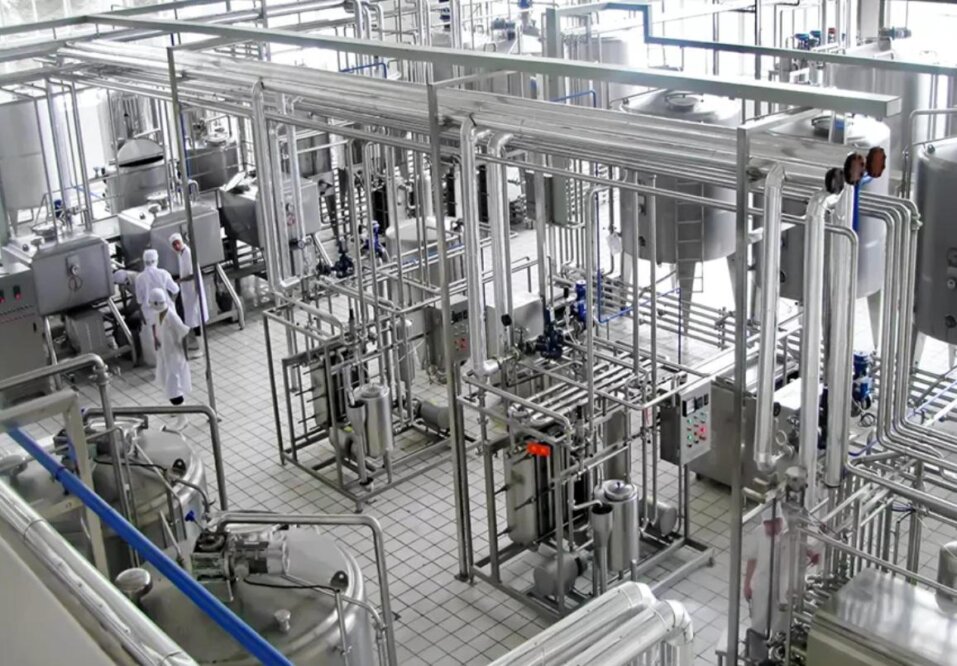
Due to the strict hygiene requirements of UHT milk processing, the whole system are fully automatic and controlled by PLC and automatic pneumatic valves to avoid the risk of secondary pollution. The whole system keeps milk processed in a closed environment to ensure the commercial aseptic state of the final product.
The UHT (Ultra High Temperature) milk production process typically involves raw milk reception, milk separation, pasteurization and standardizing, homogenization, degassing, sterilizing at 135-150°C for 2-4 seconds, cooling, aseptic filling, and packaging.
The End Products Of UHT Milk Processing Line
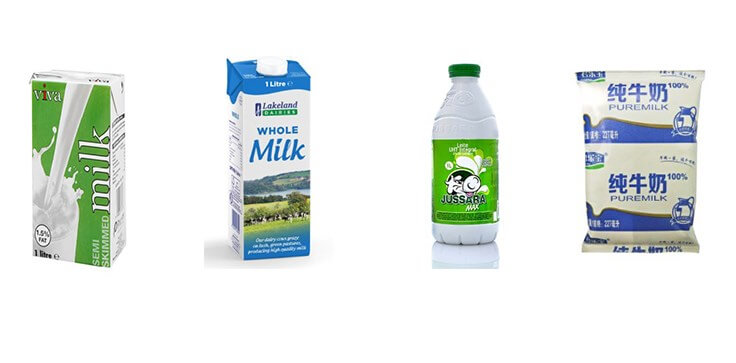
UHT milk in bottles: The secondary sterilized milk usually will be filled into PE material bottles, and the shelf life is 6 months at normal temperature.
UHT milk in aseptic cartons: The most popular package for UHT milk is aseptic cartons, the aseptic cartons include diamond pack cartons, SIG Combibloc pack cartons, and Tetra Pak aseptic brick cartons. These cartons are composed of 3-7 layers of paper, PE, and aluminum foil composite material, which has very good light resistance and airtightness and extends milk shelf life to 6-9 months stored with 20-25℃.
UHT milk in aseptic pouches: It mainly refers to Tetra Pak aseptic pillow pouches and PrePack pouches. The shelf life of UHT milk in these aseptic pouches can also reach 45-60 days.
Technological Flowchart Of UHT Milk Processing Line
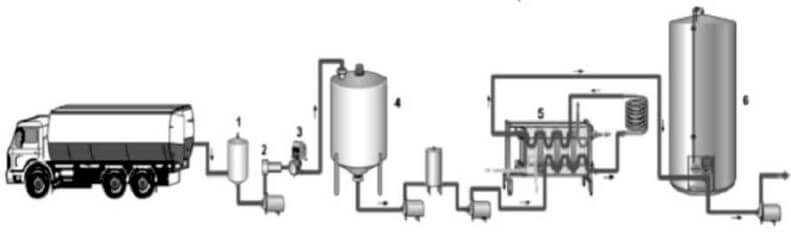
The raw milk undergoes acceptance, preliminary purification(if you want to make skimmed UHT milk, you can add one centrifuge separator to remove the fat in milk after purification),pre-pasteurization, and then cools to about 4℃, and stores it in a milk insulation tank. After standardization, homogenization, UHT sterilization and degassing, the end UHT milk will be filled into an aseptic carton or pouch packaging.

Classification Of UHT Milk Processing Line
According to the sterilization method
Secondary sterilization milk: the milk is pasteurized in advance, then filled into the container, and then sterilized by pressure in a retort sterilizer at 110-120°C for 10-20 minutes. This kind of sterilized milk is generally filled into plastic bottles or glass bottles. The product shelf life generally reaches 6 months.
Ultra-high temperature sterilized milk (UHT milk): raw cow (goat) milk is used as raw material, with or without reconstituted milk. In the state of continuous flow, it is generally sterilized at 135-150℃, holding for 0.5-4S. By increasing the sterilization temperature and significantly shortening the holding time, it effectively eliminates harmful microorganisms while preserving nutritional value and sensory quality. After sterilization, the milk is filled under sterile conditions into aseptic cartons or aseptic pouches, allowing for an extended shelf life at ambient temperature without the need for refrigeration.
According to protein content:
UHT Sterilized pure milk (P≥2.9%): raw cow and goat milk or reconstituted milk as raw materials, skimmed or non-skimmed, ultra-high temperature instantaneous sterilization, and aseptic filled into cartons or pouches.
UHT Sterilized flavored milk: (P≥2.3%): The protein content needs to be greater than or equal to 2.3%, and ingredients like fruit juice can be added to such dairy products.
According to fat content:
Whole UHT Milk(fat≥3.1%): It means full-fat UHT milk, the fresh milk fat will not be separated by the disc separator and after receiving, the milk will be UHT sterilized and filled into containers.
Skimmed UHT Milk(fat≤0.2%): The fresh milk will go through a disk centrifuge separator to separate the fat in the milk. It can be divided into low-fat milk or fat-free skimmed milk products.
Key Machine Of UHT Milk Processing Line
Raw milk receiving system
The raw milk receiving system is the initial stage of a dairy processing line, designed to receive, inspect, store, and transfer raw milk from delivery tankers or storage silos into the processing facility under hygienic and temperature-controlled conditions, it usually includes the following equipment:
-
Milk Unloading Station: Includes flexible hoses, couplings, and pumps to unload milk from tankers.
-
Weighing/Measuring System: Weighbridge or flowmeter to accurately measure the incoming milk quantity.
-
Milk Filter: Removes physical impurities (e.g., dirt, straw) before storage by the sieve screen.
-
Cooling Unit (if required): Cool the milk to 4–6 °C if it arrives at a higher temperature with a plate cooler.
-
Storage Tanks (Silos): Insulated and temperature-controlled to maintain milk freshness.
Purification of raw milk
The purpose of raw milk purification is to remove mechanical impurities in the milk and reduce the number of microorganisms. Filter purification or centrifugal purification can be used. Simple primary filtration is performed by installing a filter screen on the milk receiving tank and spreading multiple layers of gauze. The filter cloth should be cleaned and sterilized frequently. The use of a centrifugal milk purifier can significantly improve the purification effect and help improve the quality of the product. The centrifugal milk purifier can also remove breast somatic cells and certain microorganisms in the milk. The milk purifier is placed after filtering and before cooling.

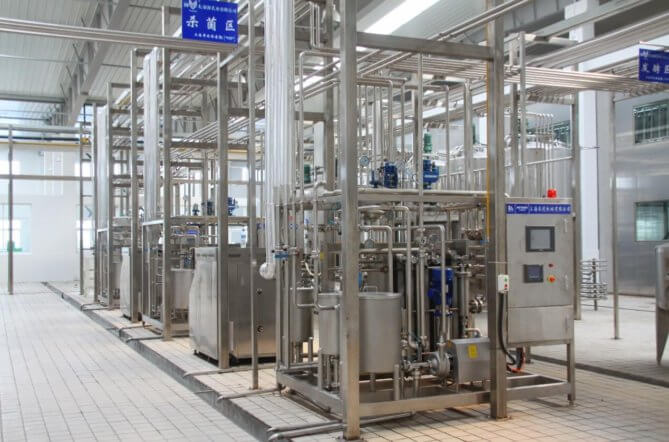
Raw milk pre-pasteurization machine
The pre-pasteurization process of the UHT milk processing line consists of feeding raw milk at approximately 5°C, heating it to 55°C for fat separation, further heating it to 72–85°C with a 15-second holding time for pasteurization, and then cooling it down to 4°C before storage in insulated milk silo tanks. The pasteurized milk stored in the insulated silo tanks should be further processed within 24 hours to maintain product quality and microbiological safety. When producing skimmed or low-fat UHT milk, a three-stage disc separator is installed in series with the pasteurizer for efficient fat separation. The purpose of pre-pasteurization is as follows:
- Preliminarily kill most bacteria and pathogenic bacteria, making UHT sterilization more thorough, to ensure the safety of food and improve the storage of finished products.
- Inhibit the activity of enzymes, so as to avoid fat hydrolysis, enzymatic browning and other undesirable phenomena in the finished product.
- UHT systems can run longer between cleaning cycles and help maintain consistent heat transfer rates.
The pre-pasteurization of milk will use a plate heat exchanger to complete the process, and the plate pasteurizer has the following features:
- All pneumatic valves use Yuan’an or equivalent brand valves, and the temperature can be automatically controlled.
- The plate is divided into a preheating section, heating section, temperature holding section and cooling section.
- Material heating, pasteurization using hot water, hot water is heated by steam through the brazed plate, and cooling through ice water cooling.
- Operation control by Siemens or equivalent brand PLC control, with touch screen operation.
- Imported diaphragm pump, imported conductivity meter.
Milk standardized system
Milk standardization system are specially designed vessels used to adjust the fat and solid-non-fat (SNF) content of milk to meet specific product requirements (e.g., full-fat, low-fat, or skimmed milk) before homogenization and further processing. Standardizing the milk can optimize product quality and consistency across batches and ensure uniform fat content in the final milk product.
The milk standardization system mainly includes cream separator, mass flowmeter, control valves, standardizing tanks, etc. Adjust milk fat to target values, such as: whole milk: 3.0–3.5% fat; Semi-skimmed milk: 1.0–2.0% fat; Skimmed milk: ≤0.2% fat; and after separation, the fat in milk can only have 0.2% if we use GEA or Alfa Laval centrifuge separators.

Milk homogenizer and vacuum degasser
Milk Degassing
The milk degasser removes dissolved air and gases from milk before homogenization, UHT sterilization, and aseptic filling. Milk enters a vacuum chamber where dissolved air is released and extracted by a vacuum pump. Degassing helps reduce oxidation, improve product stability, maintain flavor, and prevent foaming during processing.
Milk Homogenization
Homogenization reduces the size of fat globules and distributes fat evenly throughout the milk, preventing cream separation and improving mouthfeel and storage stability.
UHT milk production usually adopts two-stage homogenization. The milk passes through two homogenizing valves under high pressure to achieve better fat dispersion.
Typical homogenization conditions:
- Temperature: 65–75°C
- Pressure: 15–25 MPa
The combination of homogenization, protein stabilization, and UHT sterilization ensures stable quality and a smooth texture throughout the shelf life of UHT milk.

UHT milk sterilizer
The Ultra-High Temperature (UHT) instant sterilization system is one of the most important processes in the production of long-life milk. In a UHT system, milk is continuously heated to 130–150°C through a heat exchanger or direct steam injection system and held at the sterilization temperature for only a few seconds, typically 3–5 seconds, to achieve commercial sterility.
This high-temperature short-time treatment effectively eliminates microorganisms while minimizing the loss of nutrients, flavor, and milk quality. The processed milk can be stored at room temperature for approximately 6–12 months under aseptic packaging conditions.
UHT sterilization systems are mainly divided into two categories:
- Indirect UHT Sterilization
- Direct UHT Sterilization
1. Indirect UHT Sterilization Process
In an indirect UHT system, heat is transferred to the milk through a heat exchanger. The product does not directly contact the heating or cooling medium, ensuring hygienic processing and preventing contamination.
A typical indirect UHT process includes the following steps:
Raw milk (5°C)
↓
Preheating section (approximately 65–75°C)
↓
Homogenization (15–25 MPa) and Vacuum degassing
↓
Protein stabilization section (85–95°C, typically 90°C for 60–120 seconds)
↓
Final heating section (135–140°C)
↓
Holding tube (3–5 seconds)
↓
Cooling/Chill water cooling(25℃)
↓
Aseptic storage tank
↓
Aseptic filling
During the process, milk is gradually heated through different sections of the heat exchanger. The preheating stage improves heat recovery efficiency, while the protein stabilization stage helps improve the thermal stability of milk proteins before final UHT sterilization.
After sterilization, the milk is rapidly cooled through the cooling section. Advanced indirect UHT systems can recover approximately 80–90% of the heat energy, significantly reducing steam consumption and cooling water requirements.
Advantages of Indirect UHT System:
- High energy recovery efficiency
- Stable and accurate temperature control
- No direct contact between product and heating medium
- Suitable for large-scale industrial milk production
- Easy integration with automatic CIP cleaning systems
2. Direct UHT Sterilization Process
Direct UHT sterilization uses culinary steam to heat the milk rapidly. Steam is injected directly into the product or the product is sprayed into a steam chamber, allowing the milk temperature to increase instantly.
A typical direct UHT process includes:
Raw milk (5°C)
↓
Preheating section (approximately 70–75°C)
↓
Direct steam injection/infusion heating (140–150°C)
↓
Holding tube (2–5 seconds)
↓
Flash cooling in vacuum chamber
↓
Aseptic homogenization (15–25 MPa)
↓
Final cooling to approximately 20°C
↓
Aseptic storage tank
↓
Aseptic filling
After direct steam injection, the milk enters a vacuum cooling chamber where the added water from steam condensation is removed through evaporation. This rapid cooling process helps minimize heat damage and preserve the fresh milk flavor.
Advantages of Direct UHT System:
- Extremely short heating time
- Better retention of fresh milk flavor
- Lower thermal impact on milk components
- Suitable for premium UHT milk and sensitive dairy beverages
Comparison Between Indirect and Direct UHT Sterilization

Aseptic balance tank for UHT milk
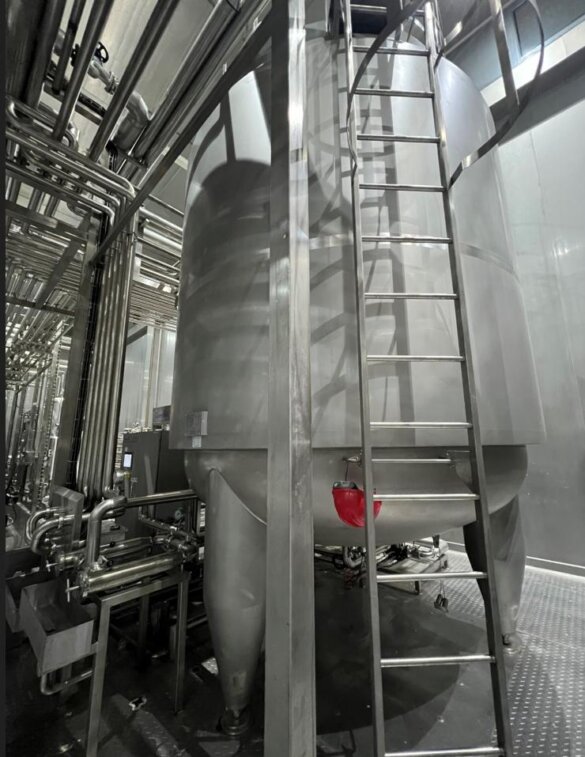
An aseptic tank (also called an aseptic buffer tank or sterile storage tank) is used in UHT milk processing lines to temporarily store sterilized milk under aseptic conditions before aseptic filling. It is installed between the UHT sterilizer and the aseptic filling machine to balance the difference between sterilization capacity and filling capacity, allowing continuous operation of the UHT system while accommodating fluctuations or temporary interruptions in the filling process.
After ultra-high temperature (UHT) sterilization and cooling, the sterilized milk is transferred through a closed aseptic pipeline into the aseptic tank and then supplied to the packaging machine for filling. During storage, the aseptic tank maintains sterile conditions and prevents microbial contamination, ensuring the microbiological safety and extended shelf life of UHT milk.
To achieve aseptic operation, all product-contact components, including the tank inner surface, inlet and outlet pipelines, valves, pumps, and fittings, must comply with hygienic and aseptic design requirements. These components are typically made of SS316L stainless steel and must be capable of sterilization by steam or hot water (SIP system). The entire aseptic system must maintain sterile conditions throughout production to ensure the quality, safety, and shelf stability of the final UHT milk product.
The storage time of UHT milk in the aseptic tank is generally limited and should not exceed 72 hours. The actual allowable holding time depends on the aseptic tank design, sterilization validation, product characteristics, and production requirements. In most commercial UHT milk plants, the aseptic tank is mainly used as a short-term buffer before filling rather than for long-term storage.
UHT milk filling machine
UHT sterilized milk is usually aseptic packaged at room temperature. Aseptic filling is to fill the sterilized milk into an aseptic container under aseptic conditions. This process includes the sterilization of packaging materials or packaging containers. Since the final product needs to have a long shelf life under non-refrigerated conditions, all filling and packaging process must also provide complete protection from light and oxygen. Generally, UHT milk can be packaged in aseptic cartons or aseptic composite bags.

CIP cleaning system for UHT milk processing plant
A CIP cleaning system for a UHT milk processing plant is an essential sanitary solution designed to ensure food safety, production efficiency, and regulatory compliance in modern dairy factories worldwide. By using Clean-in-Place equipment, all critical UHT milk processing equipment—including milk receiving tanks, pipelines, plate or tubular heat exchangers, storage tanks, and filling systems—can be thoroughly cleaned and disinfected without disassembly. A well-designed UHT milk CIP system precisely controls cleaning time, temperature, flow rate, and chemical concentration, effectively removing milk fouling, protein deposits, and microbial contamination. This not only guarantees consistent UHT milk quality and extended shelf life, but also reduces water, energy, and chemical consumption.
Technical Parameter Of UHT Milk Processing Line
| Item | Technical Parameter |
|---|---|
| Raw Milk | Fresh Cow Milk, Goat Milk, Camel Milk, Donkey Milk, Horse Milk, Resconstituted Milk |
| Capacity | 10T/D-500T/D Available |
| End Pacakge | Small PET or glass bottles, Aseptic cartons, Aseptic pouches |
| UHT milk Shelf Life | 45 Days—12months according to different packing container and sterilizing process. |
| End Products | Whole UHT Milk, Skimmed UHT Milk, Flavor UHT Milk |