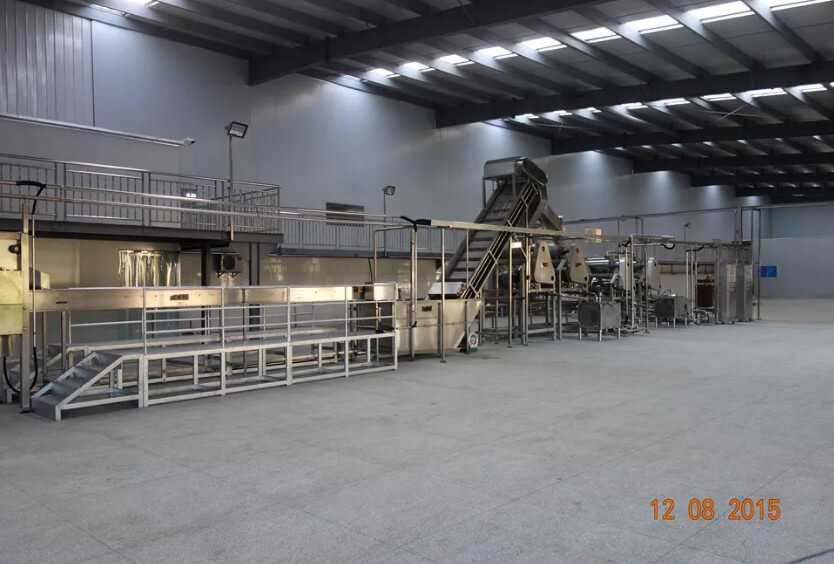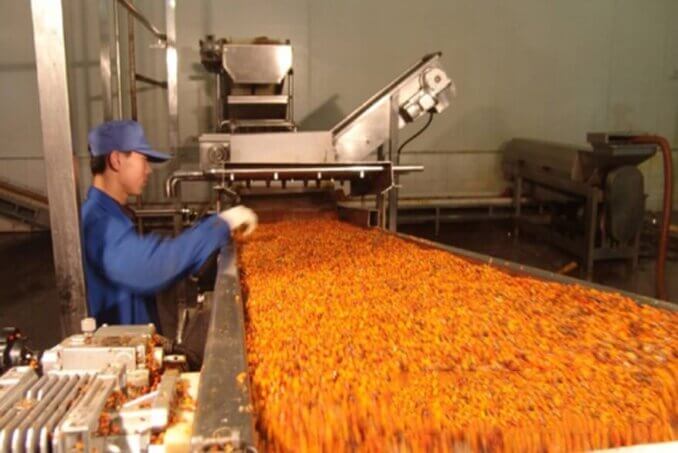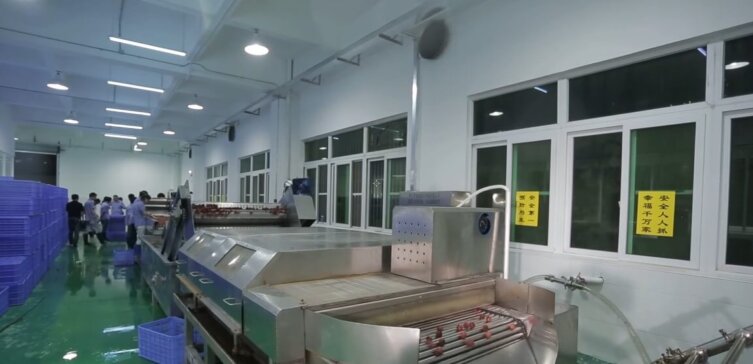
Pomegranate Juice Processing Line
Pomegranate Processing Line Description
- The pomegranate processing line is designed for fresh pomegranate processing capacities ranging from 20 tons/day to 1,500 tons/day. The line can produce various high-value products, including pomegranate juice concentrate, NFC clarified pomegranate juice, pomegranate puree, and other pomegranate-based products. Pomegranate by-products can also be utilized, with peels processed for natural antioxidants or feed ingredients, and seeds recovered for high-value oil extraction.
- Pomegranate juice is rich in natural antioxidants, including pomegranate polyphenols and anthocyanins. It also contains vitamins such as vitamin C, B6, and E, as well as minerals including calcium, magnesium, and zinc. Due to its nutritional value and unique flavor, pomegranate juice has become a popular healthy beverage worldwide.
- For efficient pomegranate juice extraction, we use gentle pressing technologies such as belt presses and vacuum pneumatic presses. These juice extraction systems are designed to achieve high juice recovery while minimizing oxidation and protecting the natural flavor, color, and nutritional properties of pomegranates. Depending on the pomegranate variety, raw fruit condition, and extraction process, the typical pomegranate juice yield can reach approximately 45–55%. The selected pressing technology can be optimized according to the required juice yield, product quality, and processing capacity of the pomegranate juice processing line.
- The pomegranate juice processing line is fully automatic and controlled by a PLC-based automation system. The equipment configuration can be customized according to clients’ specific production requirements.
- All product-contact parts are made of SUS304/SUS316L stainless steel, ensuring sanitary processing conditions and meeting the hygiene requirements of the food and beverage industry.
- The whole line is equipped with a CIP cleaning system. After production, the CIP system automatically cleans tanks and pipelines, reducing manual cleaning work while ensuring hygienic processing conditions and food safety.
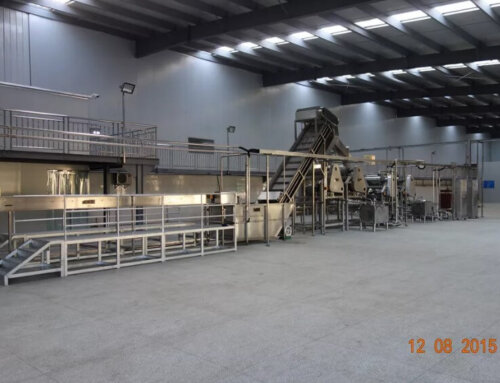
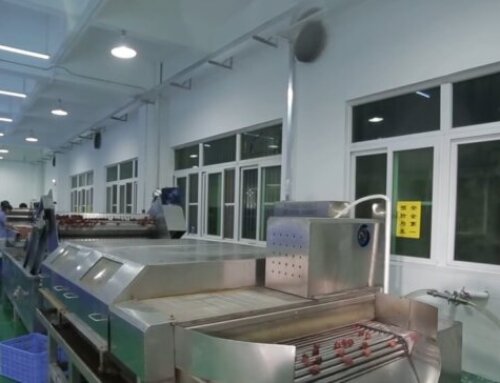
- The pomegranate processing plant includes pomegranates washing and sorting system, pomegranates peeling and aril separation machine, juice extraction system, juice filtration and clarification system, pasteurization/UHT sterilization system, and filling system.
- The pomegranate processing line can produce pomegranate juice concentrate, NFC pomegranate juice, and pomegranate seed oil, with options for additional value-added products.
End Products and Package of Pomegranate Processing Line
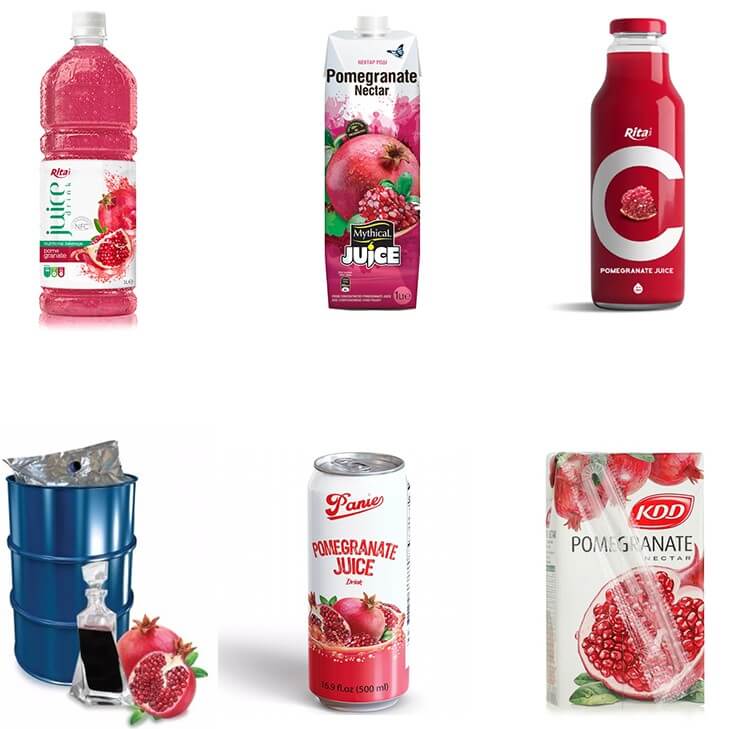
— Concentrated pomegranate juice: Produced by concentrating fresh pomegranate juice from approximately 14 Brix to 65 Brix. The concentrate is filled into aseptic bags in drums and stored under controlled conditions. The typical shelf life can reach up to 12-24months depending on processing and storage conditions.
— NFC clear pomegranate juice: Produced with approximately 14 Brix pomegranate juice and processed by pasteurization or other suitable sterilization technologies. It can be filled into glass bottles, PET bottles, cartons, or aseptic bags. The shelf life ranges from 7 days to 12 months depending on the sterilization process and packaging method.
— NFC cloudy pomegranate juice: Made from fresh pomegranate juice while maintaining natural pulp particles and flavor. It can be packed into bottles, aseptic cartons, or cans according to different market requirements.
— Reconstituted pomegranate juice/nectar: Produced by blending pomegranate concentrate with water and other ingredients to achieve the required juice content. The final products can be filled into bottles, cans, or pouches with a typical shelf life of up to 12 months at ambient temperature.
— Pomegranate wine: Fresh pomegranates are processed through juice extraction and filtration, followed by alcoholic fermentation, blending, aging, sterilization, and bottling.
— Pomegranate molasses: Pomegranate molasses is a thick, dark syrup made from concentrated pomegranate juice, with optional addition of sugar and lemon juice. The product is concentrated to achieve the desired viscosity and flavor, then filled into glass jars. It’s a common ingredient in Middle Eastern and Mediterranean cuisine, adding a unique sweet-tart flavor to dishes.
Technological Flowchart of Pomegranate Juice Processing line
NFC/Concentrated pomegranate juice processing flowchart
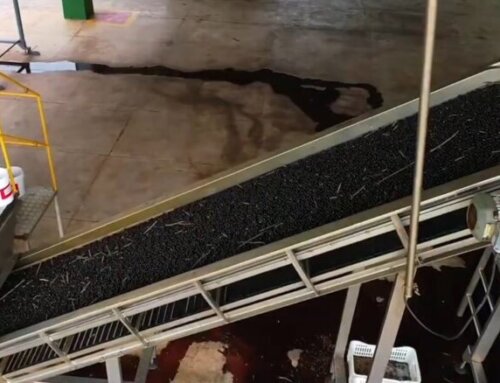
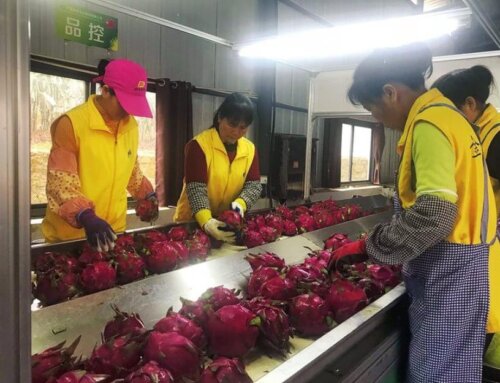
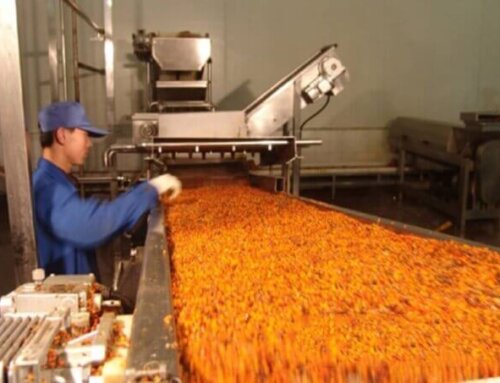
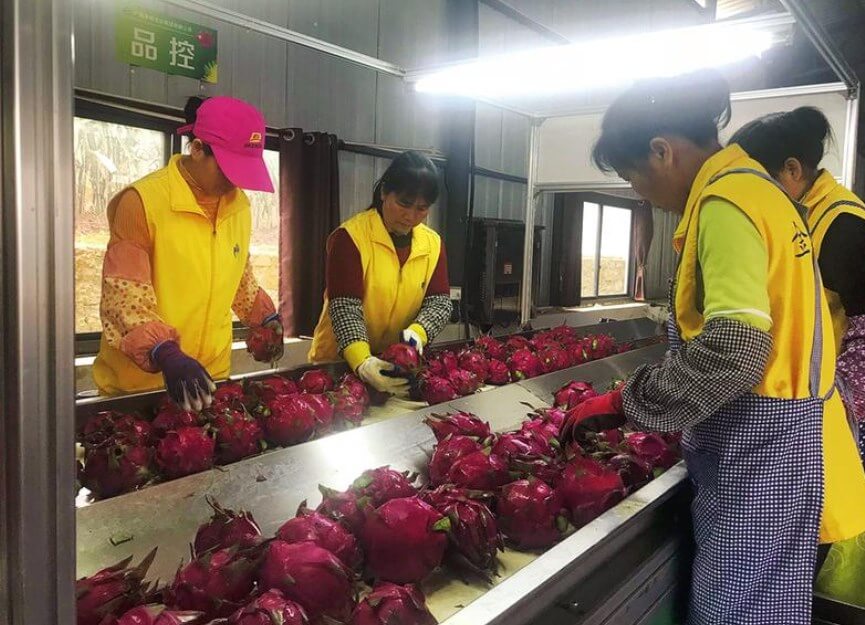
Fresh pomegranates harvested from farms are first cleaned by air-bubbling washing and brush washing systems. After washing, the fruits are inspected and sorted manually on a sorting conveyor to remove damaged or unsuitable fruits.
The selected pomegranates are then processed by an aril separation machine to separate the edible arils from peels and membranes while maximizing aril recovery and minimizing unwanted components. The recovered arils are gently pressed by a belt press or vacuum press to extract pomegranate juice, producing cloudy pomegranate juice.
For clear pomegranate juice production, additional clarification processes are required. The cloudy juice is first treated in an enzymatic hydrolysis tank to improve juice yield, reduce viscosity, and enhance the efficiency of subsequent clarification and filtration. The juice then passes through a plate and frame filter or disc separator for primary filtration, followed by an ultrafiltration system for fine clarification to obtain clear pomegranate juice.
The clarified juice can be pasteurized and filled into bottles or cartons to produce NFC clear pomegranate juice, or further concentrated by a falling film evaporator to produce pomegranate juice concentrate, which is then filled into aseptic bags in drums.

Reconstituted pomegranate juice processing flowchart
The reconstituted pomegranate juice processing line uses pomegranate juice concentrate as the raw material. The concentrate is blended with RO water to restore the original juice characteristics and required Brix level. According to different product formulations, citric acid or other ingredients can be added during the blending process. The finished juice is then pasteurized and filled into bottles, cartons, or cans for retail distribution.
Pomegranate Juice Processing Plant Core Machine Introduction
Fresh pomegranate washing and sorting machine
Fresh pomegranates are washed through two stages: air bubble washing and brush washing, which effectively remove soil, dust, and other surface impurities. The cleaned fruits are then inspected and manually sorted on a sorting conveyor to remove immature, rotten, or damaged fruits, ensuring high-quality raw materials for further processing.


Pomegranate deshelling machine
The pomegranate deshelling machine is a key piece of equipment in the pomegranate processing line, designed to efficiently separate edible pomegranate arils from peels and membranes while maintaining high product quality.
The machine adopts a gentle mechanical separation system, where the pomegranates are opened and processed through rotating separation rollers. The pomegranate arils pass through the specially designed screen, while the peels and membranes are separated and discharged from the equipment. The optimized design minimizes damage to the arils and reduces the release of tannins and bitter compounds from the peel and membrane.
By effectively removing unwanted components before juice extraction, the equipment helps improve juice flavor, reduce astringency, and ensure stable operation of the subsequent pressing and clarification processes. The machine is made of food-grade stainless steel and can be integrated into automatic pomegranate processing lines with continuous operation.

Pomegranate juice extractor
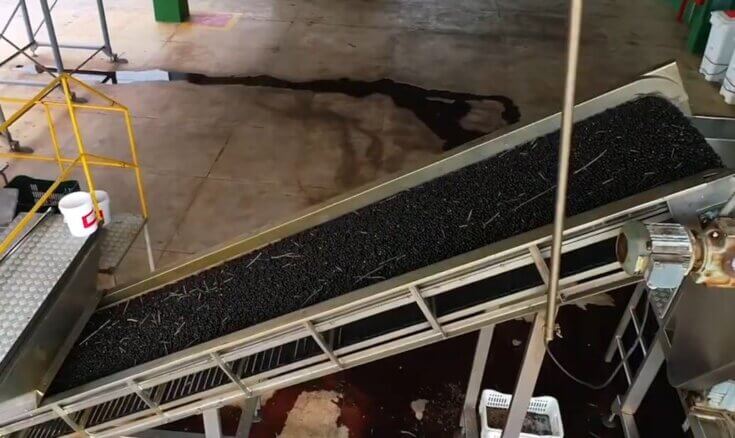
Three types of juice extraction systems are commonly used in pomegranate juice processing after pomegranate aril separation, including vacuum membrane presses, belt presses, and screw presses. The selection of a suitable pomegranate juice extractor depends on production capacity, product quality requirements, and the desired final juice characteristics.
The first type is the vacuum membrane press, which extracts pomegranate juice under vacuum conditions to minimize oxidation during the pressing process. This advanced extraction technology helps preserve the natural color, fresh flavor, and nutritional components of pomegranate juice while achieving high juice recovery. It is widely used in industrial-scale pomegranate juice production lines where premium juice quality is required.
The second type is the belt press, which continuously processes separated pomegranate arils to extract juice. The belt press is commonly used in large-capacity pomegranate processing plants due to its continuous operation and stable performance. During pressing, part of the pomegranate seeds may be crushed, which can release additional phenolic compounds and slightly affect juice taste. Proper process control and equipment adjustment are important to maintain the desired juice quality.
The third type is the screw press, which is suitable for small and medium-scale pomegranate juice production, typically below 5 tons per hour. During the pressing process, juice is separated from solid residues through the screen cage, while seeds and insoluble materials are discharged together with the pomace.

Pomegranate juice enzymatic hydrolysis system and Ultra-high filtration system
The enzymatic hydrolysis tank, also known as an enzymatic reactor, is an important piece of equipment for clear pomegranate juice production. It is equipped with heating, cooling, insulation, and mixing functions to provide suitable conditions for enzymatic treatment.
The tank is designed with product inlet and outlet ports, RO water inlet, sampling ports, and other process connections. During enzymatic hydrolysis, specific enzymes are added to break down pectin and other colloidal substances in pomegranate juice, which helps improve juice yield, reduce viscosity, and enhance the efficiency of subsequent clarification and filtration processes.
After enzymatic treatment, the jacket heating system can be used for enzyme inactivation by steam heating. The enzymatic hydrolysis tank can be integrated with an automatic control system, including feeding control, temperature control, mixing control, pH adjustment, CIP cleaning, and discharge control, ensuring stable and efficient production.
The ultrafiltration system is specially designed for clear pomegranate juice production. It uses membrane filtration technology to remove suspended solids, colloidal particles, and high-molecular-weight substances from pomegranate juice, producing bright and clear juice with improved stability.
Fresh pomegranate juice contains a high level of suspended particles, pectin, and natural compounds that can affect juice clarity and storage stability. Before ultrafiltration, preliminary filtration is usually applied to remove larger particles and protect the membrane system.
The ultrafiltration process provides gentle clarification while maintaining the natural flavor and nutritional components of pomegranate juice. It is widely used in pomegranate juice processing lines for producing high-quality NFC clear juice and juice concentrate.

Pomegranate juice evaporator
We use falling film evaporators for producing high-quality concentrated pomegranate juice with a deep red color and balanced sweet-sour flavor. During the concentration process, the total soluble solids (TSS) can be increased from approximately 14 °Brix to 60–70 °Brix according to product requirements.
The evaporation capacity ranges from 500 kg/h to 50,000 kg/h of water evaporation. Multi-effect evaporators can be applied to reduce steam consumption and improve energy efficiency. By operating under vacuum conditions and using a short residence time, the falling film evaporator minimizes thermal impact and helps preserve the natural color, flavor, and nutritional components of pomegranate juice concentrate.

Pomegranate juice sterilizer
Different pomegranate products require different heat treatment and filling technologies according to their formulation, packaging method, and required shelf life.
— For NFC pomegranate juice, plate or tubular pasteurizers are commonly used. The juice is typically heated to approximately 85–95℃ and held for several seconds to achieve effective pasteurization while preserving the fresh flavor, natural color, and nutritional components. After pasteurization, the juice can be cooled to 3–5℃ for refrigerated cold filling into PET bottles, glass bottles, or cartons. For longer shelf life products, aseptic filling technology+UHT sterilization can be applied.
— For concentrated pomegranate juice, tubular pasteurization or sterilization systems are commonly selected due to the higher viscosity and soluble solids content. The concentrate is typically heated to approximately 90–110℃ and held for 30–60 seconds before being cooled and filled into aseptic bags in drums. The combination of controlled heat treatment and aseptic packaging ensures product safety and long-term storage stability.
— For ambient pomegranate juice, pomegranate nectar, or reconstituted juice, UHT sterilization combined with aseptic filling or hot filling technology can be applied according to product requirements. The juice is rapidly heated to approximately 135–140℃ for a few seconds and then cooled under aseptic conditions for aseptic filling, or maintained at approximately 85–90℃ for hot filling into bottles, cartons, or pouches. This technology enables long shelf life at ambient temperature while minimizing the impact on product quality.

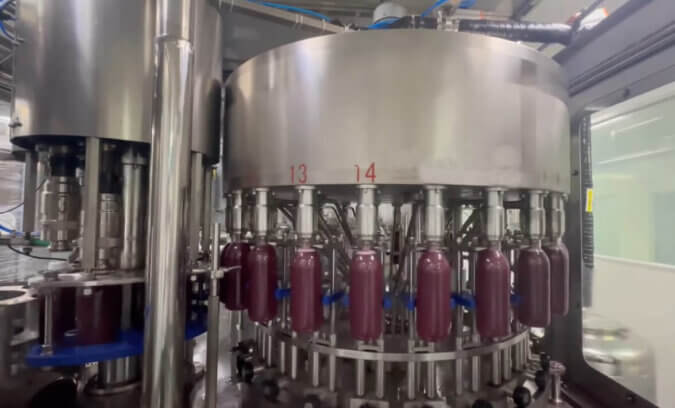
Pomegranate juice filler
The pomegranate juice filling machine is an essential part of the pomegranate processing line, designed for hygienic and efficient filling of different pomegranate products, including NFC pomegranate juice, concentrated pomegranate juice, reconstituted juice, nectar, and other value-added products.
According to different product characteristics, shelf life requirements, and packaging formats, different filling technologies can be selected.
—For NFC pomegranate juice, hot filling machines, cold filling systems, or aseptic filling machines can be applied depending on the required storage conditions and shelf life. Refrigerated NFC juice is commonly filled at low temperatures into PET bottles, glass bottles, or cartons, while ambient products can be processed with hot filling or aseptic filling technology.
—For concentrated pomegranate juice, aseptic bag-in-drum filling machines are commonly used. After sterilization and cooling, the concentrate is filled into 220L aseptic bags placed in drums to maintain product quality and achieve long-term storage stability. This packaging method is widely used for industrial juice concentrate transportation and further processing.
—For ambient pomegranate juice, nectar, and reconstituted juice, the filling system can be integrated with UHT sterilization and aseptic filling/hot filling processes. Products can be filled into aseptic cartons, PET bottles, glass bottles, cans, or pouches according to market requirements.
The pomegranate juice filling machine is designed with hygienic construction, accurate filling control, and automatic operation. The system can be equipped with CIP integration, automatic cleaning functions, and PLC control to ensure stable production, reduce manual operation, and meet food safety requirements.