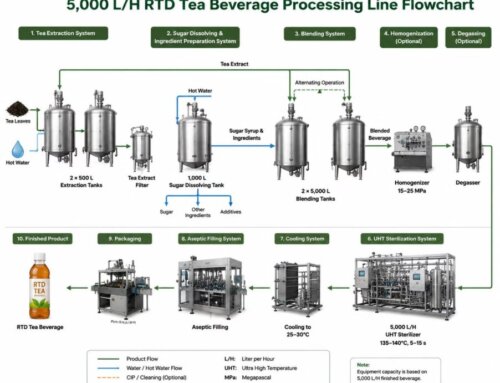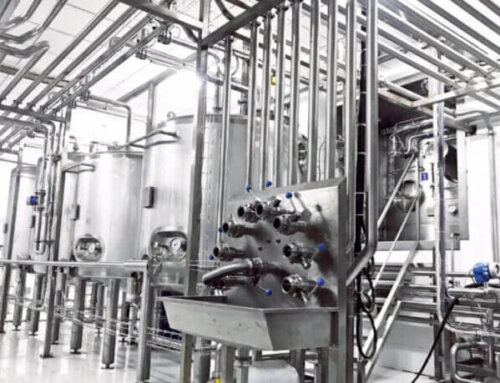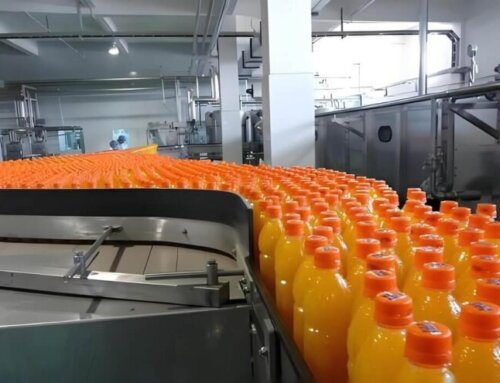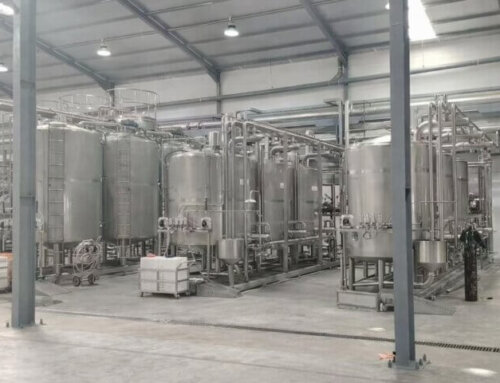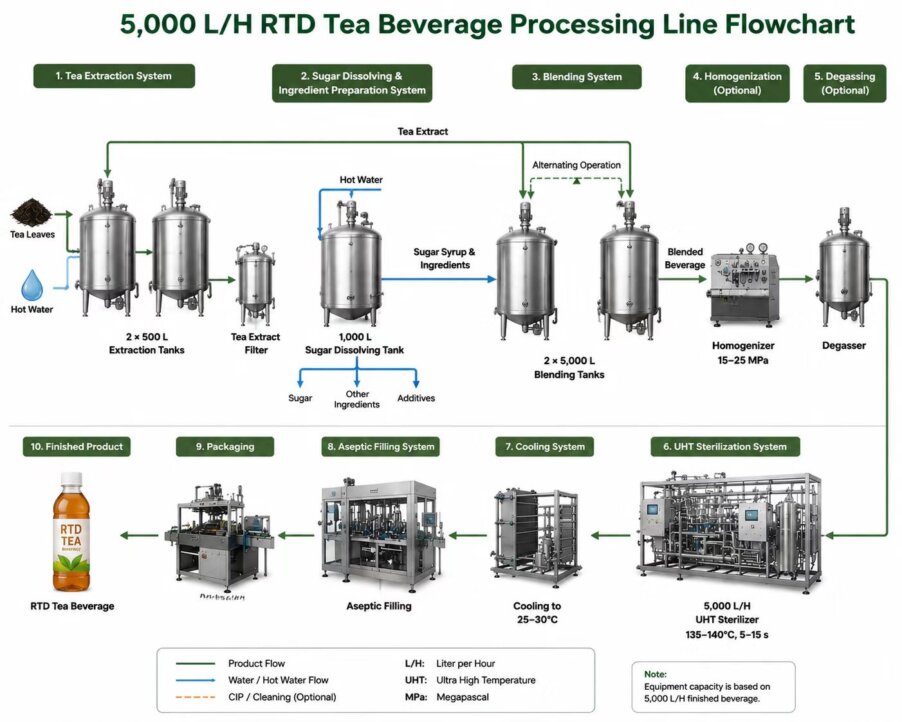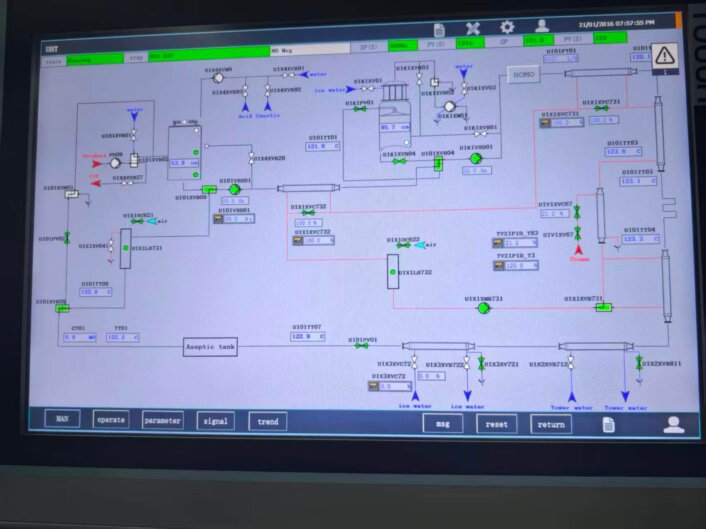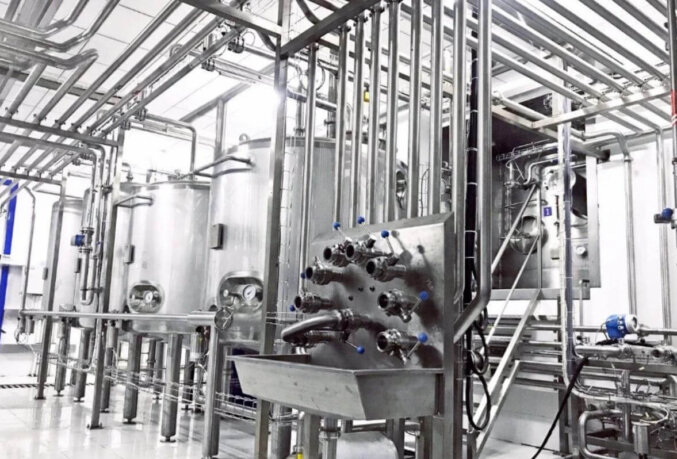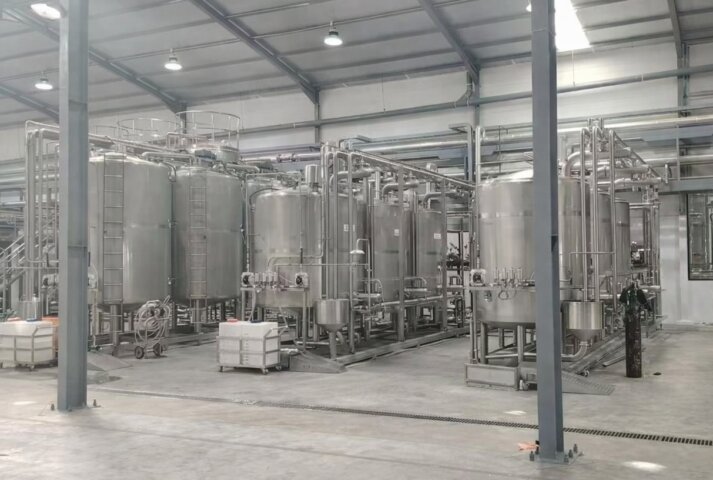
Selecting an industrial mixing tank for food and beverage production is not simply a matter of choosing a tank capacity and motor power. The actual equipment configuration depends on the product characteristics, processing objectives, operating conditions, hygiene requirements, and factory utilities.
For example, a 2,000-liter mixing tank used for milk blending may have a completely different agitator design from one used for tomato paste, fruit fillings, or high-viscosity sauces.
Even when two tanks have the same nominal capacity, their prices can vary significantly depending on the stainless steel grade, wall thickness, agitator type, motor and gearbox configuration, surface finish, and cleaning system.
To avoid incorrect equipment selection and repeated quotation revisions, it is important to define the following eight technical parameters before requesting a quotation from a mixing tank manufacturer.
8 Key Factors to Consider Before Requesting a Quotation
1. Product Name and Main Ingredients
The first step is to identify exactly what product will be processed in the mixing tank.
Providing only a general description such as “beverage,” “sauce,” or “liquid food” is not sufficient for proper equipment selection.
The supplier needs to understand:
- Product name and application
- Main ingredients and their proportions
- pH value
- Salt or acid content
- Alcohol content, if applicable
- Sugar, starch, protein, and fat content
- Whether the product contains flavors, aromas, or other sensitive ingredients
These details directly influence material selection, sealing requirements, tank construction, and cleaning methods.
Examples of different product requirements:
- Soy sauce and high-salt seasonings: High chloride concentrations may require corrosion-resistant materials such as SUS 316L stainless steel, subject to the actual chemical and operating conditions.
- Fruit juice and acidic beverages: SUS 304 stainless steel may be suitable for many applications, but corrosion resistance, weld quality, and surface finish must be evaluated.
- Alcohol-containing flavoring liquids: Motors, electrical components, seals, and ventilation arrangements may require special consideration depending on the alcohol concentration and applicable safety regulations.
- Dairy products and plant-based beverages: Protein and fat components can contribute to fouling and deposits, so the cleaning system and internal surface design should be considered from the beginning.
A clear product description helps the manufacturer determine whether a standard mixing tank is sufficient or whether special materials and hygienic configurations are required.
2. Product Viscosity at Operating Temperature
Viscosity is one of the most important factors in industrial mixing tank selection.
It directly affects agitator type, rotational speed, motor power, gearbox selection, and mixing efficiency.
Importantly, the manufacturer needs to know the viscosity at the actual processing temperature, not simply the viscosity at room temperature.
Many food products change significantly in viscosity during heating and cooling.
For example, a product may have a viscosity of 3,000 mPa·s at 60°C but increase to 15,000 mPa·s when cooled to 30°C.
If the tank is designed based only on the lower viscosity, the motor and gearbox may be undersized, resulting in insufficient mixing performance or excessive starting torque.
2.1 Typical Viscosity Ranges and Agitator Selection
The following table provides general reference values for food processing applications. Actual equipment selection must also consider shear behavior, tank geometry, batch size, and mixing objectives.
| Viscosity Range | Typical Products | Common Agitator Types |
|---|
2.2 Important Considerations for High-Viscosity Products
For high-viscosity products, the manufacturer should confirm:
- Maximum operating viscosity
- Viscosity during heating and cooling
- Required mixing speed
- Starting torque requirements
- Whether wall scraping is necessary
- Whether the product is shear-sensitive
Some food products, such as yogurt, cream-based products, and fermented dairy products, can be damaged by excessive shear.
Therefore, the agitator should be designed to achieve the required mixing result without unnecessarily damaging the product structure.
Key point: Viscosity, especially at the lowest operating temperature, is a major factor in determining agitator design, motor power, and gearbox specifications.
3. Product Density
Product density is another important parameter that should be confirmed before equipment design.
Density is generally expressed in kg/m³ and affects the total product weight inside the tank.
The basic relationship is: Product Mass = Product Volume × Product Density
Typical reference densities for food products include:
| Product | Approximate Density |
| Water | 1,000 kg/m³ |
| Milk | 1,030 kg/m³ |
| Sugar syrup | 1,250–1,350 kg/m³ |
| Fruit sauce | 1,100–1,200 kg/m³ |
These values are indicative and should be replaced with actual product data whenever available.
Why does density matter?
- It determines the actual load on the tank structure.
- It affects agitator torque and mechanical design calculations.
- It influences the required tank wall thickness and support structure.
- It helps determine the actual working volume for a specified product mass.
For example, a tank processing concentrated syrup or thick sauce may experience a considerably higher product load than a tank handling water. Do not assume that all food products have a density close to water.
4. Solid Content, Particle Size, and Settling Characteristics
If the product contains solid particles, powders, or suspended ingredients, the manufacturer needs more information than simply knowing the solid content percentage.
The following details should be confirmed:
- Total solid content (%)
- Particle type and particle size
- Particle concentration
- Particle density, if available
- Whether particles tend to float or settle
- Whether the product needs to remain uniformly suspended
These characteristics directly influence agitator selection, tank bottom design, powder feeding arrangements, and mixing performance.
Common Solid Ingredients in Food Processing
Examples include:
- Sugar crystals
- Milk powder and skimmed milk powder
- Starch
- Pectin and other hydrocolloids
- CMC and fruit stabilizers
- Fruit pulp and fruit pieces
- Nuts and crushed ingredients
- Herbs and spices
4.1 Why Particle Characteristics Matter
Different mixing objectives require different equipment configurations.
Powder dissolution: Powders such as milk powder, sugar, and stabilizers need rapid wetting and dispersion to prevent lump formation.
Solid suspension: Fruit pieces, pulp, and other particles may need continuous agitation to prevent settling.
Powder incorporation: Directly adding powder into a tank can result in floating powder, agglomeration, and incomplete dissolution.
Depending on the application, the manufacturer may recommend a powder induction system, vacuum powder feeding, a high-shear mixer, or a specialized feeding hopper.
For starch-containing sauces and seasonings, heating and mixing conditions are particularly important because excessive viscosity development can create operational difficulties.
4.2 Special Consideration for Particle Suspension
If fruit pieces or other solid ingredients must remain suspended, the customer should specify the required suspension performance.
For example:
- Particle size: 5–8 mm
- Solid content: 25%
- Required result: Uniform distribution without significant settling during the specified holding period
This information is much more useful than simply stating that the product contains some solid particles.
5. Mixing Objectives and Batch Processing Time
The next question is: What exactly should the mixing tank achieve?
Different products require different processing objectives, even if they use the same type of tank.
Common mixing and processing objectives include:
| Processing Objective | Typical Applications | Main Equipment Considerations |
|---|
The customer should also specify the required processing time per batch.
For example:
- Dissolve a stabilizer within 20 minutes.
- Complete syrup blending within 15 minutes.
- Maintain fruit particles uniformly distributed for two hours.
- Heat the product to a specified temperature and maintain it for a defined period.
A process requiring rapid powder dissolution will need a different configuration from one requiring gentle agitation over a long holding period.
For dairy products, protein beverages, and other foam-sensitive products, it is also important to clarify whether air incorporation is acceptable and whether the process requires foam control or vacuum deaeration.
The agitator, motor power, rotational speed, tank diameter, and internal structure should all be designed around the actual processing objective.
6. Effective Tank Volume and Filling Ratio
One common misunderstanding in equipment purchasing is the difference between nominal tank capacity and effective working volume.
When a customer requests a 2-ton mixing tank, the supplier needs to confirm whether this refers to:
- 2,000 kg of product per batch
- 2,000 liters of effective working volume
- 2,000 liters of total tank capacity
These are not interchangeable specifications.
Understanding Tank Capacity
The total tank capacity refers to the overall internal volume of the vessel.
The effective working volume refers to the actual volume of product that can be processed under normal operating conditions.
The filling ratio is the relationship between working volume and total tank capacity.
Filling Ratio = Working Volume / Total Tank Volume
For many conventional mixing applications, a preliminary filling ratio of approximately 60–80% may be considered. However, this is not a universal design standard.
The appropriate filling ratio depends on:
- Product viscosity
- Agitation intensity
- Foam generation
- Powder feeding requirements
- Required headspace
- Thermal expansion
- Vacuum or deaeration requirements
Products that generate significant foam, such as protein beverages and plant-based extracts, may require a lower filling ratio to prevent foam from reaching the vacuum system or overflowing the tank.
Example: Converting Product Mass into Tank Volume
If a customer requires 2,000 kg of product per batch and the product density is 1,100 kg/m³:
Required Product Volume = 2,000 / 1,100 = 1.82 m³
The total tank capacity must be larger than the calculated product volume to provide sufficient operating headspace.
The final tank size should be determined according to the mixing process and filling ratio.
7. Stainless Steel Material, Hygienic Design, and Cleaning Requirements
Material selection and hygienic design have a direct impact on equipment cost, product safety, cleaning efficiency, and long-term operating reliability.
Before requesting a quotation, the customer should confirm the following requirements.
7.1 Stainless Steel Material
The most common materials used in food processing mixing tanks are SUS 304 and SUS 316L stainless steel.
- SUS304 is mainly used for milk, general beverages, low-acid fruit juice and many standard food applications
- SUS316L is mainly used for high-salt or chemically aggressive products such as sauces and dressings, high-acid juice products or other conditions that require enhanced corrosion resistance.
The final material selection should consider product chemistry, chloride concentration, pH, operating temperature, cleaning chemicals, and other corrosion conditions.
7.2 Internal Surface Finish
The internal surface finish is particularly important for hygienic food processing equipment.
Customers should specify:
- Internal surface roughness requirements
- Mechanical or electropolishing requirements
- Whether a sanitary design standard such as 3-A or EHEDG is required
- Welding quality and internal weld finishing
For example, an internal surface roughness requirement of Ra ≤ 0.8 μm may be specified for certain food processing applications. More demanding applications may require a finer finish.
The required surface finish should be clearly stated in the technical specification rather than assumed to be included in a standard quotation.
7.3 CIP and SIP Requirements
CIP (Clean-in-Place) and SIP (Sterilization-in-Place) requirements should be discussed before tank design.
Important questions include:
- Is an independent CIP system required?
- Will the tank share an existing CIP station?
- What cleaning temperature and chemical concentration are required?
- Are spray balls or rotary cleaning devices needed?
- Is SIP required for the application?
- Can all internal surfaces be effectively cleaned?
A tank intended for different products may require additional cleaning and changeover considerations.
For example, a mixing tank used for milk today and fruit juice tomorrow must be designed with appropriate drainage, cleaning coverage, and hygienic construction
7.4 Hygienic Structural Design
Several design details are easy to overlook but can significantly affect cleaning performance:
- Manholes, sight glasses, and sampling valves: Their sealing and installation should avoid product retention.
- Agitator mechanical seals: The seal design should be suitable for the product and cleaning conditions.
- Tank bottom and discharge outlet: The structure should minimize dead zones and allow effective drainage.
- Rotating agitators: For emulsifying and high-shear applications, confirm whether the rotor or mixing head can be cleaned effectively.
- Vacuum systems: For extraction and vacuum mixing tanks, filters and internal components should be accessible for cleaning.
These details are important because poorly designed hygienic structures can create cleaning difficulties and increase microbiological risks.
8. Installation Conditions and Utility Requirements
Even a technically suitable mixing tank may encounter installation problems if the factory layout and utility conditions are not confirmed in advance.
The customer should provide the following information.
Installation Space
- Available installation height
- Floor dimensions
- Foundation and load-bearing capacity
- Whether the tank needs to be movable
- Available space for maintenance and equipment access
Electrical Requirements
- Power supply voltage
- Frequency (50 Hz or 60 Hz)
- Whether a variable frequency drive (VFD) is required
- Local electrical standards
A VFD is particularly useful when different products require different agitation speeds.
Heating Requirements
Depending on the process, heating may use:
- Steam
- Hot water
- Thermal oil
The customer should provide the available pressure, temperature, and heating capacity.
Cooling Requirements
Common cooling arrangements include:
- Chilled water
- Cooling water
- Other specified cooling media
The cooling temperature, pressure, and required cooling time should be confirmed.
Other Utilities and Connections
Additional requirements may include:
- Compressed air
- Vacuum
- Purified water
- Softened water
- Drainage
- Connections to upstream and downstream equipment
The supplier should also confirm the required connection sizes, pipe elevations, and equipment interfaces.
Providing this information early helps prevent problems such as insufficient installation height, incompatible utility connections, or inadequate space for agitator maintenance.
Different Mixing Tank Types Require Different Configurations
The term “mixing tank” covers several different types of industrial equipment.
Although these tanks may look similar from the outside, their internal structures and agitator configurations can be very different.
Understanding the differences is important when selecting equipment for a food processing plant.
1. Blending Tanks
Blending tanks are designed for mixing liquids with different ingredients to achieve a uniform product.
Typical applications include:
- Beverage formulation
- Sugar syrup preparation
- Juice blending
- Milk standardization
- Liquid seasoning preparation
Key selection factors include viscosity, effective volume, agitator circulation, and blending time.

2. Dissolving Tanks
Dissolving tanks are used to incorporate powders or solid ingredients into liquids.
Typical applications include:
- Sugar dissolution
- Milk powder reconstitution
- Stabilizer preparation
- Starch and hydrocolloid dissolution
The main challenges are powder wetting, lump prevention, and complete dissolution.
Depending on the formulation, a high-shear mixer or powder induction system may be required.

3. Emulsifying Tanks
Emulsifying tanks are designed to mix ingredients that would otherwise separate, such as oil and water.
Typical applications include:
- Salad dressings
- Mayonnaise
- Cream-based products
- Dairy beverages
- Sauces and emulsified seasonings
These systems may use high-shear mixing heads to reduce droplet size and improve emulsion uniformity.
The target particle or droplet size and product stability should be clearly specified.

4. Extraction Tanks
Extraction tanks are used to transfer soluble components from raw materials into a liquid medium.
Typical applications include:
- Tea extraction
- Herbal extraction
- Botanical ingredient extraction
- Flavor extraction
Important parameters include raw material particle size, liquid-to-solid ratio, extraction temperature, extraction time, and filtration requirements.
Depending on the application, extraction tanks may require special filtration structures, screens, or discharge arrangements.

Why Do Industrial Mixing Tank Quotations Vary So Much?
Two mixing tanks with the same nominal capacity may have significantly different prices.
The difference is often not simply the manufacturer’s profit margin. It may reflect substantial differences in equipment design and component quality.
Before comparing quotations, consider the following factors.
| Component or Design Factor | What to Compare |
|---|
A low-price quotation may exclude important components or engineering work that will be necessary for reliable operation.
For food processing equipment, it is important to compare the complete technical specifications rather than focusing only on the total price.
Information Checklist Before Requesting an Industrial Mixing Tank Quotation
To help the manufacturer prepare an accurate technical proposal, customers can complete the following information checklist.
| Parameter | Information to Provide |
|---|
Providing these details allows the equipment manufacturer to evaluate the process, recommend a suitable agitator configuration, calculate the required motor power, and prepare a more accurate quotation.
From Process Requirements to a Complete Mixing Tank Solution
Industrial mixing tank selection starts with understanding the actual product and processing requirements.
Our engineering team evaluates product characteristics, operating conditions, mixing objectives, and factory utilities before determining the equipment configuration.
The engineering process generally includes:
- Process requirement confirmation: Reviewing product composition, viscosity, density, batch size, and processing objectives.
- Equipment selection and calculation: Determining tank dimensions, agitator type, motor power, gearbox configuration, and heating or cooling arrangements.
- Technical drawing confirmation: Preparing equipment drawings and confirming the structure and connection requirements before manufacturing.
- Manufacturing and inspection: Completing material selection, fabrication, welding, polishing, and relevant quality inspections.
- Installation and commissioning: Providing technical guidance, operational training, and after-sales support.
Whether you need a simple stainless steel blending tank or a customized mixing system for dairy products, fruit beverages, sauces, or plant-based drinks, proper process evaluation is essential for selecting the right equipment.
Looking for an industrial mixing tank for your food processing project?
Contact our engineering team with your product information, batch capacity, and processing requirements. We can help evaluate the appropriate tank type, agitator configuration, material selection, and technical specifications for your application.