Introduction
Ready-to-drink (RTD) tea beverages, including green tea, black tea, oolong tea, and functional tea drinks, have become increasingly popular worldwide due to their refreshing taste and health benefits.
Designing a commercial tea beverage production line requires more than simply matching the filling capacity. The equipment selection should consider tea extraction efficiency, product formulation, filtration requirements, sterilization method, shelf life, and production automation.
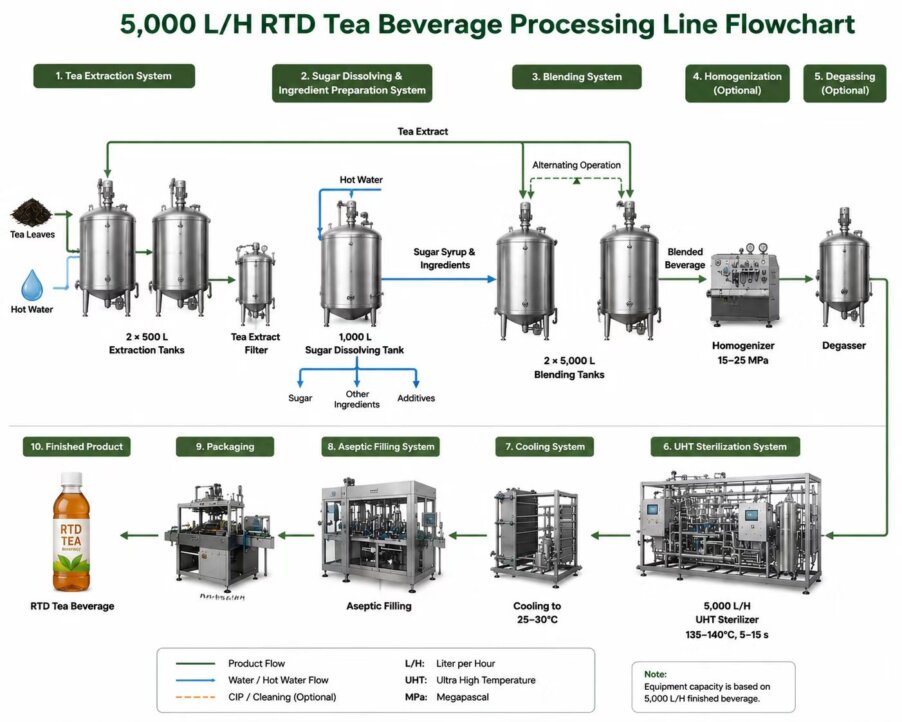
This article introduces the main equipment selection for a 5,000 L/H RTD tea beverage production line as an engineering example.
Design Basis of a 5 TPH Tea Beverage Production Line
Before selecting equipment, the following are the client’s production requirements:
| Item | Specification |
|---|---|
| Product | RTD tea beverage |
| Capacity | 5,000 L/H |
| Operation | Continuous production |
| Package | PET bottle / glass bottle / can |
| Tea type | Green tea / black tea / oolong tea |
| Shelf life | 9-12 months |
| Processing method | UHT sterilizing+Hot filling or aseptic filling |
A 5,000 L/H tea beverage line can produce approximately:
- 40 tons in an 8-hour shift
- 100 tons in a 20-hour production day
The actual output depends on the production schedule and cleaning time.
Selection of Suitable Processing Equipment for a 5 TPH Tea Beverage Production Line
1. Tea Extraction System Selection
The tea extraction system is the first key process in tea beverage production, where tea polyphenols, catechins, aroma compounds, and soluble tea solids are efficiently extracted from tea leaves into water to achieve the desired flavor, color, and functional properties of the final beverage.
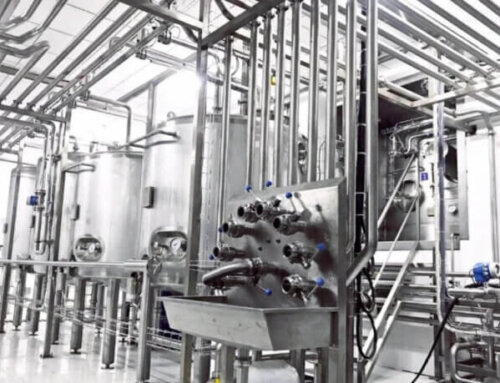
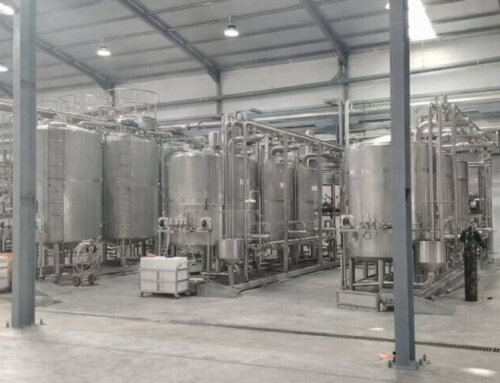
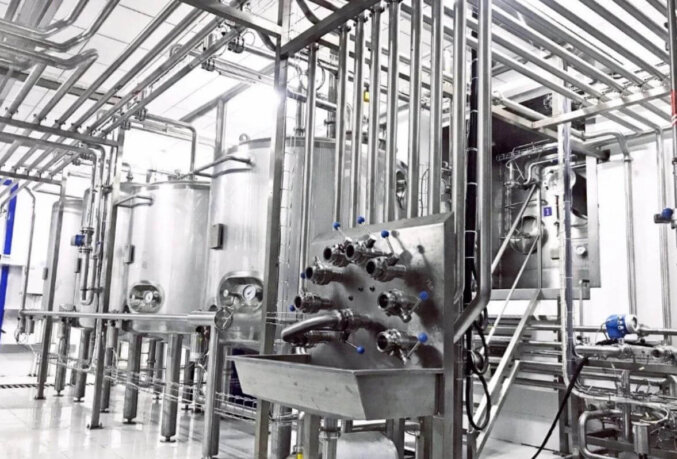
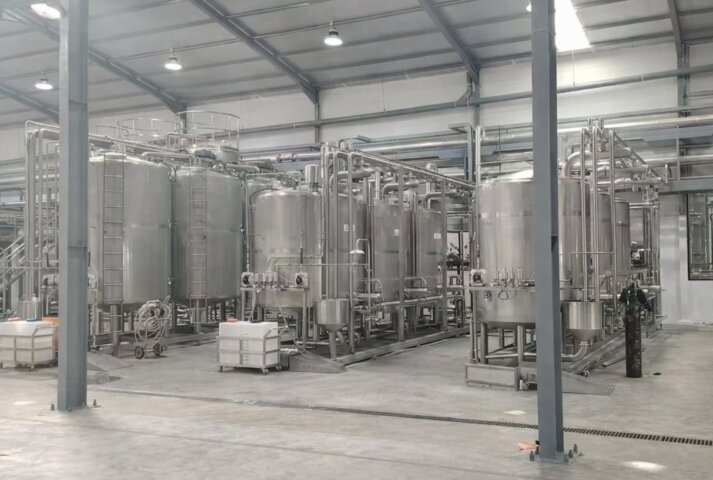
For a 5,000 L/H RTD tea processing line, a batch extraction system is commonly preferred because it provides stable tea flavor, flexible recipe adjustment, and better extraction control. A typical configuration consists of two tea extraction tanks working alternately; for example, 2 × 500L extraction tanks operating at 75–90℃ extraction temperature with an extraction time of 20–25 minutes. While one tank performs tea extraction, the other tank can discharge tea extract, feed fresh tea leaves and water, or undergo cleaning, ensuring a continuous and stable supply of tea extract to the blending system.
Design Parameters
- Finished tea beverage capacity: 5,000 L/H
- Tea dosage: 5 g/L of finished beverage
- Tea extraction ratio: Tea leaves: Water = 1: 15
- Extraction cycle time(tea loading and water feeding, heating and extraction, tea extract discharging, preparation for next batch): 25 minutes
1. Tea Leaf Consumption Calculation
For a 5,000 L/H tea beverage production line: Tea leaf consumption = 25 kg/H
2. Extraction Water Requirement
Based on a tea-to-water ratio of 1:15:
The tea extraction system produces concentrated tea extract, which is later blended with treated water to achieve the final beverage volume.
3. Material Required per Extraction Batch
The extraction cycle time is 25 minutes:
Tea leaves required per batch:
Extraction water per batch:
Therefore, each extraction batch requires approximately:
- Tea leaves: 10.4 kg
- Extraction water: 156 L
4. Extraction Tank Volume Calculation
During extraction, the tank volume should consider:
- Tea leaf expansion after absorbing water
- Mixing space
- Prevention of overflow
- Safe operating level
Assuming the tank working volume is 70% of the total tank volume:
The required working volume is approximately:
- Extraction water: 156 L
- Expanded tea leaves volume: approximately 50–60 L
Total working volume:
Required tank volume:
Therefore, the theoretical extraction tank size is approximately: 300–350 L
5. Recommended Configuration for Continuous Production
To ensure continuous tea extract supply, two extraction tanks are normally installed and operated alternately:
- Tank A: Tea extraction
- Tank B: Discharging, cleaning, and preparation for the next batch
For a 5,000 L/H RTD tea processing line, the recommended configuration is: 2 × 500 L tea extraction tanks
Advantages:
- Continuous tea extract supply
- Stable extraction temperature and time control
- Flexible production operation
- Additional capacity margin for different tea varieties and recipes

2. Hot Water Treatment System Selection
Hot water is one of the key utility systems in RTD tea beverage production. It is mainly used for:
- Tea extraction
- Sugar dissolution and ingredient preparation
- Dilution to final volume during the blending process
For a 5,000 L/H RTD tea beverage production line, the estimated hot water consumption is:
| Application | Hot Water Consumption |
|---|---|
| Tea extraction | 300–500 L/H |
| Sugar dissolution and ingredient preparation | 500–1,000 L/H |
| Dilution to final volume in blending tank | 3,000–4,000 L/H |
Therefore, the total hot water demand is approximately:≈ 3,800–5,500 L/H
Considering production fluctuations, pipeline losses, and future capacity requirements, the recommended hot water system capacity is:5 m³/H
3. Sugar Dissolving and Ingredient Preparation System Selection
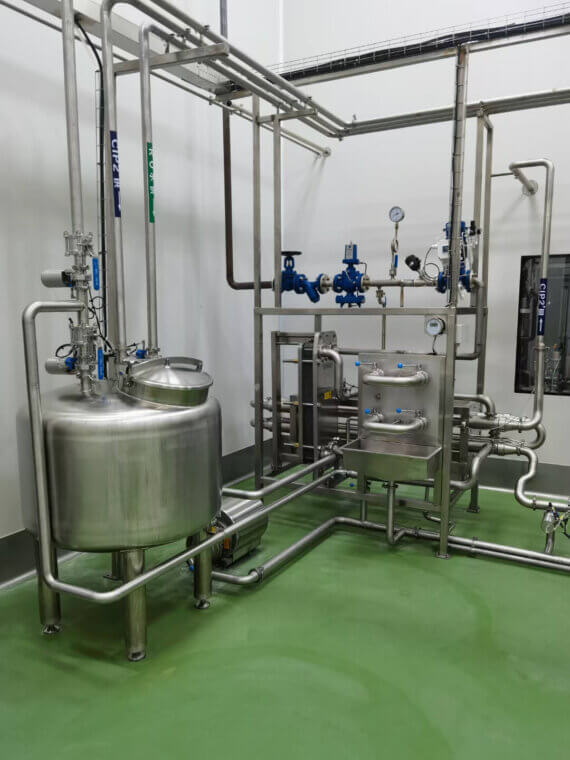
The sugar dissolving system is an important part of RTD tea beverage production. It is mainly used for:
- Dissolving sugar into syrup
- Preparing liquid ingredients
- Mixing minor ingredients before transferring them to the blending tank
For a 5,000 L/H tea beverage production line, the sugar dissolving tank capacity is selected based on sugar consumption, syrup concentration, preparation cycle time, and operating flexibility.
1. Sugar Consumption Calculation
Assuming:
- Finished beverage capacity: 5,000 L/H
- Sugar content in final beverage: 50 g/L
The required sugar consumption is:
Therefore: Sugar consumption = 250 kg/H
2. Sugar Syrup Preparation Calculation
In beverage production, sugar is usually prepared as concentrated syrup before being added into the blending tank.
Assuming: Sugar syrup concentration: 60 °Brix
The required sugar syrup quantity is:
Considering the density of 60 °Brix sugar syrup (approximately 1.3 kg/L):
Therefore: Required 60 °Brix sugar syrup volume = approximately 320 L/H
3. Sugar Dissolving Tank Volume Calculation
Assuming the sugar dissolving cycle time is: 1 hour per batch
The required syrup preparation volume per batch:
The tank should not operate at full capacity. Considering:
- Mixing space
- Heating area
- Agitation efficiency
- Operation safety margin
The working volume is normally designed at approximately 70% of the tank volume.
Therefore:
The theoretical minimum tank volume is approximately: 500 L
4. Why Select a 1,000 L Sugar Dissolving Tank?
Although a 500 L tank can meet the basic calculation, a 1,000 L sugar dissolving tank is recommended for commercial production because it provides:
- Longer continuous operation time
- Sufficient space for sugar and water mixing
- Better preparation flexibility
- Capability to dissolve other liquid ingredients
- Reduced frequency of manual operation
In many RTD tea beverage plants, the sugar dissolving tank is also used as an ingredient preparation tank for:
- Acid regulators
- Flavors
- Functional ingredients
- Other minor additives
Therefore, a larger tank provides better process integration.

4. Blending Tank System Selection
5. UHT Sterilizing System Selection
For RTD tea beverage production, homogenization is not always required. For clear tea drinks, a homogenizer is usually unnecessary because the product mainly consists of tea extract, water, sugar, and soluble ingredients. However, for tea beverages containing milk, protein, fruit particles, or functional ingredients, homogenization may be applied to improve product stability and prevent phase separation. The typical homogenization pressure for tea-based beverages is around 15–25 MPa. In addition, degassing may be used before filling to remove dissolved oxygen, reduce oxidation reactions, and improve tea color stability and overall product quality.
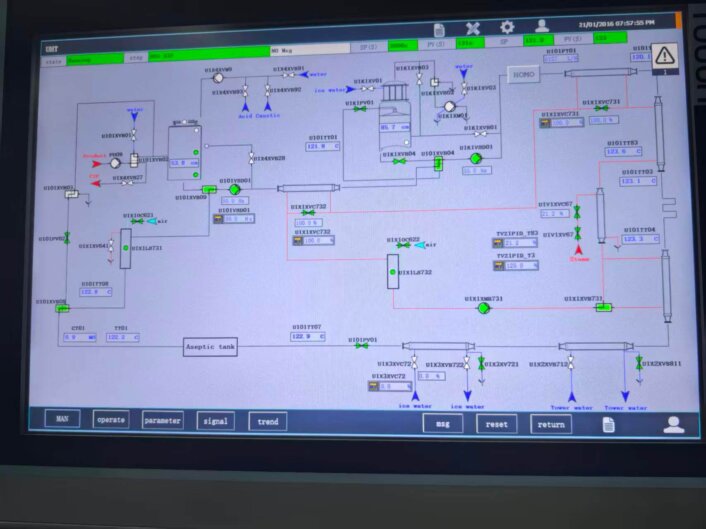
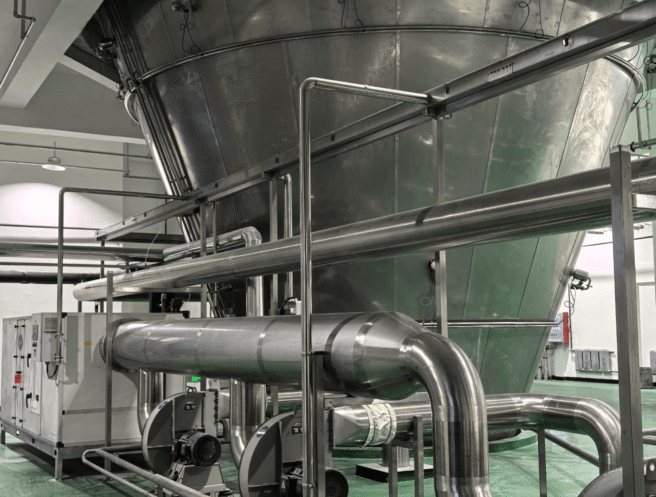
The UHT sterilization system should be selected according to product characteristics, required shelf life, filling method, and the heat sensitivity of tea components. For clear tea beverages, a typical UHT process is carried out at 135–140℃ for 5–15 seconds, followed by cooling the product to approximately 25–30℃ before aseptic filling. The UHT sterilizer capacity should match the production line capacity. For a 5,000 L/H RTD tea beverage production line, a 5,000 L/H UHT sterilization system is recommended. The UHT system generally consists of a product balance tank, feed pump, plate or tubular heat exchanger, holding tube, hot water circulation system, cooling section, and automatic PLC control system to ensure stable sterilization performance and consistent product quality.

Recommended Equipment List for a 5,000 L/H RTD Tea Processing Line
| Equipment | Recommended Specification |
|---|---|
| Tea extraction system | 2 × 500 L extraction tanks |
| Hot water system | 5,000–6,000 L/H |
| Tea filtration system | 500L/H Duplex filter + disc centrifuge separator |
| Tea extract storage tank | 1000 L/H |
| Sugar and ingredient dissolving system | 1000L/H |
| Blending tanks | 2 ×5,000 L/H |
| Sterilization system | UHT sterilizer, degasser and homogenizer(optional) 5000L/H |
| CIP cleaning system | 4000L/H ×4 tanks CIP system |
For a 5,000 L/H RTD tea beverage production line, equipment selection should be based on the complete production process rather than only the filling capacity.
The key points include:
- Selecting the correct tea extraction system to achieve stable tea flavor.
- Using sufficient filtration to prevent sediment formation.
- Matching blending tank capacity with continuous filling requirements.
- Choosing hot filling or aseptic filling according to product shelf life requirements.
- Designing an automatic CIP system to ensure food safety and production efficiency.
With a properly designed tea processing system, manufacturers can produce high-quality green tea, black tea, oolong tea, and functional tea beverages with stable quality and efficient operation.
Complete RTD Tea Beverage Processing Solution
We provide complete RTD tea beverage processing solutions, including:
- Tea extraction systems
- Tea filtration systems
- Sugar syrup preparation systems
- Blending tanks
- Pasteurization/UHT sterilization systems
- CIP cleaning systems
- Filling line integration
Our engineers can design the tea production line according to different tea types, production capacities, and shelf-life requirements.