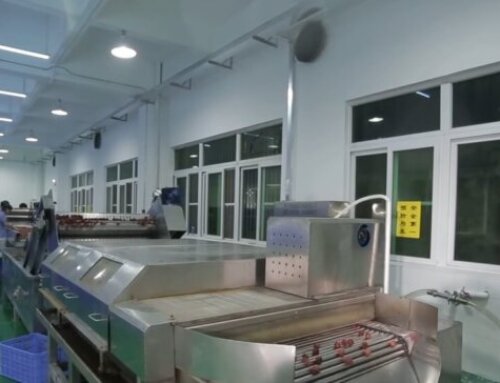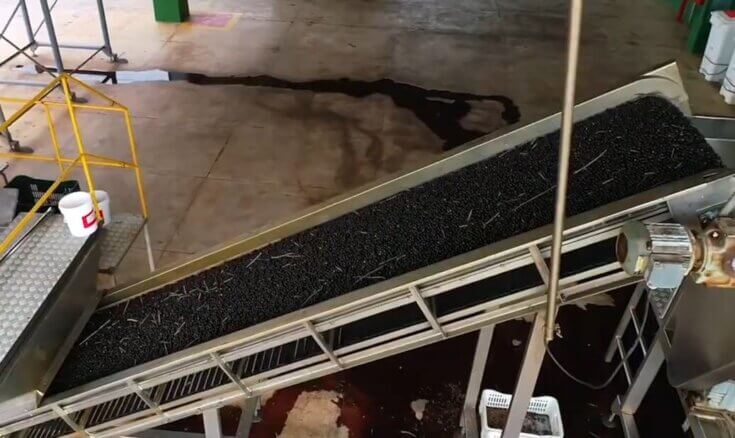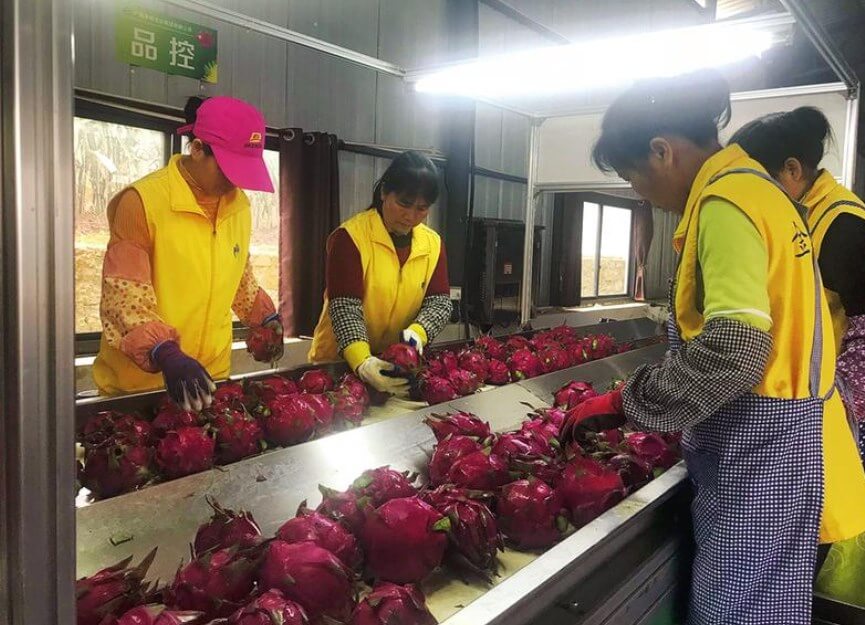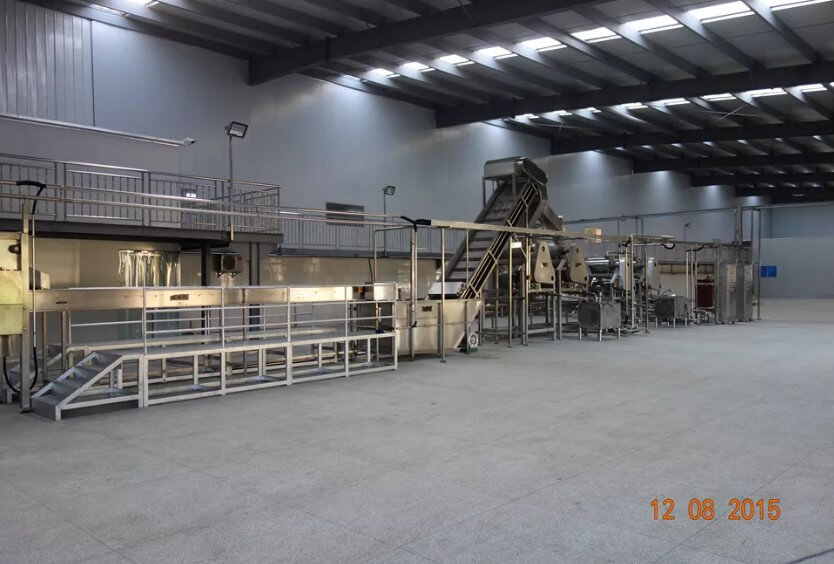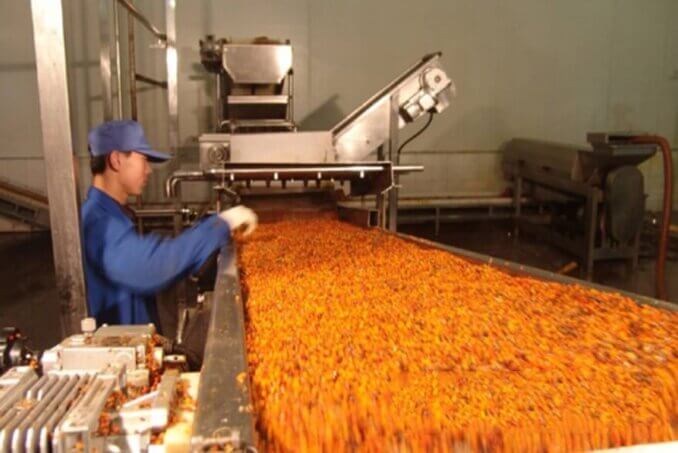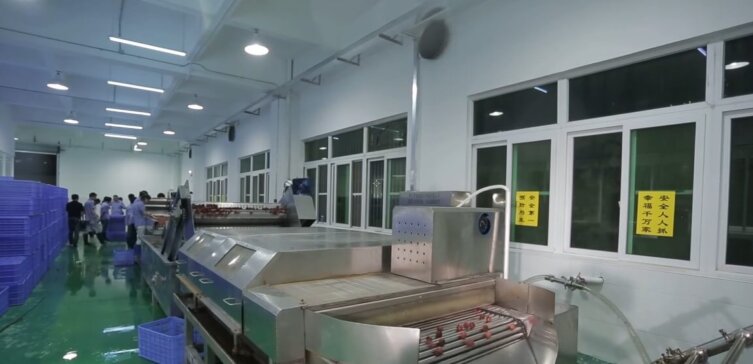
Pineapple Processing Line
Pineapple Processing Line Feature
- Wide Range of Pineapple Products: The pineapple processing line can be customized to produce clear pineapple juice, cloudy pineapple juice, concentrated pineapple juice, pineapple jam, pineapple puree, canned pineapple, canned pineapple chunks, dried pineapple slices, and other pineapple-based products.
- Complete Processing Equipment: Depending on the product range and processing requirements, the equipment may include an air-bubble washing machine, elevator, fruit sorting machine, brush washing machine, pineapple peeling and coring machine, hammer crusher, belt press juice extractor, disc separator, ultrafiltration system for clear pineapple juice, evaporator for concentrated pineapple juice, and sterilization and filling equipment.
- High Automation and Hygienic Design: The plant features a high degree of automation, carefully selected equipment configurations, a scientifically designed process flow, and food-grade hygienic design to support efficient and reliable industrial production.
- Flexible Processing Capacity: Processing capacities range from 20 to 1,500 tons of fresh pineapples per day. The plant layout and equipment configuration can be tailored to the required production capacity and product portfolio.
- Efficient Juice Extraction: The pineapple juice extraction yield typically ranges from 55% to 75%, depending on pineapple variety, maturity, raw material quality, and the selected extraction method.
- Adjustable Juice Concentration: Fresh pineapple juice typically has a soluble solids content of approximately 12°Brix, while concentrated pineapple juice can reach 62–65°Brix, depending on the product specifications.
- Energy-Saving Concentration Technology: Low-temperature vacuum concentration helps reduce thermal exposure and preserve the natural flavor, color, and quality of pineapple juice. Multi-effect evaporators recover and reuse vapor energy across successive evaporation stages, reducing fresh steam consumption and improving energy efficiency.
- Reliable Sterilization and Aseptic Filling: UHT sterilization combined with aseptic filling helps preserve pineapple juice quality and achieve a long shelf life without added preservatives, provided the thermal process, aseptic conditions, and packaging system are properly validated.
- Food-Grade Materials and CIP Cleaning: Product-contact equipment can be manufactured from food-grade SUS304 stainless steel. An integrated clean-in-place (CIP) system facilitates automated cleaning and helps maintain the required hygienic conditions throughout production.
- Centralized PLC Control System: The central control system coordinates equipment operation, monitors key processing parameters, and manages production sequences. This integrated automation helps improve production efficiency, maintain consistent product quality, and support safe and stable operation.
- Flexible Production Configurations: The pineapple processing plant can be configured to meet different production requirements, from pineapple pulp and juice to canned pineapple products and dried pineapple slices. Modular equipment selection allows manufacturers to choose the appropriate processing stages according to their target products, investment budgets, and production goals.
- Integrated Pineapple Processing Technology: A typical pineapple processing plant may include washing, sorting, peeling, coring, slicing, crushing, juice extraction, concentration, thermal treatment, filling, drying, or freezing. Not every product requires all these stages. By combining the appropriate equipment and processing technologies, the production line can be tailored to manufacture different pineapple products while maintaining consistent quality, food safety, and efficient resource utilization.
End Products and Package Of Pineapple Processing Line
—Concentrated Pineapple Juice(CPJ): filled into Aseptic bag in drums or bag in box containers.
—NFC(Not From Concentrated) Pineapple juice: filled into PET or glass bottles, aseptic cartons or pouches.
—Reconstituted pineapple juice: Use concentrated pineapple juice as raw materials, then dilute with water and add flavoring agents, after full blended, then after pasteurized, homogenized, degassed and filled into small bottles, tin cans.
—Pineapple pulp: it is the product obtained from peeled pineapple by crushing and pulping. The pineapple pulp may be preserved by thermal treatment and by adding preservatives. It is packed into small and bulk lots for further industrial processing and formulations in ice cream mixes, jellies, jams, and sodas. The pulp can be heat sterilized and packed aseptically, leading to a product with a long shelf life without any added preservatives.
—Dry Pineapple slice/chips: The fresh pineapple after washing, peeling, and slicing, then sent to the vacuum dryer for drying. The dried pineapple slice will be filled into pouches or jars. The fresh pineapple slice moisture content is 70%-80%, after drying, the mango slice moisture content is about 10%-12%. The drying temperature is about 60℃, and one batch of pineapple slice drying takes about 20-22 hours.
—Pineapple wine: The similar process for producing apple cider, use concentrated pineapple juice or fresh pineapple as raw material, then the pineapple juice will be standardized and ultra-filtered, then the clear juice will be alcoholic fermentation, after that, we will get the pineapple wine. Then the pineapple wine will be pasteurized and filled into bottles.
—Canned Pineapple Chunks: Fresh pineapple after washing, sorting, cutting two ends and remove fruit core, then use the slicer machine to cut the pineapple into slices or chunks, then add the antioxidants and sugar water to mix, and filled into metal cans.

The Technological Flowchart of Pineapple Juice Processing Line
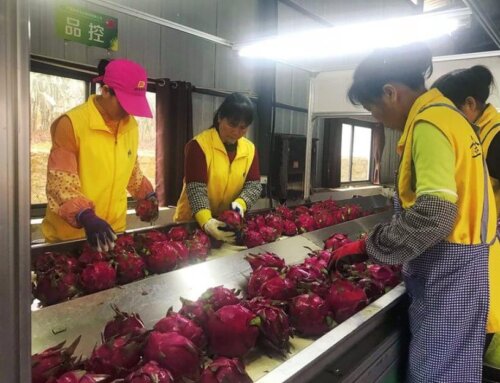
Fresh pineapples are first washed in an air-bubble washing machine to remove dirt and surface impurities. They are then conveyed along a roller conveyor, where damaged, rotten, and unqualified fruits are sorted out, ensuring that only high-quality pineapples enter the subsequent processing stages.
There are two main options for pineapple juice extraction. The first uses an automatic pineapple peeling and coring machine to remove the skin and core, followed by a fruit crusher and a belt press juice extractor to obtain fresh pineapple juice. The second option uses an integrated roller-type pineapple juice extractor, which combines peeling, crushing, and juice extraction in one machine. For higher juice recovery, the discharged pineapple peels and residues can be further pressed using a screw press, and the recovered juice can be combined with the primary juice.
After extraction, manufacturers can choose whether to concentrate the pineapple juice according to the target market. For bulk supply to juice distributors and beverage manufacturers, the juice can be concentrated using an evaporator, sterilized, and aseptically filled into large bags for convenient storage and transportation. For retail products sold in supermarkets, the concentration stage can be omitted if single-strength juice is required. The juice is then thermally processed and filled into small packages, such as bottles or Tetra Pak cartons, using a suitable hot-filling or aseptic-filling system.

Key Machine Of Pineapple Juice Processing Line
Fresh pineapple washing and sorting machine
Fresh pineapples are first processed through an air-bubble washing machine and a brush washing machine to remove dirt, soil, and other surface contaminants. The air-bubble washing machine combines soaking and water agitation to loosen impurities from the fruit surface, while the brush washing machine provides additional mechanical cleaning and rinsing to improve washing effectiveness.
Using these two washing stages helps reduce surface contamination and prepare the pineapples for subsequent processing. However, washing alone does not guarantee complete bacterial removal, so proper sanitation and hygienic handling are also essential throughout the production line.
After washing, the pineapples are conveyed to a roller sorter for quality inspection and sorting. Operators can identify and remove undersized, damaged, overripe, or otherwise unsuitable fruits, ensuring that only qualified raw materials proceed to the next stage.
This integrated pineapple washing and sorting process helps improve raw material cleanliness, maintain more consistent fruit quality, and support stable operation in industrial pineapple juice and canned pineapple production lines.

Pineapple peeler and end cutter
Automatic Pineapple Peeling and Coring Machine
An automatic pineapple peeling and coring machine is designed to streamline pineapple preparation for industrial fruit processing. Integrating four functions—peeling, cutting off both ends, pineapple cutting, and core removal—this multifunctional machine helps prepare fresh pineapples efficiently for further processing into pineapple juice, canned pineapple chunks, pineapple pulp, and other pineapple products.
Equipped with an intelligent profiling system, the machine automatically adapts to variations in pineapple height and diameter. The peeling thickness can be adjusted from 1.5 to 10 mm to accommodate different fruit sizes and processing requirements, helping remove the pineapple skin while reducing unnecessary fruit loss. The integrated coring function removes the hard central core, making the peeled pineapple more suitable for downstream cutting, crushing, and juice extraction.
With a processing capacity of approximately 400–500 pieces per hour, this automatic pineapple peeling and coring machine is suitable for commercial pineapple processing plants seeking to improve preparation efficiency, reduce manual labor, and achieve more consistent processing results.
Key Technical Specifications
- Main functions: Automatic pineapple peeling, top and bottom cutting, pineapple cutting, and core removal
- Processing capacity: 400–500 pieces/hour
- Suitable fruit diameter: 80–250 mm
- Suitable fruit height: 80–400 mm
- Adjustable peeling thickness: 1.5–10 mm
By combining pineapple peeling and coring in one machine, this equipment provides an efficient solution for preparing pineapples before dicing, canning, pulping, or juice extraction in an industrial pineapple processing line.
Pineapple juice extractor
The belt press is designed for continuous juice extraction from chopped pineapple fruits or pineapple mash without the previous necessity of enzymatic treatment. The juice extraction is obtained by increasing the pressure on the fruit cake placed between the two running belts. The fruit cake is conveyed on the upper belt where it is uniformly distributed. After its conveyance on the lower belt, the fruit cake is subjected to a further increase in pressure by approaching the two belts toward the wedge zone. In the pressure zone, the cake contained between the two belts follows an S pattern around the rolls with a different and decreasing diameter. The capacity for the belt press pineapple juice extractor is from 3 tons per hour to 20 tons per hour.
In a complete fruit juice processing line, the belt press is typically installed after fruit washing, sorting, crushing, and pulping or mash preparation. The extracted juice can then be transferred to filtration, enzymatic treatment, clarification, pasteurization, concentration, or aseptic filling, depending on the final product requirements.

Another option for industrial pineapple juice production is a roller-type pineapple juice extractor, which integrates pineapple peeling, crushing, and juice extraction into one machine. After washing and sorting, fresh pineapples can be fed directly into the roller-type extractor without requiring separate peeling or crushing equipment.
During the extraction process, the rollers separate the pineapple juice from the solid materials. The extracted juice flows through the discharge outlet at the bottom of the machine and is collected in a juice collection tank, while the pineapple peels and fibrous residues are discharged from both ends of the machine.
To further improve juice recovery, the discharged pineapple peels and residues are conveyed by a screw conveyor to a screw press for secondary extraction. The juice recovered from this second pressing stage can be combined with the juice obtained from the primary roller-type extractor. The combined juice is then pumped to downstream processing equipment for subsequent filtration, clarification, pasteurization, concentration, or other treatments, depending on the final product requirements.
This two-stage extraction process helps recover additional juice from the pineapple residues, reduce juice losses, and increase the overall juice extraction yield. With processing capacities ranging from 5 to 20 tons of fresh pineapples per hour, this integrated solution is suitable for medium- to large-scale pineapple juice processing plants seeking high throughput and efficient raw material utilization.
Pineapple juice separator
After extraction, the pineapple juice is pumped to a two-phase decanter centrifuge to remove coarse particles and separate part of the suspended solids. This process helps improve juice consistency while retaining a certain amount of fine pulp to achieve the desired mouthfeel. Depending on the raw material characteristics and separation conditions, the insoluble solids content of the separated pineapple juice can be adjusted to approximately 5%–30% to meet different product requirements.
For manufacturers aiming to produce clear pineapple juice, an additional ultrafiltration (UF) process is required to remove fine suspended particles and improve juice clarity. Before clarification, pectolytic enzymes can be added to break down pectin in the juice, reducing viscosity and improving the efficiency of subsequent clarification and membrane filtration.
The choice between pulp-containing and clear pineapple juice depends on the target product specifications. A pulp-containing product retains more suspended solids for a fuller mouthfeel, while a clear juice product requires additional clarification and filtration to achieve the desired transparency and stability.

Pineapple juice evaporator
A falling film evaporator is widely used in industrial pineapple juice processing to concentrate juice from approximately 12°Brix to 65°Brix. During operation, pineapple juice flows as a thin film along the heated surfaces of the evaporator tubes, allowing rapid heat transfer and efficient water evaporation. Operating temperatures can range from approximately 45°C to 90°C, depending on the evaporator design and operating conditions. When combined with vacuum evaporation, this technology helps reduce thermal exposure and preserve the natural flavor, color, and quality of pineapple juice.
The pineapple juice evaporator is manufactured from food-grade SUS304 stainless steel to meet the hygiene requirements of food processing. The entire concentration process can be controlled automatically through a PLC system, enabling precise monitoring and adjustment of key operating parameters, including temperature, pressure, and product concentration.
Depending on the required processing capacity and energy-efficiency targets, the system can be designed as a single-effect, double-effect, or multi-effect evaporator. Multi-effect evaporation reuses vapor generated in one effect as the heating medium for subsequent effects, reducing fresh steam consumption and improving overall energy efficiency. Additional heat recovery and condensate recovery systems can further optimize utility consumption.

Pineapple juice/pulp/jam sterilizer
The thermal processing method for pineapple products depends on the product type, formulation, packaging format, and required shelf life. Tubular sterilizers, plate pasteurizers, and post-filling sterilization systems are commonly used in industrial pineapple processing lines to ensure product safety and maintain quality.
1. Sterilization of Concentrated and NFC Pineapple Juice
Concentrated pineapple juice and not-from-concentrate (NFC) pineapple juice can be processed using a tubular sterilizer designed for the product’s viscosity and pulp content. A typical processing reference is 115–120°C for approximately 30 seconds, subject to validation of the required commercial sterility and product quality. After sterilization, the juice can be transferred to an aseptic filling machine for packaging in sterile containers. Alternatively, hot filling may be used when the product formulation, packaging material, filling conditions, and target shelf life are suitable for this process.
2. Pasteurization of Blended Pineapple Juice and Pineapple Jam
For blended pineapple juice and pineapple jam, a tubular or plate pasteurizer can be selected according to the product’s viscosity, pulp content, and heat-transfer characteristics. A processing temperature of approximately 95–98°C may be used as an initial design reference, with the holding time and operating conditions determined through product-specific thermal validation. Following pasteurization, the product can be hot-filled into compatible bottles or cans to help prevent post-process contamination and achieve the required shelf life.
3. Thermal Processing of Canned Pineapple Chunks
For canned pineapple chunks, the fruit pieces may undergo pre-filling heat treatment in a suitable tubular or other product-specific processing system, depending on the process design. In some production lines, pre-filling pasteurization may be omitted, with the required thermal treatment instead carried out after filling and sealing.
Post-filling processing options include spray pasteurizers, water-bath pasteurizers, and retorts. The appropriate system depends on the product formulation, packing medium, can size, packaging material, and target shelf life. For shelf-stable canned pineapple products, a validated retort process is commonly required when the product’s acidity and formulation do not permit a less intensive process. The complete time-temperature schedule must be established to achieve the required product safety and commercial sterility.

Pineapple products filling machine
The filling method for pineapple products depends on the product type, packaging format, and required shelf life. Common solutions for industrial pineapple processing line include hot filling, aseptic filling, frozen storage in barrels, and integrated can filling and sealing systems.
1. Hot Filling and Aseptic Filling for Pineapple Juice/Pulp
Pineapple juice can be packaged using either hot filling or aseptic filling. Hot filling is commonly used for compatible small bottles and cans for retail consumption, while aseptic filling is suitable for packaging formats such as aseptic bags and cartons. The appropriate filling method depends on the product’s thermal processing requirements, packaging materials, and target shelf life.
2. Aseptic Packaging of Single-Strength Pineapple Pulp/Juice
Single-strength pineapple pulp can be heat-treated using a validated sterilization process and then filled into pre-sterilized aseptic bags under controlled aseptic conditions. This packaging method helps preserve product quality and achieve a long shelf life without added preservatives, provided the thermal process, packaging integrity, and aseptic conditions meet the required specifications.
3. Frozen Storage of Concentrated Pineapple Pulp/juice
Concentrated pineapple pulp/juice can be packed into suitable food-grade barrels and stored at approximately -18°C for extended periods. Freezing helps slow quality deterioration and supports long-term storage without the need for added chemical preservatives. The actual storage life depends on the concentration, packaging integrity, initial product quality, and storage conditions.
4. Four-in-One Filling Machine for Canned Pineapple Chunks
For canned pineapple chunks, an integrated four-in-one filling and sealing machine can combine four operations in a continuous production sequence:
- Can rinsing: Empty metal cans are rinsed to remove potential contaminants before filling.
- Pineapple chunk filling: A portioning system places the required quantity of pineapple chunks into each can.
- Sugar syrup filling: Sugar syrup is dosed into the cans to achieve the specified fruit-to-syrup ratio and fill weight.
- Can sealing: The filled cans are hermetically sealed to prepare them for subsequent thermal processing.
After sealing, the cans are transferred to the appropriate pasteurization or retort sterilization system, according to the product formulation and validated thermal process. This integrated solution helps streamline canning operations, improve filling consistency, and support efficient large-scale canned pineapple production.