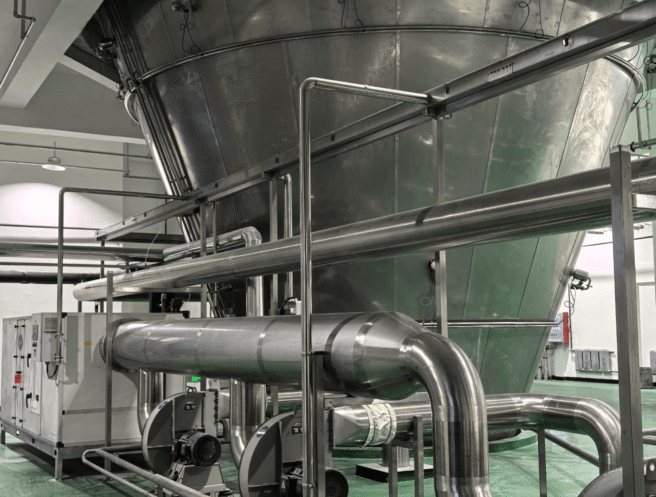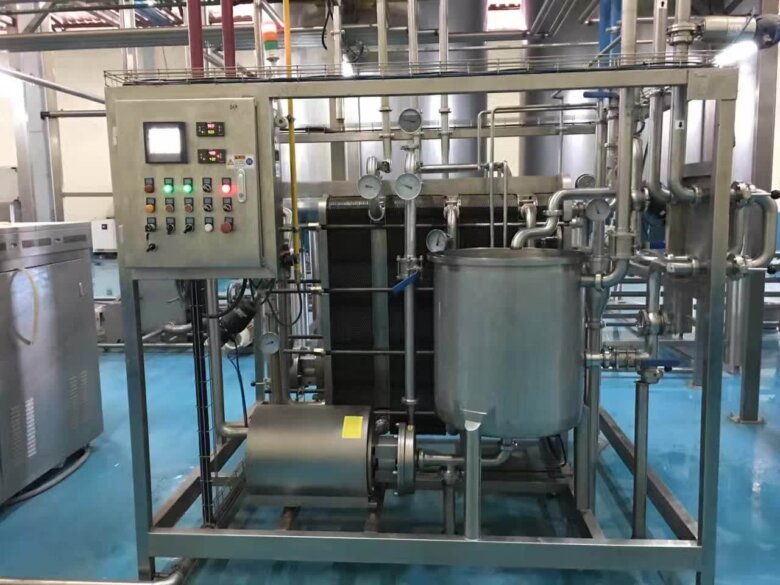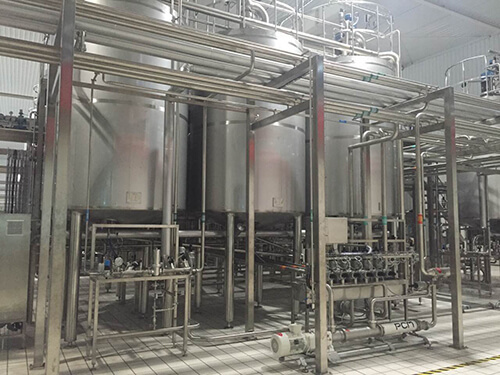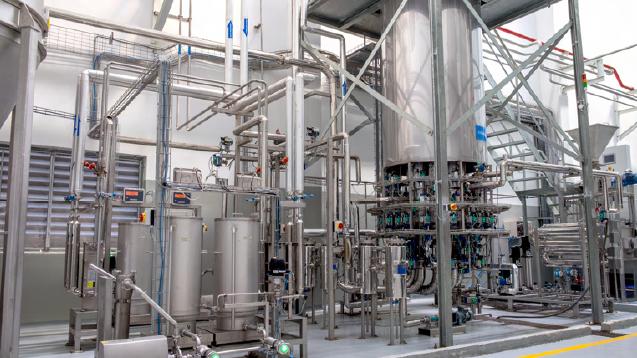
In many dairy processing plants, existing production lines are supplied by global equipment providers such as Tetra Pak or GEA Group. However, with the rapid development of China’s dairy processing equipment industry, more and more manufacturers are choosing Chinese suppliers when expanding production capacity or introducing new products. In these situations, customers often purchase additional equipment such as storage tanks, mixers, pasteurizers, UHT sterilizers, or aseptic tanks from alternative suppliers. With extensive project experience, we have successfully integrated our machines with existing European processing equipment in many dairy plants. Successfully integrating new equipment into an existing dairy processing system requires careful engineering planning, including mechanical compatibility, piping connections, automation system integration, and compliance with hygienic design standards.
I. Evaluate the Existing Processing System
The first step is to understand the structure of the current processing plant. Dairy processing lines from companies like Tetra Pak and GEA Group typically include centralized automation, CIP systems, and standardized piping layouts. Key information that must be confirmed includes:
- PLC brand and model used in the plant
- Communication protocols (Profinet, Profibus, Modbus TCP, etc.)
- Existing process flow and equipment layout
- CIP cleaning configuration
- Available utility connections (steam, chilled water, compressed air)
A detailed system evaluation ensures that the new equipment can operate smoothly within the existing production environment.
II. Mechanical and Process Integration
New machines or tanks must match the existing process parameters of the plant. This includes pipeline diameter, hygienic fittings, and process flow requirements.
Important integration considerations include:
- Using sanitary stainless steel materials compatible with dairy standards
- Matching pipeline connections such as clamp or DIN fittings
- Ensuring proper flow direction and pump capacity
- Maintaining hygienic design for food safety
The goal is to ensure the new equipment becomes a seamless extension of the original dairy production line.
III. Automation and Control System Integration
One of the most critical aspects of equipment integration is automation compatibility. Most modern dairy processing plants use centralized PLC control systems.
There are generally three integration approaches:
Direct PLC Integration
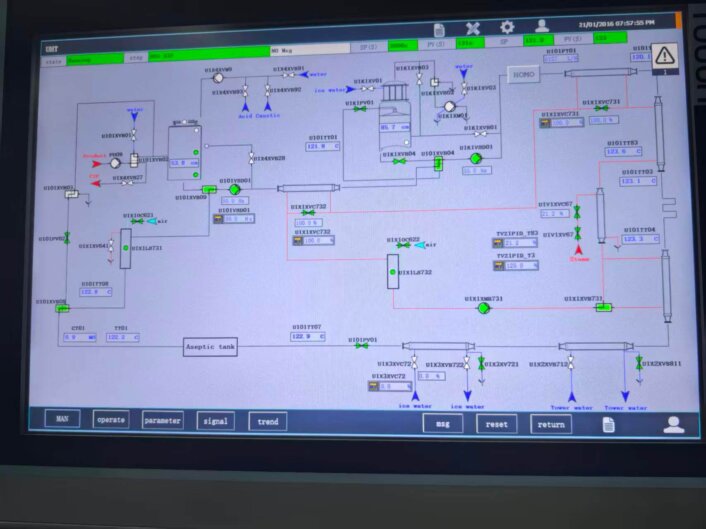
In this approach, all instruments, valves, and motors of the new equipment are connected directly to the plant’s original PLC. The automation program and HMI interface must then be modified to include the new equipment. This solution allows the entire processing line to operate under one centralized control system, which provides better operational consistency and unified process management. In this method, the control program and HMI will need to be updated by the Tetra Pak or GEA group automation engineer so that the new equipment operates within the current control system.
Independent PLC with Communication Integration
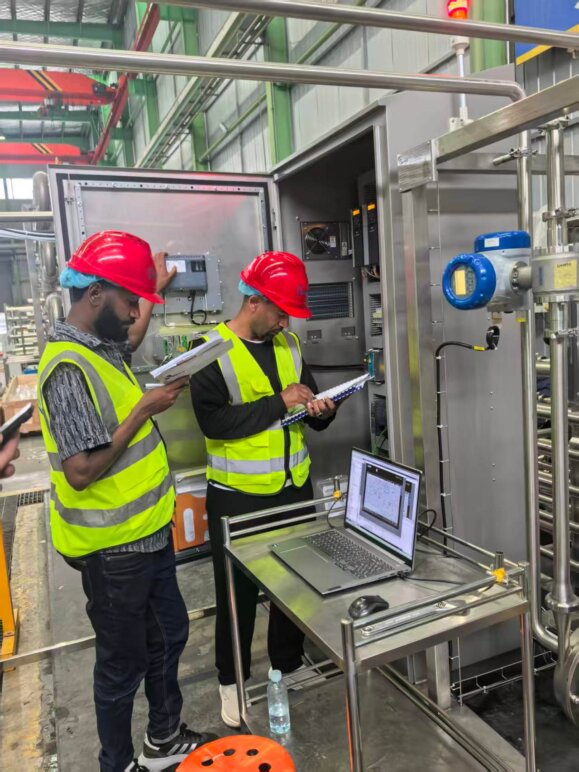
A separate PLC is installed for the new equipment, and communication is established with the existing plant control system through industrial communication protocols, which is commonly used in factory expansion projects. In this method, the new machines are equipped with a dedicated PLC control system, and communication is established with the existing plant automation network through industrial protocols such as Profinet or Modbus TCP. The central system can monitor equipment status and key parameters while the local PLC manages detailed control logic. This approach minimizes changes to the original automation system and reduces operational risk.
Local or Semi-automatic Control
The third option is local or semi-automatic control, where the new equipment operates independently with local control panels and basic instrumentation. While this solution is simpler and requires minimal system modification, it is typically used only for auxiliary equipment because it does not provide centralized monitoring or automation integration with the main processing system.
IV. CIP and Hygienic Cleaning Integration
Dairy processing equipment must be compatible with the plant’s CIP (Clean-in-Place) system. When integrating new tanks or processing units, engineers must ensure that:
- The equipment is designed with proper CIP spray devices
- Pipeline slopes allow complete drainage
- CIP flow velocity meets hygienic requirements
- Cleaning circuits connect correctly to the existing CIP system
Proper CIP integration guarantees hygiene compliance and simplifies plant maintenance.
V. Commissioning and System Testing
After installation, the integrated equipment must undergo commissioning and testing to ensure reliable operation. This includes:
- Functional testing of valves, pumps, and sensors
- Automation system communication testing
- CIP cleaning verification
- Process performance validation
Once these steps are completed, the new machines can operate as part of the existing processing line without disrupting production.
Integrating new equipment into an existing dairy processing plant supplied by Tetra Pak or GEA Group is a common requirement as factories expand production. With proper engineering design, automation integration, and hygienic standards, new tanks and processing machines can be seamlessly incorporated into the original system. This approach allows dairy manufacturers to increase capacity, introduce new products, and extend the life of their existing processing facilities while maintaining reliable and efficient plant operation.