Coconut Milk Processing Description
Coconut fruits are tropical fruits that are widely planted and proceed in South-East Asia and South Asia countries such as India, Philippines, Vietnam, Sri Lanka, Thailand, Malaysia, Indonesia, Some African countries(Nigeria, Ghana) and Central American countries(Dominica, Belize). The fresh coconuts in these countries proceed in all kinds of products including coconut milk, coconut water, coconut oil, and desiccated coconuts products, among these products, coconut milk is one of the most popular drinks from fresh coconuts due to its high protein, vitamin and trace elements.
Coconut milk products are proceeded by preparing a large quantity of finely ground coconut meat and extracted, where most solids, fibers and residues are separated and filtered, with or without additional water and flavors, thermally processed appropriately and packed in a container for direct consumption or retailing use.
The fresh coconut meat can proceed into light coconut milk(5%-7% fat content), medium coconut milk(10%-20% fat content), high-fat coconut milk (20%-30% fat content), and coconut cream (30%-40% fat content) according to the end products fat content, the desired fat content coconut milk can be diluted by RO pure water during processing.
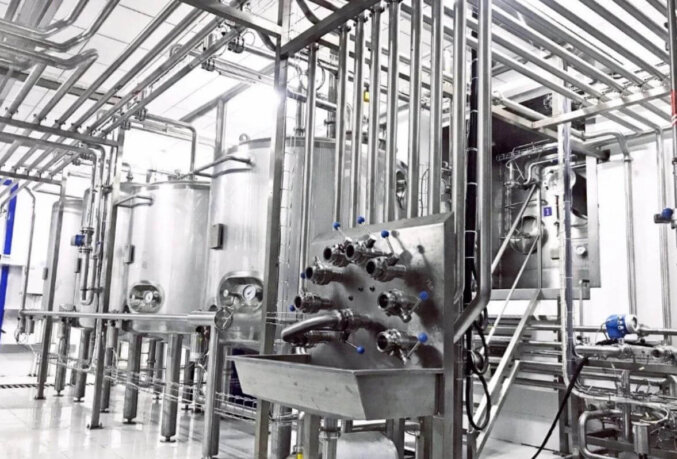
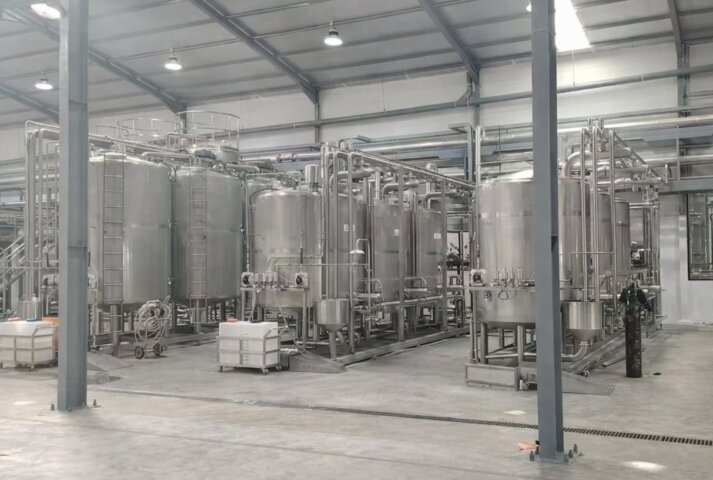
The coconut milk processing machines are involved in coconut meat washing and blanching equipment, coconut meat grinding and expelling machine, coconut milk extracting machine, coconut milk filter and separator, coconut milk formulation, homogenizing, degassing and pasteurizing/sterilizing machine, coconut milk filling and packing machine, CIP cleaning plant, RO water system. All the coconut milk processing machines are made of food-grade SUS304 material.
Thanks to our R&D department for designing a reasonable and highly efficient coconut milk production process, The whole coconut milk processing plant can greatly save energy such as water and steam to help our client to reduce the operating cost.
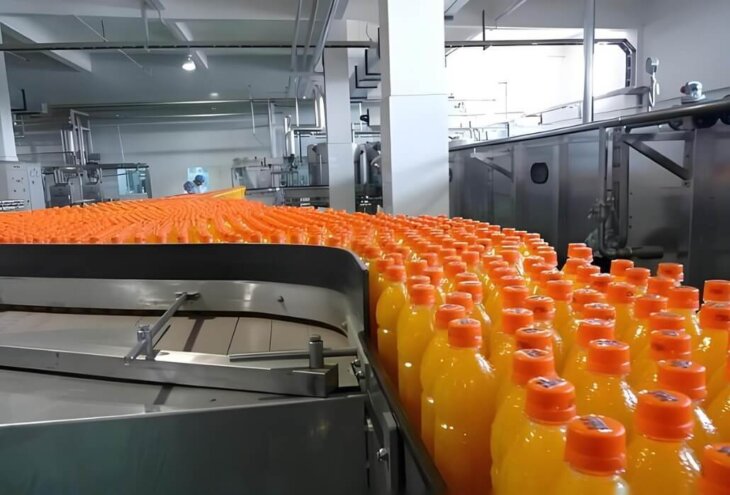
The coconut milk processing capacity is from 500L per hour to 10000L per hour and the end coconut milk products can be packed into various containers such as bottles, metal cans, aseptic bags, aseptic cartons, or pouches according to client’s different requirements.
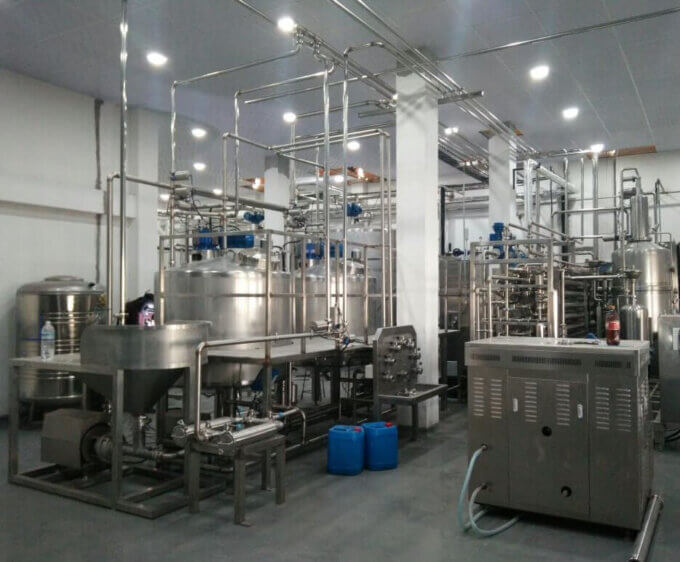
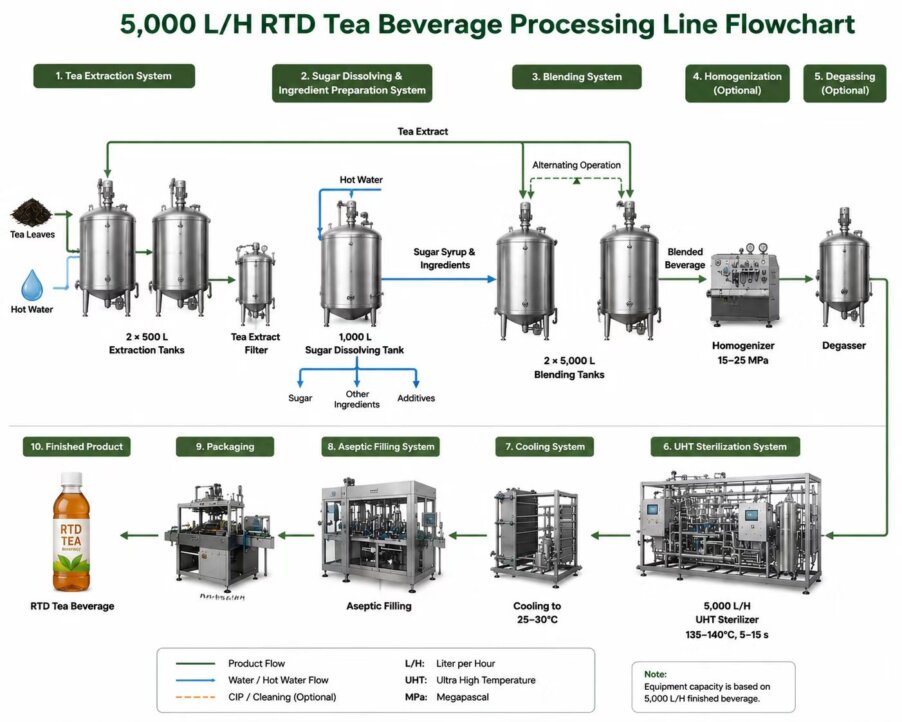
Coconut Milk Production Process Flowchart
After dehusking and deshelling, fresh coconuts are processed to obtain clean coconut meat. The coconut meat is then blanched or pre-cooked using hot water or steam to reduce microbial load, inactivate enzymes, and improve product quality before further processing.
The blanched coconut meat is transferred to a drum washing machine for cleaning. After washing, the coconut meat is ground into small particles and fed into a coconut milk extractor to separate coconut milk from coconut residue.
The extracted coconut milk is then filtered to remove suspended solids and fibers, improving product smoothness and stability. To prevent quality deterioration, the coconut milk is pre-pasteurized and stored in insulated tanks before formulation and standardization.
During the formulation stage, the coconut milk is blended with other ingredients according to the product recipe. The finished mixture is then processed through homogenization, pasteurization or UHT sterilization, and degassing to improve emulsion stability, ensure product safety, and extend shelf life.
Finally, the processed coconut milk is filled into suitable packaging containers, such as aseptic bags, cartons, bottles, or cans, according to the required storage and distribution conditions.

Coconut Milk Processing Machine Introduction
Coconut meat blancher and washer
The fresh coconut meat will be blanched in 85℃-100℃ hot water for 3-5 minutes. After blanching, the bacteria of coconut meat will be greatly reduced and the enzyme will also be inactivated to increase the yield rate in later coconut milk extraction process. The coconut meat blanching process can be done in an air bubble washing machine, so the coconut meat has a cleaning effect in the process of blanching. After blanching and first-stage washing, the coconut meat will be fed into the drum washing machine for the second-stage washing. In the drum washing machine, the coconut meat is washed by high-pressure water spraying through the rotation of the drum.
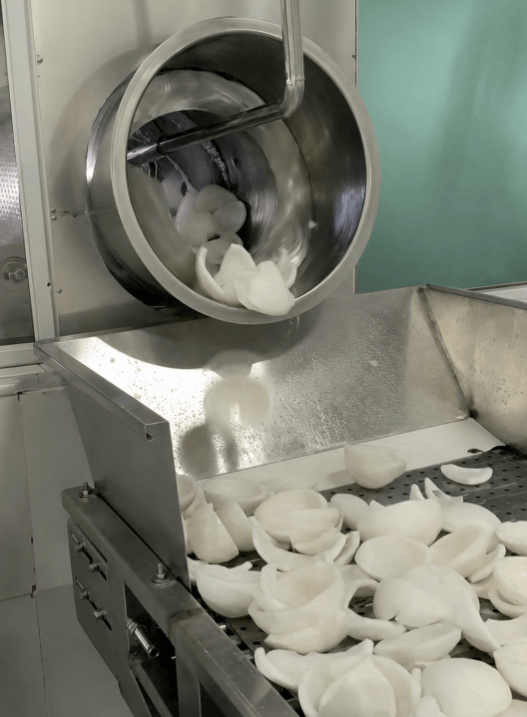
Coconut meat grinding and extracting machine
The cleaned coconut meat is reduced in particle size by a grinding machine to prepare for more efficient coconut milk extraction. The coconut meat is fed into the coconut meat grinding machine hopper, then the sharp blade in the coconut grinding machine rotates at a high speed to chop the coconut meat into 3-5mm small particles, the chopped coconut flakes will be collected into the hopper and screw transferred to the coconut milk extractors.
For coconut milk extraction, the double screw press or belt press are the most commonly used for the first extraction. To increase the yield rate and extraction efficiency, during coconut milk extraction, the barrel type hydraulic press will be used for the second extraction of the coconut milk, the desiccated coconut from first extractors will be transferred to one recombined tank, where the RO pure water is usually dosed into the tank, and then the coconut mash and water mixture will be pumped to the barrel type hydraulic press for the second extraction. After coconut milk is extracted, the milk will be collected and stored in a SUS304 tank and then one sieve screen and dual bucket filter can be applied to remove the fiber and solids in coconut milk.

Coconut milk pre-pasteurizing and batch storage tank
In higher capacity coconut milk processing plants, The coconut milk will be pre-pasteurized by a plate pasteurizer, and the pasteurizing process is 75-80℃ for 60S and cooled down to 5-10℃, then the milk will be pumped into insulation sanitary SUS batch tanks for storage.
In a small-scale coconut milk processing line(500L-1000L per hour), the coconut milk after being filtered can be cooled down to 5 ℃directly by a plate cooler and stored in insulation tanks. And with this case, the milk in batch tanks must be finished processing in 6-8 hours.

Coconut milk mixing/blending tanks system
The blending process plays an important role in determining the final formulation, flavor, viscosity, color, and mouthfeel of coconut milk products. Therefore, it is a critical step in industrial coconut milk processing plants.
Ingredients such as sugar, stabilizers, emulsifiers, vitamins, and flavors are first dissolved and dispersed in the liquid phase using a high-speed emulsification tank to ensure uniform distribution and prevent ingredient agglomeration.
The prepared ingredient solution is then transferred into the blending tank and mixed with coconut milk and water according to the product formula. The blending tank is equipped with a low-speed paddle agitator, typically operating at 20-60 rpm, which gently mixes all components to achieve a consistent composition while minimizing air incorporation and maintaining product quality.
After blending and standardization, the coconut milk is transferred to the following processes, including homogenization, sterilization, degassing, and filling.

Coconut milk high-pressure homogenizer and degasser
1. Coconut milk homogenizer
The main purpose of the homogenizer in coconut milk processing is to reduce fat globule and particle size, creating a uniform and stable emulsion. This helps prevent oil separation, improves product stability, and enhances the texture, consistency, and mouthfeel of the final coconut milk product.
A high-pressure two-stage homogenizer is commonly used for coconut milk processing. Depending on the product formulation, fat content, and required stability, the homogenization pressure is typically adjusted within the range of 20-60 MPa.
The homogenization sequence is an important factor affecting product quality:
—For aseptic coconut milk production, the coconut milk can be homogenized before UHT sterilization or processed through an aseptic homogenizer after UHT treatment at controlled temperatures (typically around 60-70℃) before aseptic filling.
—For non-aseptic coconut milk products, homogenization is usually carried out before pasteurization or sterilization to improve emulsion stability and ensure consistent product quality.
2. Coconut Milk Degassing System
The coconut milk degassing system is used to remove dissolved air and entrapped gases from coconut milk after homogenization and before sterilization or filling. During grinding, extraction, mixing, and homogenization, air can be introduced into the product, which may cause oxidation, color changes, foaming, and reduced storage stability.
By applying vacuum degassing technology, the dissolved oxygen and air bubbles inside the coconut milk are effectively removed. This helps prevent fat oxidation, maintain the natural color and flavor of coconut milk, improve filling accuracy, and enhance the stability and shelf life of the final product.
The degassing process is especially important for aseptic coconut milk production, where product quality and long-term storage stability are critical. The vacuum degasser is usually installed before UHT sterilization and filling, and it can be integrated with the homogenization and sterilization system to provide a continuous hygienic processing solution.
Coconut milk sterilizer and filler
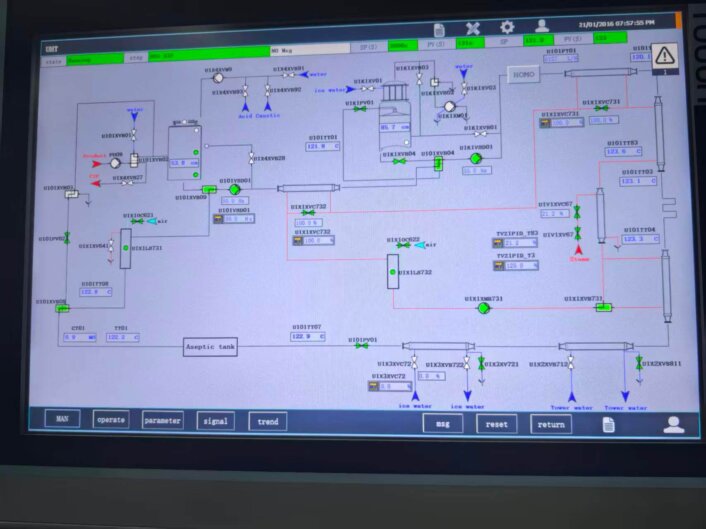
Coconut milk heat treatment and filling technologies are closely related and should be selected according to the required shelf life, packaging format, storage conditions, and market requirements. The following are the most common sterilization and filling solutions used in industrial coconut milk processing.
Pasteurized Chilled Coconut Milk
For refrigerated coconut milk products, the coconut milk is usually pasteurized at approximately 75-85℃ for 15-120 seconds using a plate heat exchanger pasteurizer. After pasteurization, the product is cooled and filled under hygienic conditions into glass bottles, PET bottles, gable top cartons, metal cans, or pouches.
This type of product requires cold-chain distribution and typically has a refrigerated shelf life of approximately 1-4 weeks, depending on the filling conditions and storage temperature.
Pasteurized Frozen Coconut Milk/Cream
For frozen coconut milk or coconut cream products, the extracted coconut milk is first pasteurized, then cooled and filled into food-grade soft bags. The packaged product is rapidly frozen using a blast freezer to approximately -18℃ or below for long-term storage and distribution.
Frozen coconut milk and cream products can typically achieve a shelf life of 12-18 months under proper frozen storage conditions.
In-Container Sterilized Coconut Milk
In-container sterilization is a traditional method where coconut milk is filled into final containers before heat treatment. The sealed packages, such as glass bottles, metal cans, or pouches, are then sterilized in a retort system, typically at around 110-121℃ for a controlled holding time depending on the package size and product characteristics.
This process provides commercially sterile products with a shelf life of approximately 1-2 years at ambient temperature.
UHT Sterilized Aseptic Coconut Milk
For ambient shelf-life coconut milk, UHT sterilization combined with aseptic filling is widely applied. The coconut milk is sterilized at approximately 137-145℃ for 3-6 seconds using either a direct steam injection (DSI) system or an indirect tubular UHT sterilizer.
After sterilization, the product is aseptically filled into aseptic cartons, aseptic bags, or sterile PET bottles. This technology provides extended shelf life while maintaining the natural flavor, color, and nutritional properties of coconut milk.
DSI sterilization technology has become increasingly popular for certain high-fat coconut milk products, such as formulations containing 22%-24% fat, due to its rapid heating and cooling process, which helps reduce thermal impact and maintain a fresher taste and lighter color.