Orange Juice With Pulp Processing Introduction
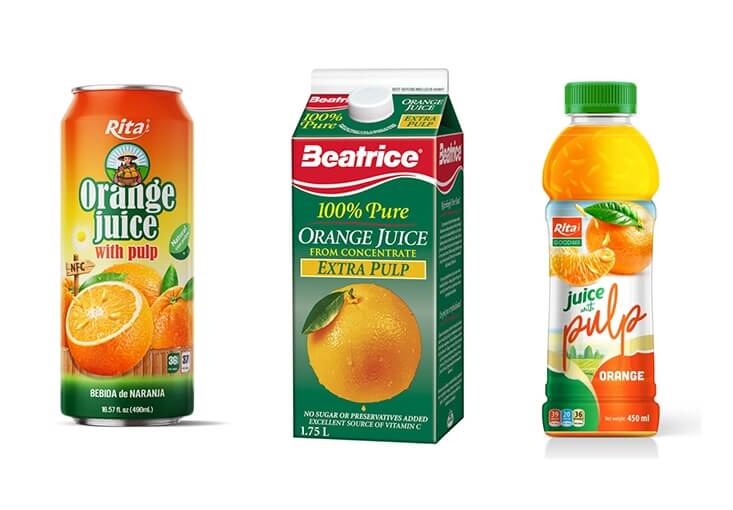
Orange juice with pulp is a functional fruit beverage made from concentrated orange juice, containing natural orange pulp particles of 2–6 mm, with a typical pulp content of 5%–15%. Compared to clarified juice, it offers a richer mouthfeel, enhanced sensory experience, higher perceived nutritional value, and stronger market premium.
Orange juice with pulp processing involves blending concentrated orange juice (or NFC juice), orange pulp, water, sugar, stabilizers, and other functional ingredients into a homogeneous mixture. The product is then subjected to homogenization, degassing, and pasteurization or sterilization to ensure stability, safety, and extended shelf life. Finally, the finished beverage is filled into plastic bottles or cartons through hot filling or aseptic filling systems, depending on the desired storage conditions and product positioning.
The capacity of orange juice with pulp processing is from 1000L/H-20000L/H available for customer to choose and the end products will be packed into bottles or cartons.
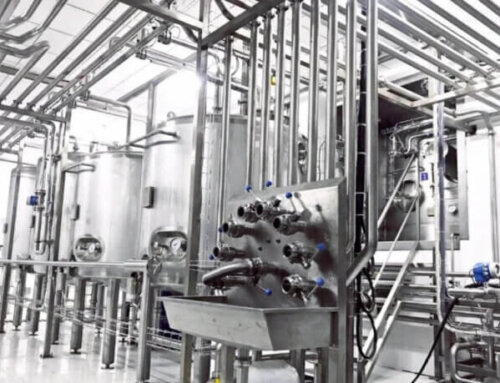
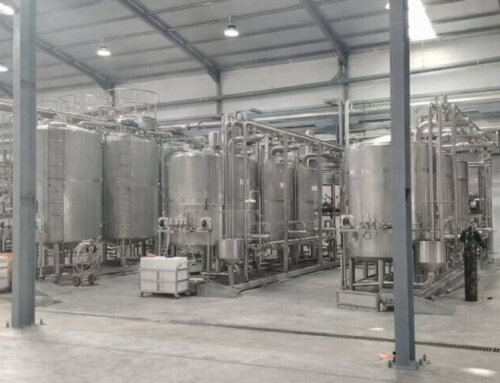
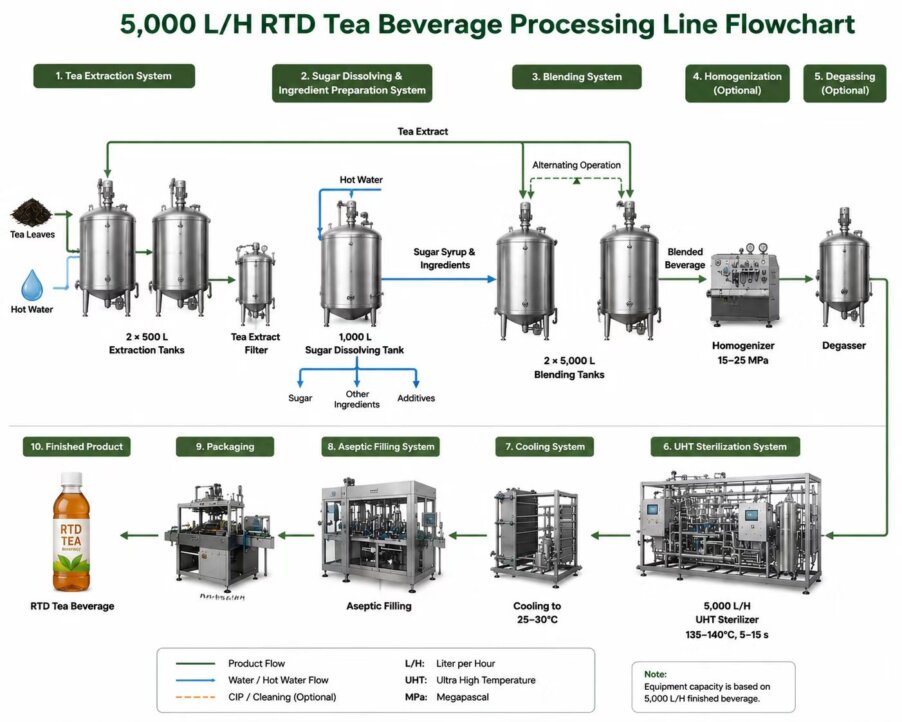
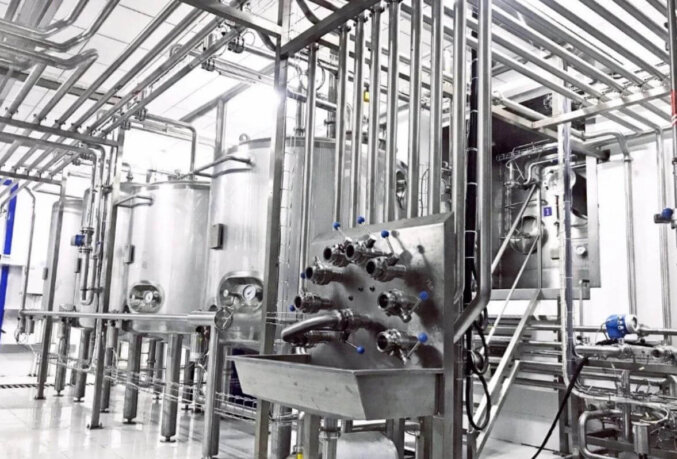
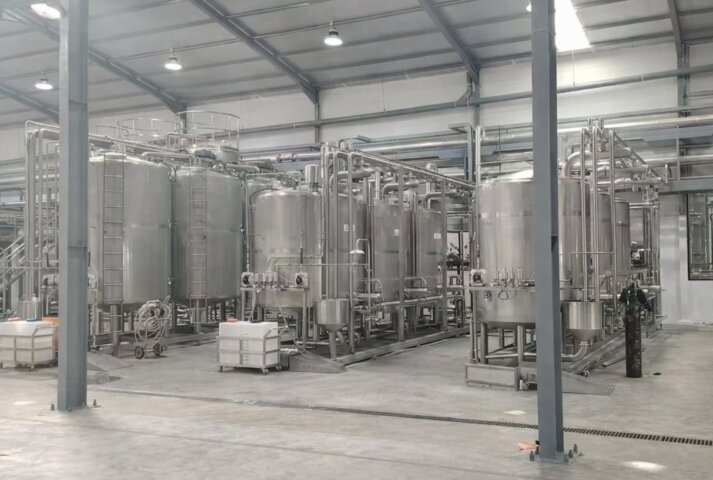
Orange juice with pulp processing machines mainly include defrosting system (for concentrate handling), high-shear dissolving machine, blending tanks, pasteurization/sterilization system, filling and packaging machines, as well as a RO water treatment system and CIP cleaning system.
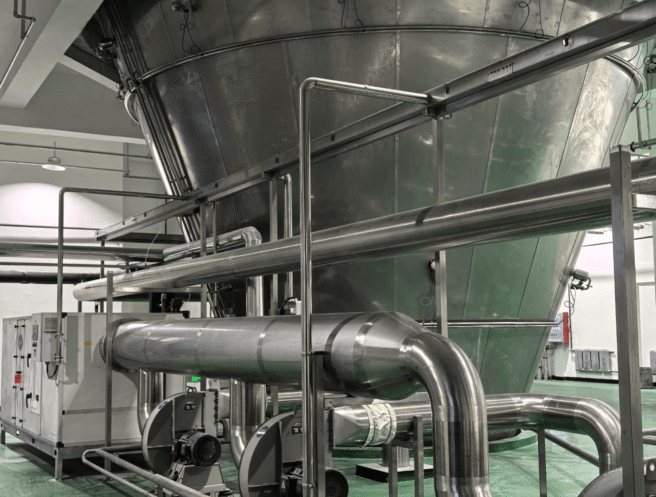
The orange juice with pulp processing equipment is manufactured using food-grade SUS304 and SUS316L stainless steel, ensuring excellent corrosion resistance and full compliance with international food hygiene standards. The hygienic design guarantees product safety, prevents contamination, and meets the strict requirements of modern beverage processing.
We are an expert supplier providing turnkey orange processing plants for the production of concentrated orange juice, NFC orange juice, and orange oil products.
Orange Juice With Pulp Processing Ingredients
- Frozen Concentrated Orange Juice (FCOJ)
Frozen Concentrated Orange Juice (FCOJ) is the primary raw material used in orange juice with pulp processing, typically with a concentration of 65°Brix. It generally accounts for 10%–20% of the final formulation.
FCOJ is commonly supplied in 220 L drums or 1000 L IBC containers. During production, it is first defrosted and then blended with water to produce reconstituted orange juice.
Using FCOJ offers several advantages, including:
- Stable supply and consistent quality
- Lower cost compared to fresh juice processing
- High suitability for large-scale industrial production
- Orange Pulp
Orange pulp is produced from fresh oranges through a controlled process including peeling, segmenting, dicing, blanching, and pasteurization, resulting in standardized pulp particles with a size of 2–6 mm.
The pulp content in the final product typically ranges from 5% to 15%, depending on product positioning and market preference.
- RO Water
Reverse Osmosis (RO) water is used to dilute the concentrated orange juice and adjust the final product to the desired Brix level. It also ensures water purity and compliance with food safety standards.
- Stabilizers
Stabilizers mainly include pectin, CMC (carboxymethyl cellulose), and xanthan gum.
Their key functions are:
- Preventing pulp sedimentation
- Increasing product viscosity
- Improving suspension stability
The typical dosage is 0.1%–0.5% of the total formulation.
- Sugar and Vitamin C (Optional)
- Sugar (such as sucrose or glucose syrup) is added to enhance sweetness and improve overall flavor balance.
- Vitamin C (ascorbic acid) acts as an antioxidant, helping to prevent oxidation and extend the shelf life of the final product.
Orange Juice With Pulp Processing Machine Introduction
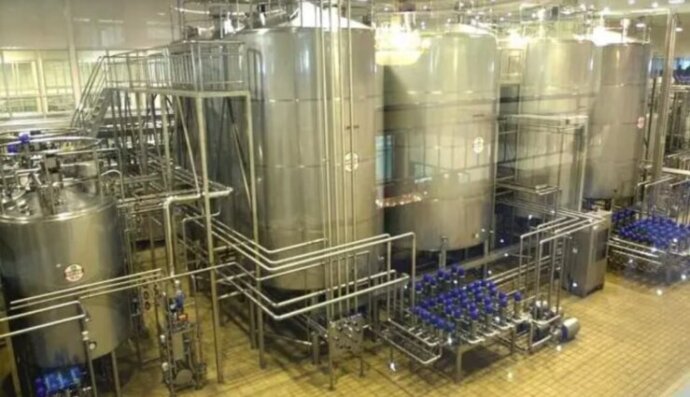
Orange juice with pulp blending system
The orange juice with pulp blending system is designed to accurately mix reconstituted orange juice, orange pulp, water, sugar, stabilizers, and other ingredients into a uniform and stable product. It plays a vital role in ensuring consistent product quality, proper pulp suspension, and precise formulation control.
Ingredient Dissolution
Sugar and stabilizers such as CMC are dissolved using high-shear mixing equipment, including a colloid mill or high-shear mixing tank. These systems enable rapid dispersion and complete hydration of powders, preventing agglomeration and significantly improving product stability.
Industrial Blending Methods
Method one is direct blending in the mixing tank: Orange juice and orange pulp are pumped directly into the blending tank and mixed uniformly. When mixing, a low-speed anchor agitator (20–60 rpm) is used to provide gentle mixing and effective circulation and minimizes shear force to protect pulp integrity
Method two is inline dosing after separate processing: In this method, orange juice and orange pulp are processed separately before final mixing.
- Orange juice is first diluted with water and mixed with sugar, stabilizers, and other ingredients
- The juice is then pasteurized (and optionally homogenized and degassed)
- Orange pulp is pasteurized separately in a dedicated system
- After pasteurization, the pulp is dosed into the juice via a static mixer installed on the pipeline between the orange juice pasteurizer and the filling machine
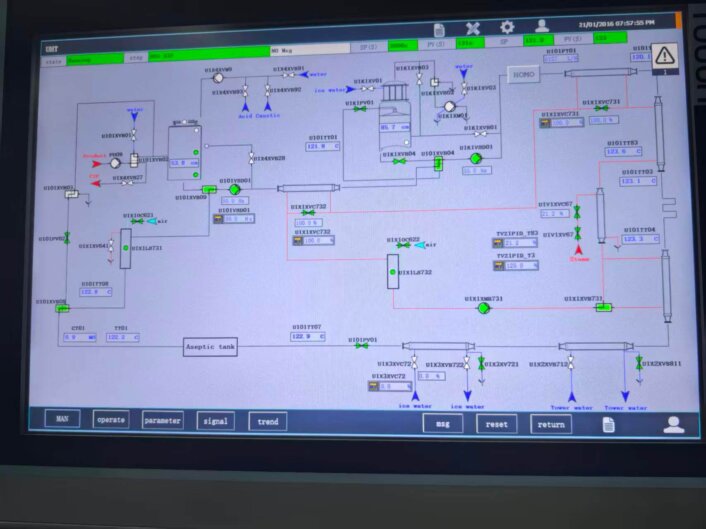
Orange juice with pulp pasteurizing/sterilizing system
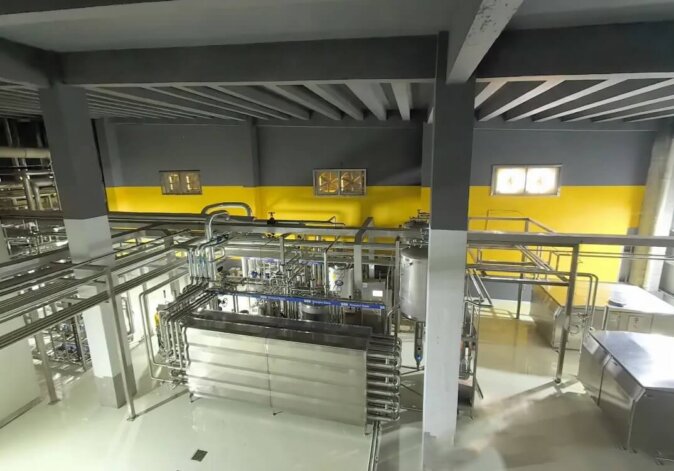
Two main sterilization (pasteurization) methods are commonly used in orange juice with pulp processing, depending on product positioning, capacity, and filling type.
Method 1: Separate Pasteurization of Juice and Pulp (Recommended for Aseptic Production)
In this method, orange juice and orange pulp are pasteurized separately to ensure better control of product quality and pulp integrity.
First, the 2–6 mm orange pulp is mixed with approximately 10% diluted orange juice to improve flowability. The mixture is then fed into a tubular pasteurizer for heat treatment at 90–95°C for 30–60 seconds. After pasteurization, the pulp is cooled to around 25°C and stored in a buffer tank for subsequent dosing into the product line.
Meanwhile, the diluted orange juice is pumped into a plate pasteurizer and heated to 95–98°C with a holding time of 10–30 seconds. Prior to pasteurization, the juice can undergo homogenization and degassing to improve stability and product quality.
Finally, the pasteurized pulp is dosed into the juice by a static mixer, typically on the pipeline between the juice pasteurizer and the filling machine.
This method is particularly suitable for the production of large-scale aseptic orange juice with pulp, offering superior control over pulp texture and overall product quality.
Method 2: Combined Pasteurization (Juice + Pulp Together)
In this method, orange juice and pulp are first blended together in a mixing tank to form a uniform mixture. The blended product is then pumped into a tubular pasteurization system for heat treatment at 95–98°C for 30–60 seconds.
After pasteurization, the product is cooled to approximately 85°C for hot filling or further cooled to around 25°C for aseptic filling, depending on the packaging requirements.
This method features a simpler process flow and is suitable for standard production lines, although careful control is required to maintain pulp integrity during processing.
Orange Juice With Pulp Processing Key Points
How to prevent the orange pulp from breaking during processing
During orange juice with pulp processing, pulp breakage can directly lead to product turbidity and poor mouthfeel. To prevent pulp damage, the following key process measures are applied:
- Low-shear conveying equipment such as lobe pumps or progressive cavity pumps is used during pulp transfer to minimize mechanical damage.
- During the mixing of orange juice and pulp, a low-shear anchor agitator (20–60 rpm) is applied to ensure uniform blending while preventing the pulp from being broken by the impeller.
- The process piping is designed with larger diameters to reduce flow velocity. In addition, the system layout minimizes the use of elbows and valves to reduce mechanical impact on the orange pulp.
- During pulp pasteurization, the temperature is controlled at 90–95°C. Excessive temperature can cause orange pulp softening, making it more susceptible to breakage.
How to prevent orange pulp sedimentation
- The most critical measure to prevent pulp sedimentation is the addition of stabilizers such as CMC and pectin during the juice blending process.
- The pulp particle size should be controlled within the range of 2–6 mm to ensure optimal suspension performance.
- The orange juice is homogenized before pasteurization to reduce particle size, increase juice viscosity, and improve overall suspension stability.