Mango Pulp Processing Optimization: Improving Quality in a 5 T/H Production Line
Project Background and Processing Requirements
Mango pulp processing appears straightforward at first glance: washing, sorting, pulping, pasteurization, and filling. However, in practical industrial applications—especially in regions with high ambient temperatures and diverse raw material varieties—product quality can easily deteriorate if process details are underestimated.
This article reviews a 5 T/H mango pulp processing project in the Middle East, where product discoloration and nutrient loss were identified as major risks during the early process design stage. Through targeted process optimization, these risks were successfully mitigated, resulting in improved product quality and stable long-term operation.
The customer planned to process fresh mangoes into pasteurized pulp for subsequent filling. The initial scope included washing, sorting, peeling, de-stoning, pulping, thermal treatment, and filling.
From a capacity perspective, this was a medium-scale project. However, the diversity of mango varieties and the climatic conditions significantly increased the complexity of the process design.
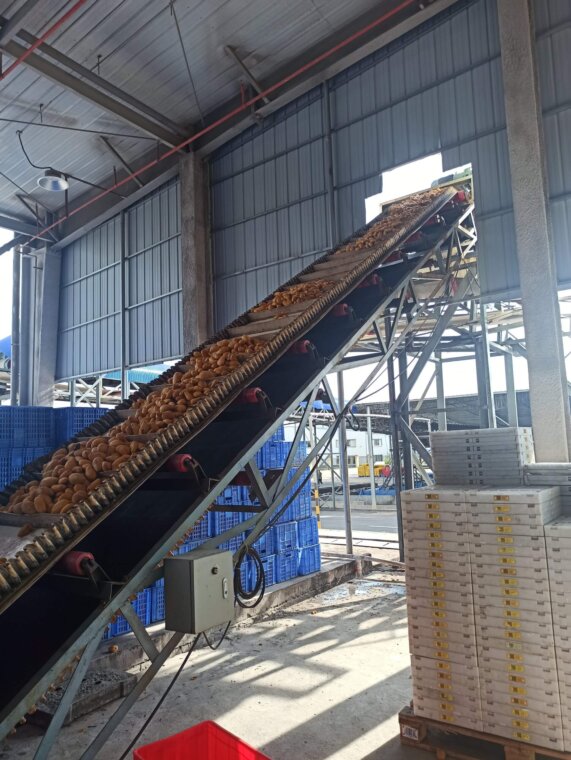
Initial Mango Pulp Processing Concept
In the original proposal, mangoes were to be washed, sorted, peeled, de-stoned, and pulped. The pulp would then be temporarily stored before entering the pasteurization and filling section.
During the sterilizer selection stage, the customer expressed uncertainty and initially considered using a shell-and-tube heat exchanger for pasteurization. This choice was based on:
- Familiarity with traditional processing concepts
- Lower initial investment cost
- Prior experience with similar equipment
From the customer’s perspective, the process appeared cost-effective and technically feasible.
Key Quality Risks in Mango Pulp Processing
Based on our prior project experience with mango fruit processing, several critical risks were identified at an early stage.
1. Product Quality Degradation During Temporary Storage
During mango pulping and de-stoning, mechanical energy input inevitably raises the product temperature. In this project, the mango pulp temperature after pulping reached approximately 30°C.
If pulp at this temperature is transferred directly into a buffer tank and held for an extended period, several quality issues may arise:
- Vitamin C degradation due to prolonged exposure to elevated temperatures
- Enzymatic browning, leading to visible discoloration
- Overall reduction in sensory quality and market value
This risk was not related to equipment reliability, but rather to long-term product quality stability, which is often more difficult to correct after commissioning.
2. Inappropriate Heat Exchanger Selection for High-Viscosity Pulp
Mango pulp has a relatively high viscosity, typically around 10,000 cP, depending on variety and fiber content.
At this viscosity level, conventional shell-and-tube heat exchangers pose significant risks:
- High pressure drop
- Uneven flow distribution
- Localized overheating
- Increased likelihood of fouling and blockage
These issues not only affect heat transfer efficiency but can also result in frequent shutdowns and cleaning interventions.
Process Optimization Measures Implemented for Mango Pulp Processing
To address these challenges, the process was optimized at multiple critical points rather than relying on a single corrective measure.
1. Color Protection During Pulping
A color protection system was integrated into the pulping stage. Its function was to minimize oxidative reactions immediately after cell rupture, which is when mango pulp is most vulnerable to discoloration.
This measure significantly reduced early-stage color degradation and helped stabilize the visual quality of the pulp.
2. Immediate Cooling After Pulping
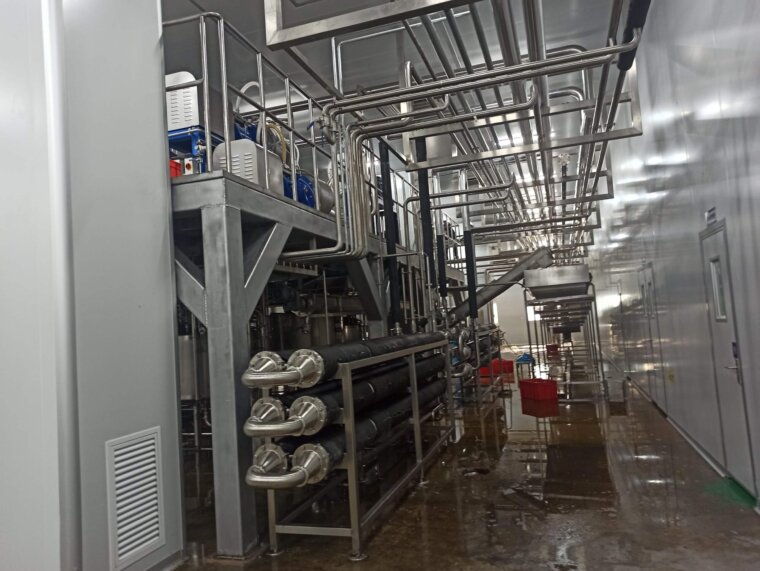
Instead of sending 30°C pulp directly to a buffer tank, a tubular cooling heat exchanger was installed downstream of the pulper.
- The pulp temperature was reduced from approximately 30°C to 10°C
- Cooling was performed in a continuous and controlled manner
- The cooled pulp was then transferred to a standardization tank
At this lower temperature, both nutritional value and color stability were preserved to the greatest extent possible.
3. Fine Filtration for Quality Improvement
To further enhance product appearance and consistency, a filtration unit was installed after pulping. This step removed black spots and undesirable particles commonly present in mango pulp.
Although not strictly mandatory from a processing standpoint, this measure significantly improved the perceived quality of the final product.
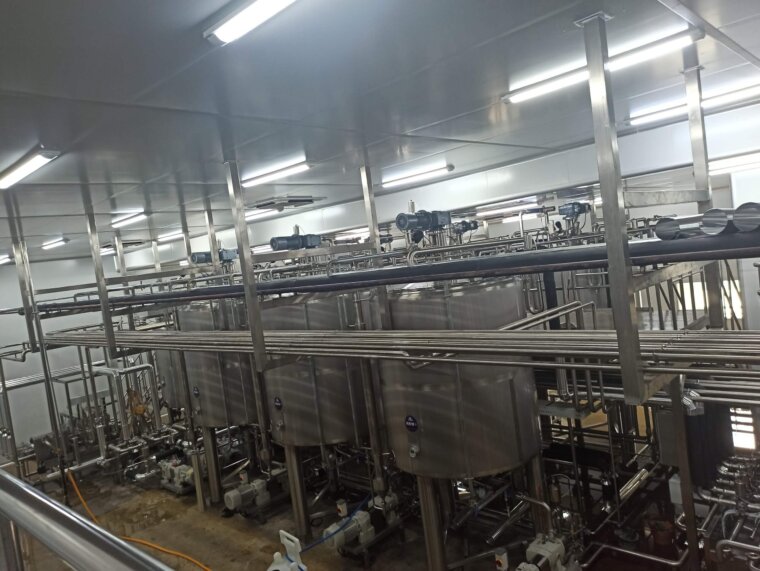
4. Standardization for Brix Consistency
The customer processed more than ten different mango varieties, each with a distinct natural Brix value.
A standardization tank was therefore introduced to allow controlled adjustment of:
- Sugar content
- Acidity
- Water addition
This ensured that each production batch met the same target Brix specification, resulting in consistent product quality regardless of raw material variation.
Pasteurization Equipment Selection for High-Viscosity Mango Pulp
Given the high viscosity of mango pulp, the originally considered shell-and-tube pasteurizer was reassessed.
Based on previous operational experience, it was determined that such equipment would likely suffer from blockage and fouling under real production conditions.
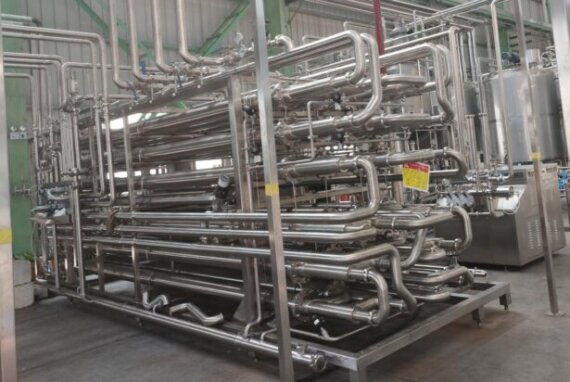
Instead, a four-layer tube-in-tube heat exchanger was selected for pasteurization. This configuration provided:
- Improved flow characteristics for viscous products
- Lower risk of material stagnation
- Reduced fouling tendency
- More stable and predictable thermal performance
During operation, the system performed reliably, with no incidents of tube blockage, burning, or pulp adhesion.
Engineering Lessons Learned from Mango Pulp Processing
This project highlights several important engineering principles applicable to fruit pulp processing:
- Temperature control before pasteurization is critical for quality preservation
- High-viscosity products require flow-oriented heat exchanger design, not just sufficient heat transfer area
- Standardization is essential when dealing with variable raw materials
- Early-stage process optimization is far more cost-effective than post-commissioning corrections
Mango pulp processing is not only about thermal treatment and filling. Product quality is largely determined by decisions made upstream, especially regarding temperature management, equipment selection, and process flexibility.
This project demonstrates that thoughtful process optimization—based on real engineering experience—can significantly enhance product quality while ensuring stable and reliable plant operation.