Project Description
Citrus Processing Line
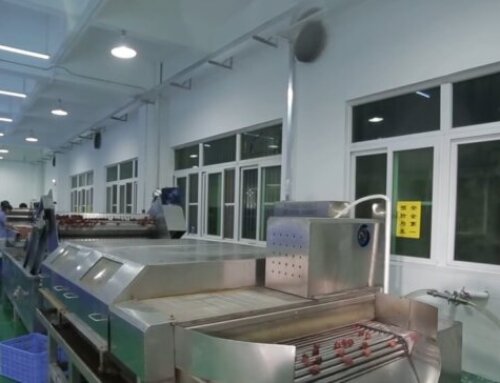
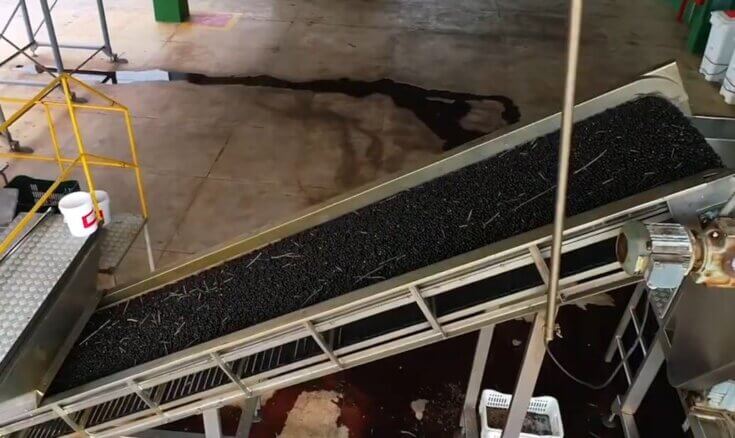
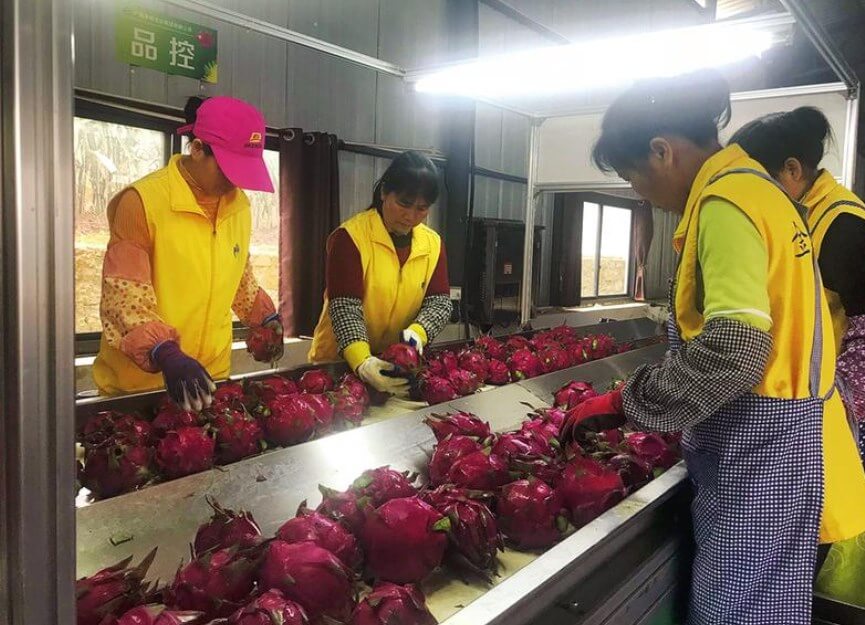
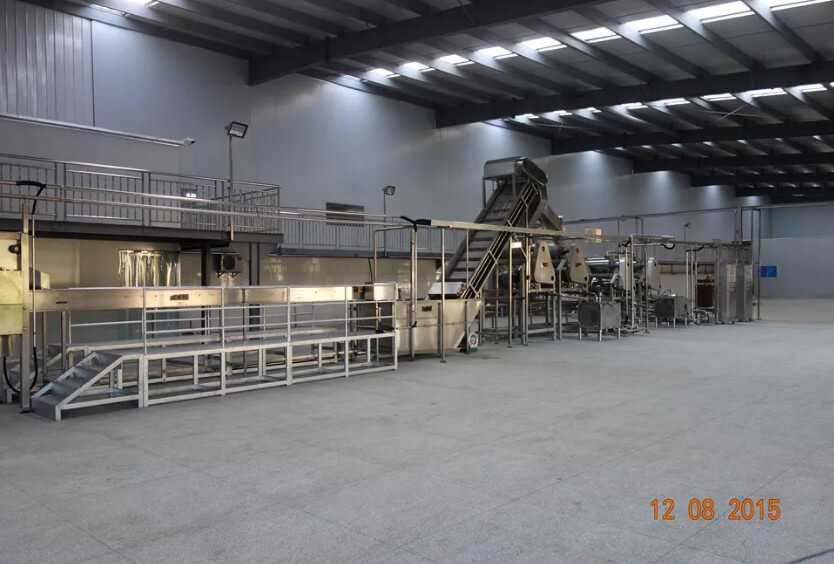
Citrus Processing Line Description
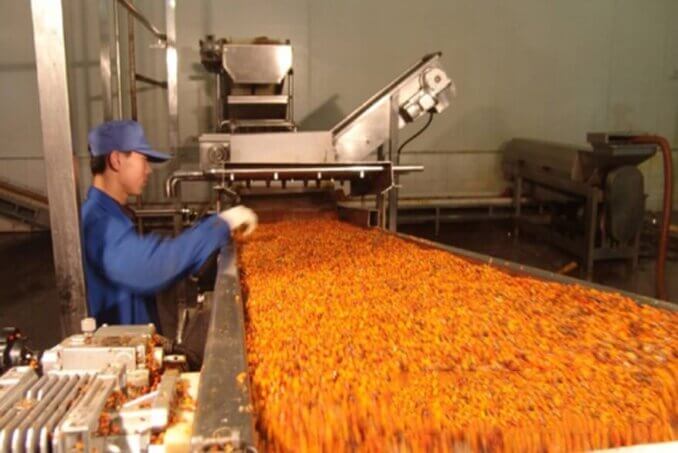
- Processing citrus fruits differs a lot from processing other kinds of fruits, as citrus fruits have peels and seeds, if we direct mill the citrus and extract juice from the mash, the citrus peels and seeds in the juice will influence the end product’s taste. Due to this feature, we designed a citrus extractor that is especially for citrus fruits, and the extractor can separate the peels, seeds, pulp and juice.
- The citrus fruits go through extractors, juice and pulp as the main products to make into drinkable juice, whereas citrus peels and seeds as the by-products can be dewatered via belt press extractor and the final products can be as animals feed.
- Before citrus juice extraction, we use the citrus oil extractor to grind citrus oil from citrus peel. Depending on the variety of citrus, 0.5-2% oil will be existed in the citrus oil wash water, through three-phase disk stack centrifuge separator concentration and purification, the pure essential citrus oil is recovered.
- The citrus processing line offers turnkey solutions for clients including citrus juice production, citrus oil recovery, citrus peel and seeds deep processing, With this method, fruit juice producers can considerably enhance the resource utilization and cost-effectiveness of the entire system.
- The capacity of the citrus processing line ranges from 10 tons per day to 500 tons per day, the end product that can be produced is NFC citrus juice, frozen orange concentrated juice, aseptic orange concentrated juice, citrus pulp, citrus oil and citrus peel animal feed.
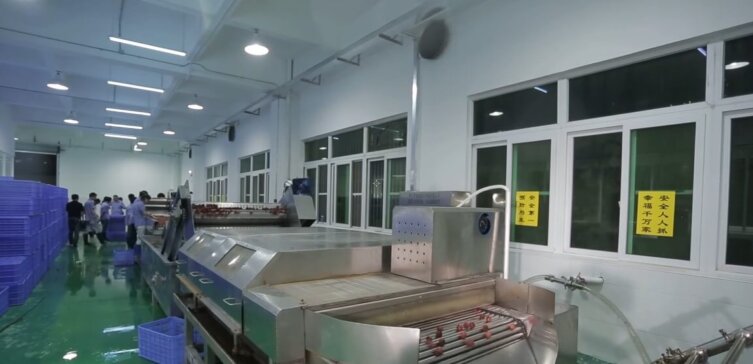
- All the citrus processing equipment is CIP capable and made of food-grade SUS304 material, this hygienic advantage ensures the production of optimum products.
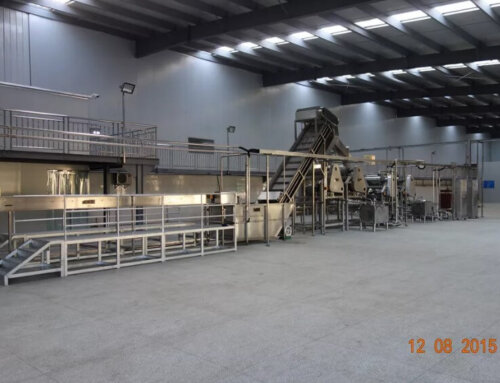
- The production process of a citrus processing plant typically involves fruit selection and grading, washing, sorting, juice extraction, juice and pulp refining, juice separating and clarification, concentrating and pasteurization/sterilizing, filling, and packaging.
End Products and Package
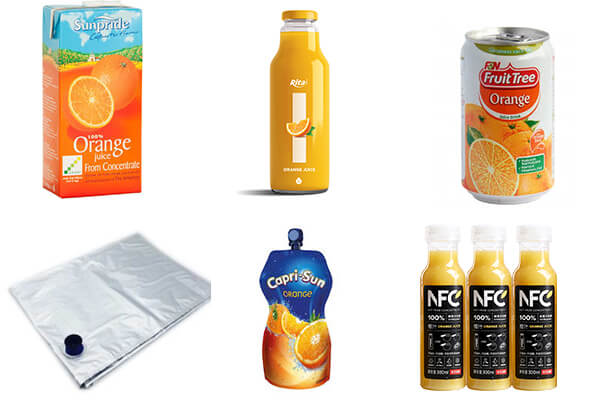
— Frozen Concentrated Orange Juice(FCOJ) filled into bulk bags (5kg, 220kg and 1000kg).
—Aseptic Concentrated Orange Juice filled into aseptic bags(220L and 1000L).
—Not From concentrated(NFC) orange juice filled into bottles, cartons and pouches.
—Blended orange juice filled into bottles, cartons or bags.
—Citrus oil: it is a byproduct in the citrus juice processing line. The citrus oil is extracted from citrus peel and citrus pulp and then recovered by centrifuge separating machines. Refined citrus oil can be used for flavor or aroma in the food industry and skin care industries.
—Citrus pulp: The citrus pulp is separated and recovered from citrus juice by the scrape refiner and cyclone separator, then the citrus pulp can be pasteurized, filled into containers, and stored in the freezer as the ingredients for RTD juice pulp processing plants; It can also be dried to reduce moisture content and increase shelf life by belt drying.
Technological processing flowchart of Citus Processing Line
Aseptic/Frozen Concentrated Orange Juice(FCOJ) uses fresh oranges as raw materials, fresh oranges after washing, sorting, sizing, juice extracting, scraping refining, disk separating, and evaporating, the frozen concentrated juice will be pasteurized or without pasteurization, and then filled into composite bags, the end products will be stored in cold temperature -18℃; The aseptic concentrated juice will be sterilized and filled into aseptic bags, and the end products will be stored in room temperature. This processing line can be suitable for orange, lemon, lime or kinnow and other citrus fruit processing. The end product soluble solid is 65-70brix.
NFC orange juice is 100% natural juice without any other ingredients, it is purely natural and can keep the nutrition and flavor in fresh fruits. which also uses fresh citrus as raw materials, after washing, sorting, juice extracting, and separating to get fresh orange juice, then homogenizing and degassing and UHT sterilizing then filling an aseptic brick carton, the whole filling process is aseptic, and the end products can have 12 months shelf life in aseptic processing. The other type is orange juice pasteurizing/UHT sterilizing, then cold filling into gable-top cartons or bottles, this type of juice producing, storage, transporting, and sales distribution process all in 4℃ cold environment. and the shelf life ranges from 14 days to 120 days.
Blended orange juice: The blended orange juice use concentrated orange juice or fresh orange as raw materials, then blend with water, sugar and other ingredients, after homogenizing, degassing sterilizing, then filled into small packages like PET or glass bottles, pouches.

Key Machine of Citrus Juice Processing Line
Fresh citrus receiving, washing and sorting system
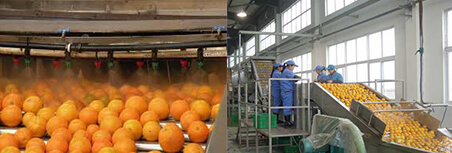
Fresh ripen citrus after harvesting from the farm, using the truck to transport it to the orange processing site, then unloading the citrus into the orange receiving pool, through water flume, deliver citrus to air blow washing machine and brush washing machine to remove the dirty matters from fresh fruits. Then use a roller sorting machine to choose the bad fruits from the good fruits.
Citrus oil extracting machine
The citrus oil extracting machine is specially designed for grinding and extracting oil from citrus peel. The machine is made of SUS304 material and with a high oil yield rate, the capacity for the citrus oil extractor is from 2-10 tons available. When extracting the oil from the citrus peels, same amount of water needs to be added into the machine to wash off the oil on the citrus peel.

Citrus juice extracting machine
There are two types of juice extractors for citrus fruits:
The first is a squeezer-type citrus juice extractor(also called whole fruit cup extractor) is specially designed for citrus juice extracting, the orange extractor has three to five channels, which can sort the citrus according to different size, then through the channel to feed citrus into the extractor cups, it can separate the juice, oil, peel and seeds, and the capacity can reach to 500 citruses per hour. The juice extractor is suitable for oranges, mandarins, tangerines, key limes, persian limes and lemons juice extracting.
The second extractor is roller half cutting juice extractor, this extractor is composed of two rollers and one sharp knife between two rollers, when the fresh citrus feeding into the hopper, the knife will cut the citrus fruits into half and then send them to two rollers, With the rotation of the pressure roller, the gap between the pressure roller and the stainless steel screen becomes smaller and smaller. Under the action of the squeezing force, the citrus juice is obtained. The roller half extractor is suitable for extracting limes, lemons, and oranges which side is under φ50-60mm. Use this extractor can not separate the oil and seeds, but the processing capacity is bigger than the cup extractors.

Citrus peel oil recovery system
The citrus oil recovery system process includes citrus oil extracting, citrus oil refining, two-stage centrifuge separating and essential oil de-waxing.
Citrus oil extracting: the citrus oil extraction process can be done by a needle-type extractor to obtain the oil, when extracting the oil, pure water needs to be added to wash off the oil on the citrus peels. The oil can also be extracted by cup-type citrus extractors.
Citrus oil refining: the refining process can use a screw finisher or scrape finisher to remove the big particles in oil emulsion.
First stage centrifuge separating: it is mainly used to remove most of the water and insoluble solids from the citrus oil emulsion. This stage may involve more than one desludging centrifuge, depending upon the volume being processed. The oil-rich emulsion (cream) produced by this centrifuge should have an oil ranging between 65% to 85% (and preferably >75% for best results). This oil-rich cream becomes the feedstock for the second stage polishing centrifuge.
Second stage polishing centrifuge: it is where the remaining water and some cloudy particles are removed. The oil discharged from this stage is the fine essential oil that can be ready for storage.
Essential citrus oil de-waxing: the citrus oil contains a small amount of wax, the wax will precipitate out of the oil when stored at cold temperature, so we will need one more de waxing process to remove the wax in citrus oil. Firstly chill the citrus oil to -18℃, then use the double filter to remove the wax in the oil.
Essential citrus oil storage: the oil can be stored in an unrefrigerated warehouse that is below 20℃.

Citrus juice refiner and finisher
We use a scrape refiner/finisher to obtain pure citrus juice. Using the principle of combining crushing and rapid centrifugation, the juice and pulp/pomace can be quickly separated, and the pit can be effectively removed. As the machine works in a fully enclosed state, it can effectively reduce the oxidation of the citrus juice.

Citrus juice centrifuge separator
Citrus/Orange juice after scrape finisher separation, the pulp content is about 8%-12% in the juice, if you want to make lower pulp content orange juice, then the two-phase stack centrifuge separator with 4000-8000rpm rotate speed can be used for the application. After centrifuge separation, the pulp in orange juice can be reduced to 1%-3%.

Citrus juice concentration system
The product obtained from a process in which water is removed from orange juice by utilizing heat under vacuum conditions. The orange concentrate is normally concentrated to 65°Brix which has the soluble solids content of 7 equal volumes of orange juice at 11.8°Brix.
The orange juice flows from one stage to the next without recycling. And cool down in a very short time. The evaporator can also be equipped with an aroma recovery system where the aromas are extracted from the juice. Before leaving the evaporator, the concentrated juice passes through a flash cooler which drops the temperature to 10 ℃.

Citrus juice pasteurization/sterilizing system
A heat treatment that kills some but not all of the microorganisms present in juice to minimize microbial growth in subsequent handling and storage. A temperature of 70°C for one minute is required to sufficiently reduce the microbial load in orange juice. Pectinesterase inactivation requires minimal heat treatment at 90°C for 10 seconds.
—For citrus juice concentrate processing, a tubular-in-tube pasteurizer is recommended due to the high product viscosity, typically in the range of 7,000–10,000 mPa·s. This pasteurization design ensures stable heat transfer, uniform temperature control, and reliable product flow when handling high-viscosity citrus concentrates.
—In contrast, NFC (Not From Concentrate) citrus juice has a much lower viscosity, generally around 800–1,000 mPa·s, allowing it to be efficiently processed using a standard tubular pasteurizer. This configuration provides gentle thermal treatment, preserves fresh flavor and nutrients, and supports continuous, high-efficiency juice processing.
In a citrus juice processing line, two distinct pasteurization stages are typically applied to ensure product quality, enzyme stability, and microbiological safety:
—Primary pasteurization is carried out immediately after juice extraction in order to inactivate pectin methylesterase (PME) as early as possible. This step is critical for preventing cloud loss and maintaining juice stability. The juice is heated to 95–98 °C for 10–30 seconds, providing rapid enzyme deactivation while minimizing quality degradation.
—Secondary pasteurization (sterilization) is performed prior to packaging of NFC citrus juice or citrus juice concentrate. This step applies to NFC juice after bulk storage, as well as juice reconstituted from concentrate. The main purpose of secondary pasteurization is microbial destruction rather than enzyme inactivation. Since microorganisms are less heat-resistant than enzymes, this pasteurization stage is conducted at a lower temperature than the primary pasteurization, ensuring food safety while preserving flavor and nutritional properties.

Citrus juice filler system
According to different citrus juice end products, dedicated filling and packaging systems are selected to ensure product safety, quality preservation, and optimal shelf life.
For NFC (Not From Concentrate) citrus juice, the product is typically filled into gable top cartons, PET bottles, or glass bottles. The juice is filled at a cold temperature of 5–7 °C to maintain freshness and sensory quality. Under refrigerated storage conditions, the shelf life ranges from approximately 15 days to 3 months, depending on the pasteurization parameters and packaging material.
For aseptic concentrated orange juice, an aseptic bag filler is employed. The concentrate is filled at a controlled temperature of 25–30 °C under fully aseptic conditions. This packaging method enables a shelf life of up to 12 months without the need for refrigeration.
For frozen concentrated citrus juice, the extracted juice may be processed with or without pasteurization, depending on product specifications and regulatory requirements. The juice is then filled into bulk bags with capacities of 200–1,000 L. When stored in a −18 °C cold warehouse, the final product can achieve a shelf life of 12–24 months.