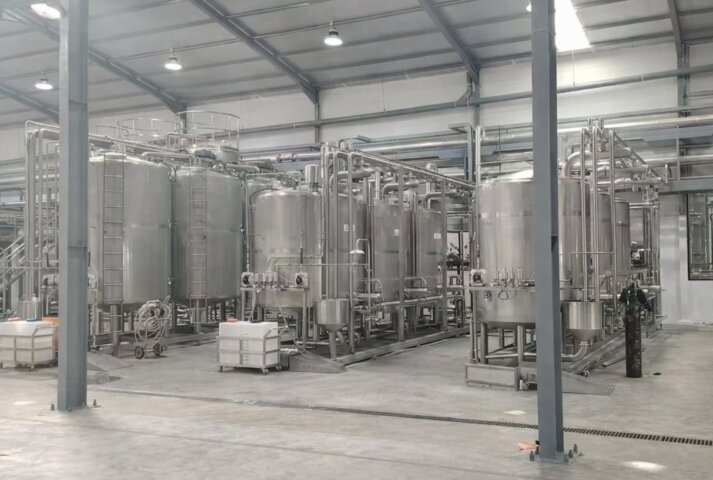
Description Of Banana Juice Processing Line
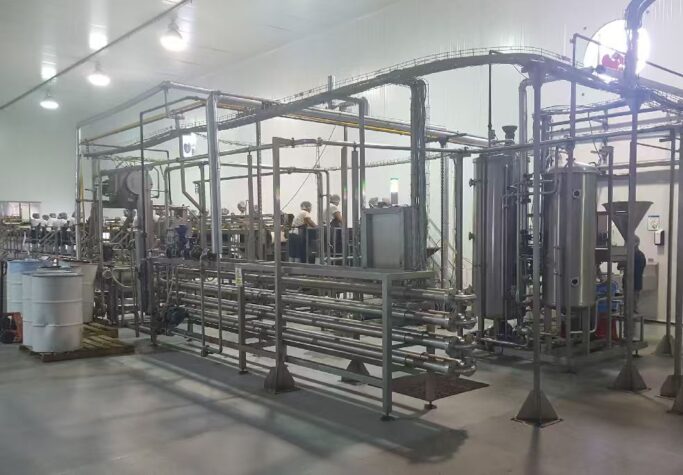
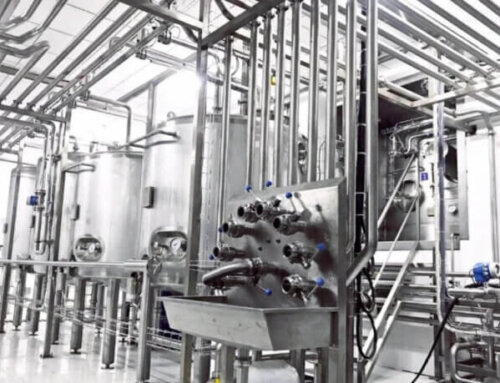
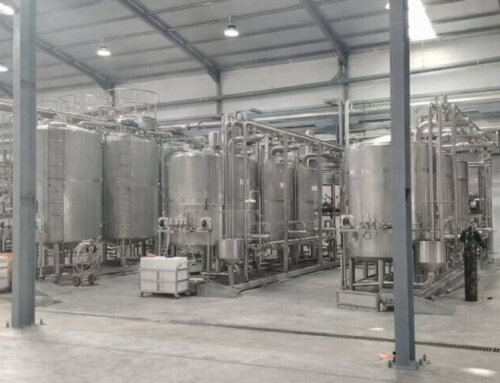
The clear banana juice processing line includes fresh banana ripen system, banana washing and checking system, banana peeling and milling system, banana juice enzymatic hydrolysis system, banana juice separating and ultra-filtration system, and banana juice sterilizing and filling system.
Banana fruit is one kind of tropical fruit, most bananas are consumed as fresh fruit, but it is also one ideal fruit to proceed into all kinds of banana end products like banana puree, banana juice, banana wine and banana chips and banana powder. This article will introduce how to proceed fresh bananas into clear banana juice.
Clear banana juice is produced by processing ripe bananas and removing most of the suspended pulp and colloidal materials. Compared with conventional banana puree, clear banana juice has significantly lower turbidity and a more transparent appearance.
The main challenge is that bananas naturally contain considerable amounts of pectin, starch and fine suspended particles. These components can cause high viscosity, turbidity and sedimentation if they are not properly treated. Therefore, the processing line normally combines pulping, enzymatic treatment, clarification, centrifugation or filtration, and thermal processing.
Bananas contain approximately 1.1%–1.2% pectin and 2%–4% starch, making it challenging to efficiently separate the pomace from the juice during processing. In addition, bananas are rich in polyphenols, sugars, and amino acids, which can promote enzymatic browning after the fruit is crushed. This may result in darker juice color and negatively affect the appearance and quality of the final product.
To improve pomace and juice separation, our clear banana juice processing line first uses a two-stage pulping machine to produce a uniform banana puree. The puree then undergoes enzymatic treatment to reduce viscosity and break down pectin and other colloidal components, improving the subsequent solid-liquid separation. A decanter centrifuge is then used to efficiently separate the remaining pomace from the banana juice, helping to achieve a higher juice yield and more stable clarification performance.
To control enzymatic browning, vitamin C (ascorbic acid) can be added shortly after crushing to help protect the natural color of the banana juice. Combined with rapid processing and controlled oxygen exposure, this treatment helps minimize color deterioration and maintain the desired appearance and quality of the final product.
Clear Banana Juice Technical Parameter
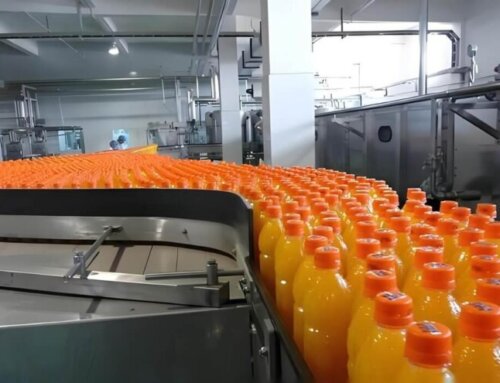
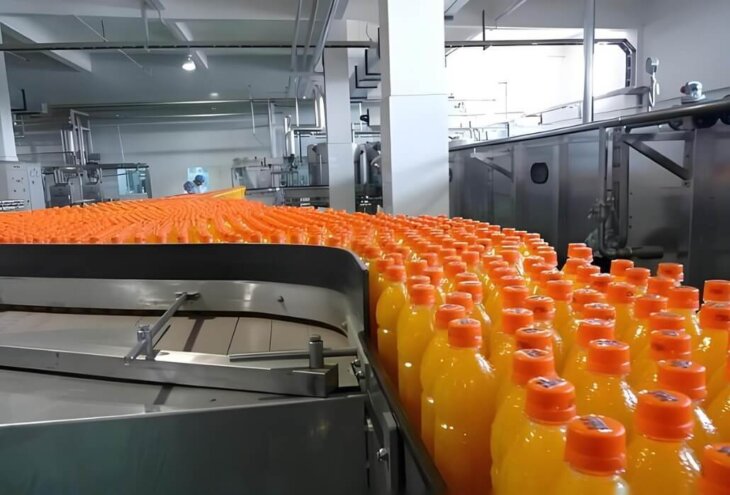
The single-strength clear banana juice is 12-14 Brix, white brown with clear juice. The end products can be filled into aseptic bags or bottles or pouches.
Clear banana juice concentrated: 70 Brix with PH value is 4.2-4.3. The end products can be filled into aseptic bag in drums.
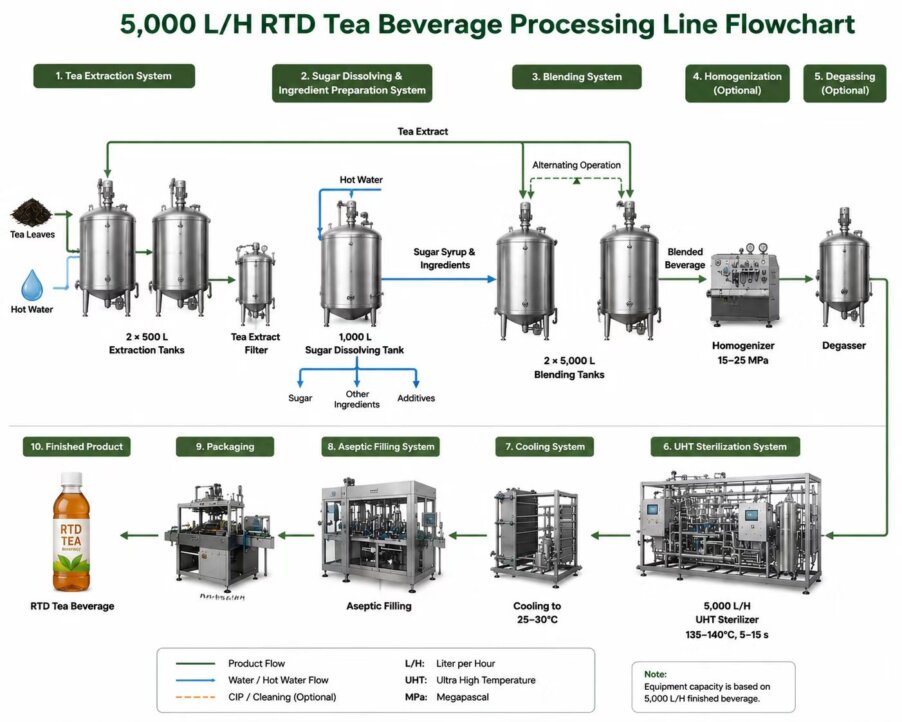
Technological Flowchart of Clear Banana Juice Processing Line
After washing, sorting, and peeling, the fresh bananas are crushed into a uniform banana pulp. At this stage, oxidation is a key technical challenge because the banana flesh is exposed to air, which can quickly cause enzymatic browning and color deterioration. To minimize oxidation and preserve the natural color, vitamin C (ascorbic acid) can be added immediately after crushing.
The banana pulp is then heated using a tube-in-tube heat exchanger or scraped-surface heat exchanger. This thermal treatment helps improve juice extraction efficiency and facilitates subsequent processing. Appropriate food-grade enzymes, such as amylase or pectinase, can then be added to the banana puree to break down starch and pectin, reduce viscosity, and improve solid-liquid separation.
After enzymatic treatment, the banana mash is fed into a decanter centrifuge, where the pomace and liquid phase can be efficiently separated. The clarified banana juice then passes through an ultrafiltration (UF) system to further remove fine suspended solids and colloidal particles that remain after centrifugal separation.
The clarified juice can then proceed to vacuum evaporation for concentration, followed by sterilization and aseptic filling, completing the production process for clear banana juice or clear banana juice concentrate.

Key Machine Of Banana Juice Processing Line
Banana receiving and cleaning machines
Fresh ripe bananas are first inspected and sorted to remove damaged, overripe or contaminated fruit. The bananas are then washed and peeled. Depending on the factory design, peeling can be manual or assisted by specialized preparation equipment. After peeling, the fruit is transferred to a crusher or pulper to produce a homogeneous banana mash. The maturity of the bananas is particularly important because it affects:
- Soluble solids
- Starch content
- Juice yield
- Viscosity
- Color
- Flavor
- Clarification performance

Banana milling machine
The banana milling machine is designed to crush and mill peeled bananas into a uniform and smooth puree, preparing the product for subsequent enzymatic treatment and juice separation. During milling, 0.4% citric acid and 0.1% vitamin C (ascorbic acid) can be added to inhibit enzymatic browning and help maintain the natural color of the banana puree.
The machine features a high-efficiency rotor and screen system to achieve consistent particle size and efficient milling while minimizing excessive shearing. Its hygienic stainless-steel construction and continuous operation make it suitable for industrial banana juice and puree production. The milled banana puree is then transferred to the heating and enzymatic treatment section for further viscosity reduction and solid-liquid separation.
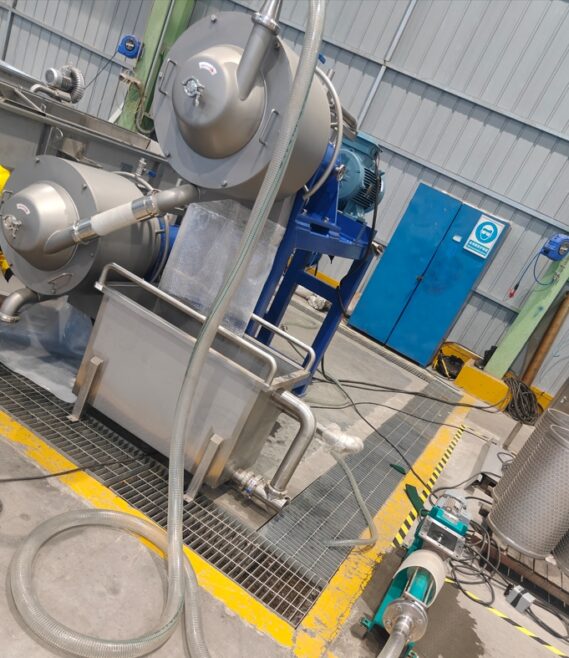

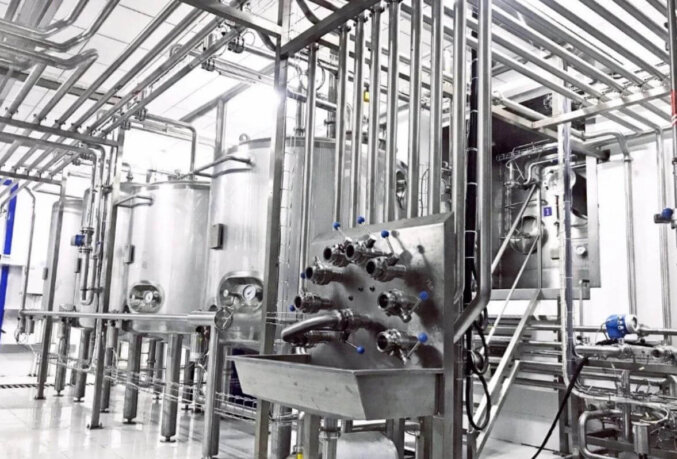
Enzymatic hydrolysis system for banana puree
After milling and heat treatment, the banana puree is transferred to an enzymatic hydrolysis tank for viscosity reduction and clarification. Food-grade enzymes such as amylase and pectinase can be added according to the characteristics of the raw material and the required juice quality. Amylase helps break down starch and reduce the viscosity of the banana puree, while pectinase degrades pectin and other colloidal substances, improving juice release and clarification.
The enzymatic hydrolysis process is carried out under controlled temperature, pH, enzyme dosage, and holding time to achieve a balance between juice yield and clarity. In some processes, amylase treatment is first used to obtain a coarse filtrate, followed by pectinase treatment to further clarify the juice before centrifugal separation.
As a typical reference condition, when the banana juice pH is maintained at around 3–4, enzymatic treatment at approximately 55°C with about 0.08% pectinase for 90 minutes can effectively improve juice yield and clarity. Actual parameters should be optimized according to banana variety, maturity, initial viscosity, enzyme activity, and the required final juice specifications.
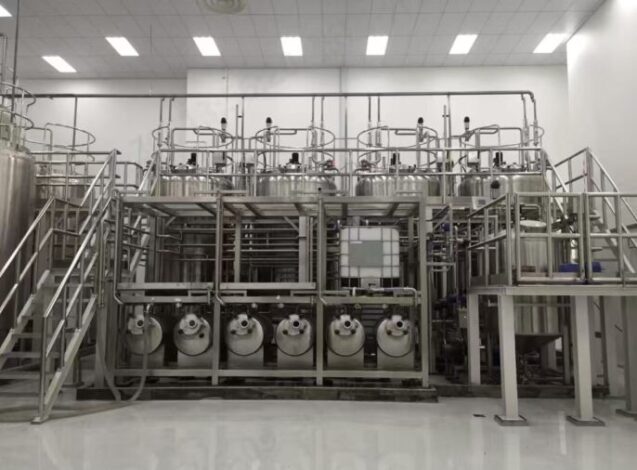

Banana juice Extractor
The banana juice extractor, based on a high-performance decanter centrifuge, is designed to efficiently separate banana juice from pomace after milling and enzymatic hydrolysis. Following enzymatic treatment, the reduced-viscosity banana mash is continuously fed into the decanter, where centrifugal force separates the liquid juice from the insoluble fibers and solid residues.
The decanter provides efficient solid-liquid separation and helps improve juice recovery while reducing the solids content of the extracted juice. With properly optimized milling, enzymatic hydrolysis, and centrifugation conditions, the system can achieve a banana juice yield of approximately 60%, depending on the banana variety, maturity, and raw material characteristics.
The extracted banana juice can then be transferred to the ultrafiltration system for further removal of fine suspended solids and colloidal particles, preparing the juice for subsequent concentration, sterilization, and filling.


Banana juice ultra-filtration system
The ultrafiltration system is used to further clarify banana juice by removing residual pectin, starch, colloidal substances, and fine suspended particles after centrifugal separation. This helps improve juice clarity and stability before subsequent concentration and sterilization.
The system typically consists of a feed/circulation tank, cleaning water tank, clear juice tank, ultrafiltration membrane modules, centrifugal pump, pneumatic valves, pressure sensors, electromagnetic flowmeters, and an electrical control cabinet. As the core filtration component, the system uses high-quality imported ceramic membrane elements, which provide good chemical resistance, mechanical strength, and long-term filtration performance.
The entire filtration process is automatically controlled by a PLC, including feed, circulation, filtration, pressure monitoring, and membrane cleaning, ensuring stable operation and consistent banana juice quality.

Banana Juice Sterilization and Aseptic Filling
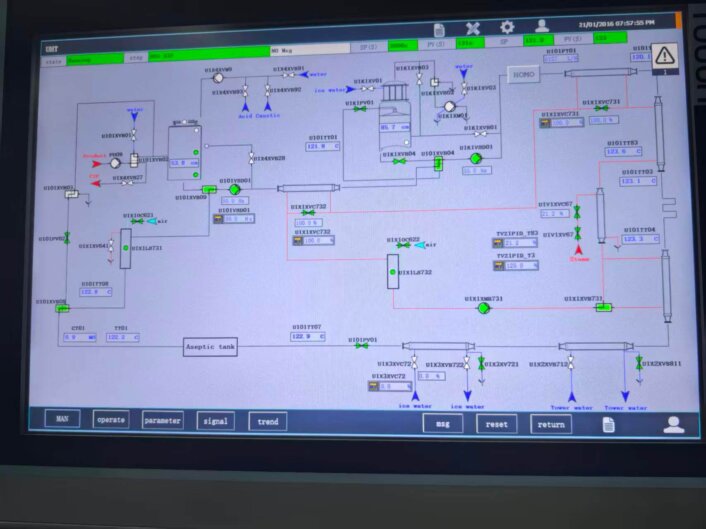
After clarification and concentration, the banana juice is transferred to a tubular sterilizer for continuous heat treatment before filling. The sterilization conditions are selected according to the juice pH, formulation, and required shelf life. For neutral or low-acid banana juice intended for ambient-temperature aseptic storage, UHT treatment at around 130°C for 2–4 seconds can be used as a reference, followed by rapid cooling to minimize thermal damage to the product. For acidified clear banana juice, a lower heat-treatment temperature may be sufficient, subject to thermal and microbiological validation.
After sterilization, the commercially sterile juice is transferred through a sterile pipeline to an aseptic tank, which provides hygienic buffering between the sterilizer and filling machine. The product is then filled into aseptic bags, aseptic cartons, or other suitable sterile packaging under controlled aseptic conditions. The integrated sterilization and aseptic filling process minimizes the risk of recontamination and enables the finished clear banana juice to be stored at ambient temperature with an extended shelf life.